Movers › Piano & Organ Moving
Piano and Organ Moving at Three Budgets: What Budget, Mid-Range and Premium Really Buy
Dispatch teaches you to fear one sentence: "It's just a piano, throw it on the truck." A piano is 300 to 1,200 pounds of cast iron, spruce and tension, worth anywhere from nothing to the price of a house, and it punishes improvisation instantly and audibly. An organ adds a second education: a Hammond B-3 console runs about 300 pounds by itself, roughly 425 with bench and pedals, and a church console can pass 600 pounds before you count the pedalboard and bench. Professional piano moving nationally averages about $400, with most jobs between $200 and $1,000 — but that average hides the real question, which is not what a piano move costs. It is what the money at each level actually buys, and what it pointedly does not.
This site lists 377 piano and organ movers, and their quotes for the same instrument can differ by a factor of three. Here is the honest anatomy of the three tiers — budget, mid-range and premium — for people who would rather spend deliberately than cheaply twice.

First, the instrument sets the floor
No tier escapes physics. Published 2026 cost data breaks the baseline down by type: a digital piano moves for $200 to $350, a spinet or console for $250 to $450, a full upright for $300 to $600, a baby grand for $400 to $800, a grand for $500 to $1,200, and an organ for $400 to $900. Weight maps to crew: under 400 pounds takes two movers, 400 to 600 pounds takes two to three, 600 to 900 takes three to four, and over 900 pounds takes four or more. Then the building starts billing: stairs run $40 to $100 per flight, and long carries, crane lifts or window removals can add $200 to $1,000. A quote that ignores your instrument's type, weight or stairs is not a tier at all. It is a guess with a phone number.
The budget tier: a competent pair of hands, nothing more
What it looks like in price: the bottom of the ranges above — roughly $200 to $400 for an upright or spinet moved locally, ground floor to ground floor.
What it buys: a general moving crew (or a small piano specialist on a simple job) with the essential hardware: a piano skid board, a heavy-duty dolly, straps and blankets. The piano is padded, tipped onto the skid for a grand — legs and pedal lyre removed — carried or dollied out, transported, and set in place. For a low-value upright moving across town with no stairs, this is a rational purchase, and I have dispatched hundreds of them without incident.
What it does not buy: margin for the unexpected. Budget quotes assume the route you described is the route that exists. The tight turn you forgot, the four steps at the side door, the gravel drive — each becomes a surcharge conversation held while your piano sits on a dolly. Insurance at this tier is typically the mover's standard liability, which for household goods defaults to released value — 60 cents per pound — unless you arrange more. On a 500-pound upright worth $6,000, that is a $300 promise. Budget tier also rarely includes climate thought, storage, or a tuner referral. You are buying transport, competently done, with the risk retained by you.
The mid-range tier: the specialist, the equipment, the paperwork
What it looks like in price: the middle of the ranges — roughly $400 to $800 for most uprights and baby grands locally, organs in the $400 to $900 band.
What the extra money buys, item by item:
- A piano-specific crew. Not movers who also do pianos — movers whose week is pianos, with the stair technique, the skid work and the turn choreography practiced. This is the single largest quality jump in the whole comparison, and it happens at this tier.
- Full protection as standard: fitted pads, skid, dollies with the right casters, door and floor protection at both ends, and the instrument secured for transport rather than braced against other freight — because at this tier the piano is not sharing its ride with a household.
- Declared-value coverage that means something. Mid-range specialists will write actual coverage for the instrument's value into the quote or offer it as a priced option, rather than leaving you at 60 cents a pound. Ask for the number in dollars, in writing.
- The building work priced in advance: stairs counted at both ends, long carries measured, tight turns scouted from your photos before the crew rolls — so the price you approved is the price on the invoice.
- For organs, disassembly done knowingly: pedalboard, bench and speaker cabinets separated, connectors handled by someone who knows a Leslie cabinet is a second instrument, not an accessory.
For most families moving a piano they care about, this is the tier the dispatch desk would choose with its own money. The premium above budget is buying the removal of surprises, which in piano moving is most of what there is to buy.
The premium tier: distance, difficulty and irreplaceability
What it looks like in price: $800 to $1,200 and beyond locally for large grands and difficult access; long-distance and cross-country moves run well past that, and crating, storage and crane work are priced on top.
What the extra money buys:
- Climate-controlled transport and storage. A piano's soundboard and action are wood and felt, and they read humidity like a diary. Premium long-distance movers offer climate-controlled trucks and warehouses; temporary storage at ordinary rates runs $50 to $150 a month, and the premium version of that storage is a controlled room, not a unit with a padlock.
- Custom crating for concert grands, antiques and instruments whose value is not really insurable in any ordinary sense — the crate is built around the piano, and the piano travels as freight engineering, not furniture.
- Hoisting and crane work, engineered rather than attempted: the $200 to $1,000 that difficult access can add buys a planned lift with the right equipment and permits, instead of four men discovering a balcony rail's opinion of a baby grand.
- White-glove placement and coordination: exact positioning, assembly, lid and lyre set, and a tuner booked at the destination — remembering that every piano needs tuning after a move, at $100 to $200, scheduled two to three weeks after arrival once the instrument has settled into the new room's temperature and humidity. Premium tiers fold that appointment into the service instead of leaving it as your homework.
- A single accountable chain for multi-leg moves: one company answerable from the first door to the final placement, rather than a brokered relay in which your piano changes hands and paperwork in a warehouse you will never see.
Premium is not about luxury. It is the correct tier when the instrument is valuable, the route is hostile, or the distance is long — the three situations in which a failure costs more than the difference between the quotes.
| Budget | Mid-Range | Premium | |
|---|---|---|---|
| Typical local price | $200–$400 (upright/spinet) | $400–$800 (most pianos) | $800–$1,200+ (grands, hard access) |
| Crew | General movers | Piano specialists | Specialists + rigging/crating partners |
| Protection | Blankets, skid, dolly | Fitted pads, floor/door protection, secured solo transport | Crating, climate control |
| Coverage | Standard liability (often 60¢/lb) | Declared value in writing | Full valuation, single chain of custody |
| Stairs/access | Surcharge as discovered | Counted and priced in advance | Crane/hoist engineered in |
| After the move | Your problem | Tuner referral typical | Tuner booked; placement finished |
Organs: the tier logic with a twist
Organs follow the same tiers with two adjustments. The weight is sneakier — a home spinet organ can be as light as 112 pounds, while a three-manual church console runs 505 to 627 pounds for the console alone, plus roughly 96 pounds of pedalboard and 87 of bench — so "an organ" spans the entire crew table by itself. And a pipe organ is not a move at all: it is built into the building and comes apart only in the hands of organ builders. Any mover who quotes a pipe organ like furniture has identified their own tier, and it is below budget. For console and Hammond-class instruments, mid-range is the sensible floor: the disassembly knowledge lives there.
Choosing your tier in one pass
Ask three questions. What is the instrument actually worth — in money and to you? (Low value forgives budget tier; heirloom value forbids it.) What is the route really like — stairs at both ends, turns, distance? (Hostile routes are what mid-range pricing exists for.) And what happens if it goes wrong? (If the honest answer is "we'd be devastated and undercompensated," you are shopping a tier too low.) Then get the quote in the tier's own terms: crew size, equipment, coverage in dollars, stairs counted, and the tuning plan. The cheapest piano move is the one you only pay for once, and from the dispatch desk, that was almost never the cheapest quote on the board.
The line item every tier forgets: the tuning
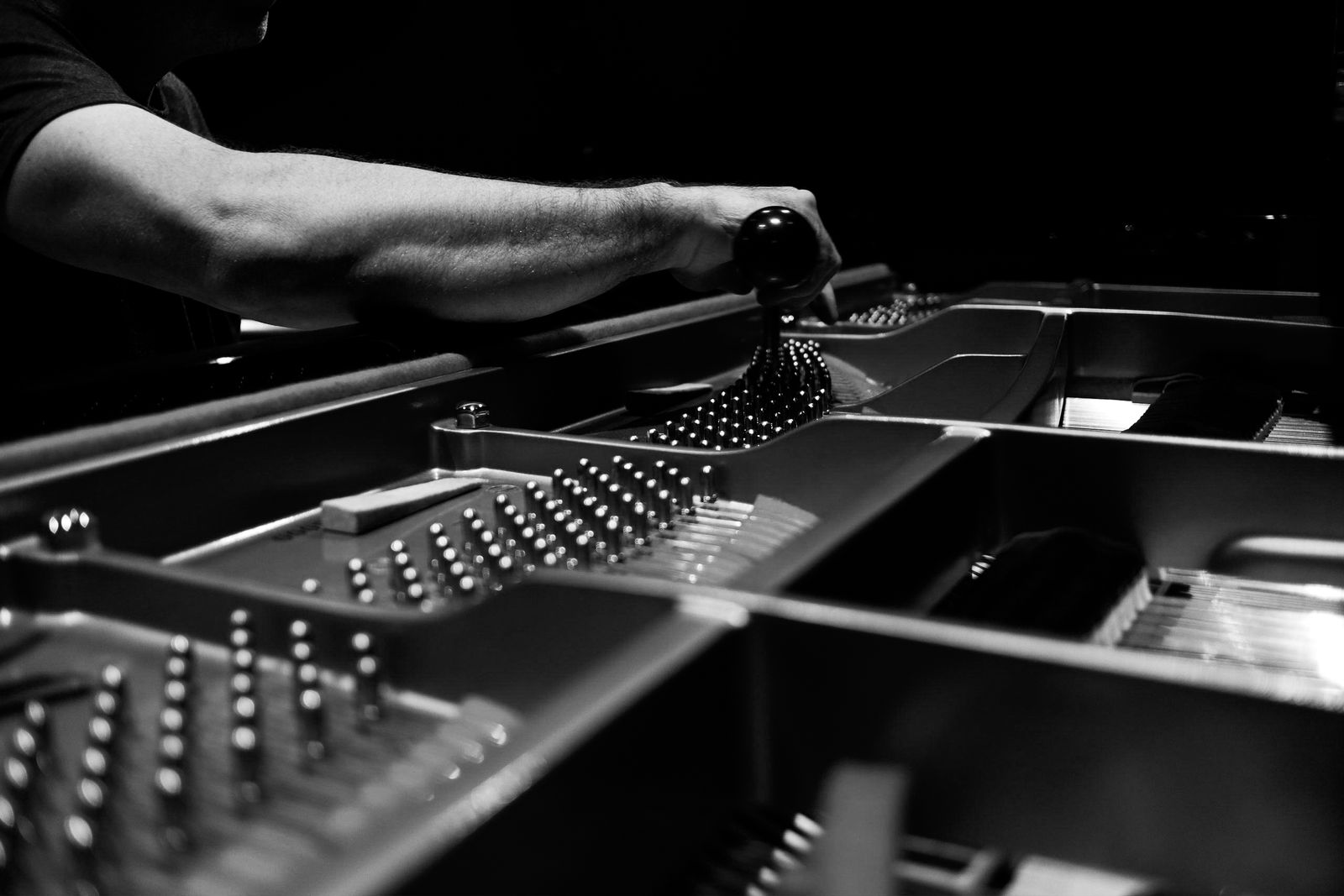
Whichever tier you buy, reserve the last $100 to $200 of the budget for the tuner, and book the appointment for two to three weeks after the piano lands — not the day after, however eager you are. A piano goes out of tune from the change of room more than from the journey: temperature and humidity in the new space swell and settle the soundboard, and a tuning done before that settling is a tuning paid for twice. Budget-tier customers forget this entirely and conclude the move damaged the piano; premium customers never learn it, because their mover booked the tuner for them. Be a premium customer in this one respect, whatever tier you bought: put the appointment in the calendar while the crew is still in the house, and let the instrument acclimatize in the meantime. It will sound like itself again. They almost always do.
Sources
- Angi, piano moving cost data (2026) — establishes the national average of about $400, costs by instrument type and weight, stair surcharges of $40 to $100 per flight, access extras of $200 to $1,000, storage at $50 to $150 a month, and post-move tuning at $100 to $200.
- Piano and organ movers' manufacturer-specification references — establish weights for uprights, spinets, the Hammond B-3 console at about 300 pounds (425 with bench and pedals), and church consoles at 505 to 627 pounds plus pedalboard and bench.
- Specialty piano moving practice guides — establish skid and dolly technique, pre-move photography, hoist rigging for stairs and corners, and tuning two to three weeks after the move.
Photos: photo by Stanislav Kondratiev, https://www.pexels.com/photo/vintage-piano-near-windows-12214095/ ; photo by Patrick Pecome, https://www.pexels.com/photo/close-up-of-piano-tuner-s-hand-inside-a-grand-piano-29039292/
More guides
- How to Hire a Moving Company That Won't Hold Your Furniture HostageMovers › Moving & Storage
- How Much Do Movers Cost? Local vs. Long-Distance Pricing ExplainedMovers › Moving & Storage
- Binding vs. Non-Binding Estimates: The Difference That Decides Your Final BillMovers › Moving & Storage
- Moving Insurance and Valuation: What 'Full Value Protection' Really CoversMovers › Moving & Storage
- Long-Distance Moving: A Start-to-Finish Guide for Household GoodsMovers › Household Goods Moving & Storage
- All Guides & ArticlesBrowse the full guides library