Movers › Piano & Organ Moving
Piano and Organ Moving on a Tight Budget: Where to Save, and Where Saving Backfires
Downsizing concentrates the mind wonderfully. The dining set can go to a daughter, the books to the library sale, the treadmill to anyone with a truck and optimism. And then there is the piano: 500 pounds of cast iron, spruce and family history, standing in the room it has stood in for thirty years, needing to get down a flight of stairs and into a smaller house, a child's home, or a buyer's care — on a budget that has already been spent twice.
I have coordinated relocations for executives whose companies paid for everything, and the piano still caused more anxiety per pound than any other object in the house. For seniors paying their own bill, the anxiety is financial as much as sentimental: piano moving is a specialist trade with specialist prices, and the temptation to treat it as just another heavy thing — to let the household movers "throw it on the truck," or to recruit three grandsons and a borrowed dolly — is exactly where the expensive mistakes live. This guide separates the savings that are real from the ones that send the bill to a repair shop instead. There are genuine ways to pay less. They are just not the obvious ones.
What a piano move actually costs
Prices vary by instrument, distance and access, but the published ranges from mover surveys and booking platforms agree on the shape of the market:
| Instrument | Typical local cost | What you are paying for |
|---|---|---|
| Digital piano or keyboard | $75–$350 | Careful handling of electronics; one or two people |
| Spinet or console upright | $150–$450 | Three-person crew, dolly, straps, padding |
| Full upright | $200–$600 | 300–500 lb on a dolly, three to four people; surveyed average local flat rate about $275 |
| Baby grand | $400–$800 | Legs, lid and pedal assembly removed; piano moved on its side on a piano board |
| Grand | $500–$1,200 | Four-person specialty crew, board, padding, reassembly |
| Concert grand | $700–$2,000+ locally | 800–1,200 lb; specialty crew and equipment |
| Home or church organ | $400–$900 | Weight plus electronics; pipe organs are a separate trade entirely |
Long distance changes the arithmetic: an upright carried across the country by a specialist typically runs $500 to $2,500, and a grand $1,100 to $4,200 or more. Stairs are the great multiplier at every level — movers charge for them by the flight or even by the step, with one established piano mover's published rate adding $7 per step on top of its flat rate, and industry guides putting a flight of stairs at anywhere from $40 to $300 extra depending on the crew and the turn in the staircase. A piano that has to be craned through a window is its own line item entirely.
And one cost is not optional, whichever way you move: tuning afterward, at $100 to $300, done two to four weeks after the move once the instrument has settled into its new room's temperature and humidity.
Where saving is real
Combine the piano with the household move — carefully. If you are already hiring movers for the whole house, adding an upright to that move typically adds $75 to $150 to the bill, against $275 or so for a standalone local piano move, because the truck, the crew and the drive are already paid for. A grand added to a household move carries a bigger upcharge — $200 to $1,000 in mover surveys — but still usually beats a separate specialty booking for a local distance. The condition, and it is not negotiable, is that the household mover actually does piano work: ask whether they carry a piano board and skid, whether the crew assigned has moved grands before, and get the piano named, with its handling described, in the written estimate. "We move pianos all the time" from a company that cannot describe how a grand's legs come off is not the saving; it is the risk wearing the saving's clothes.

Move in the off-season and midweek. Piano specialists are movers, and movers' calendars peak at month-ends, weekends and summer. A flexible date — midweek, mid-month, outside the summer rush — is the single easiest discount in the trade, and for a downsizing move, where the date is often yours to choose, it costs nothing but patience.
Do the preparation yourself. Movers bill for time. Clear the path at both ends: measure the route, take doors off hinges if that is what the turn requires, move the furniture that shares the hallway, empty the piano bench, remove the music, lamps and metronome, and photograph the instrument from every side before anyone touches it. None of that requires strength, all of it shortens the crew's clock, and the photographs are your evidence if anything is damaged.
Sell, donate or gift the piano instead of moving it — and price that option honestly. For many older uprights, the moving cost exceeds the instrument's market value, and a local sale, a donation to a school or church, or a gift to the grandchild who actually plays can be the genuinely economical answer. What is not economical is the halfway version: paying to move a piano nobody will play into a smaller home where it consumes a wall and a monthly storage-adjacent guilt. Decide with the numbers in front of you, including the tuning it will need at the other end either way.
For a digital piano, relax a little. A digital instrument at 80 to 300 pounds, with no strings, soundboard or cast-iron frame, is electronics, not cabinetry under tension. Careful household movers — or family, with the stand disassembled, the unit padded and kept upright and dry — can move one safely. This is the one category where the specialist premium buys little.

Where saving backfires
The DIY grand. An upright on a flat, ground-floor route defeats fewer people than a grand defeats everyone. A grand piano is moved on its side, on a board, with its legs, lid and lyre removed, by a crew that knows which side, which order and how the weight shifts — because a grand's 500 to 1,200 pounds are not evenly distributed: the cast-iron plate and keybed carry most of it, while the legs and casework that an amateur grabs are the delicate parts. The failure modes are not scratches. They are a leg snapping under a shifting load, a soundboard cracked by a drop of two inches, a piano tipping on a stair turn — and a person underneath it. Professional moving at $175 to $500 for a typical job is, as one piano technician's guide puts it, small next to a hospital bill or a cracked soundboard. For seniors especially, this is the line: the money saved by recruiting family is spent, with interest, the first time anything goes wrong, and bodies are part of "anything."
The cheapest quote with no piano in it. A quote that never asked the piano's type, size, or the stairs at either end is not a low quote; it is an uninformed one, and the difference will be collected on move day, when the piano is on the dolly and you have no alternative crew. Real piano movers ask about the instrument, the steps, the turns and the ground at both addresses before they price. If yours did not, the saving is fictional.
Skipping the insurance question to save the premium. Household movers' standard liability for your goods is limited, and a piano's value — financial and otherwise — can exceed what a general claim will return. Ask what the mover's coverage pays for damage to the instrument specifically, state the piano's value in writing, and consider declared-value coverage for a good grand. The premium is small against a refinishing bill, let alone a soundboard.
Storing it badly between homes. Downsizing moves often involve a gap, and a piano in an unheated garage or a non-climate-controlled unit through a season of temperature swings can come out with a cracked soundboard, sluggish action and a tuning that will not hold. Specialists are blunt on this point: a piano that must be stored goes into climate-controlled storage. A few months of the right storage costs less than the repair of the wrong kind.
Tuning it immediately, or never. Tuning the day after the move wastes the fee — the piano is still acclimating, and the tuning will drift as it settles. The technicians' consensus is to wait two to four weeks (some say up to eight after a long-distance move), then tune. Skipping it entirely is the slower false economy: an instrument left far out of tune for years is harder and more expensive to bring back to pitch, sometimes needing two tunings to hold.
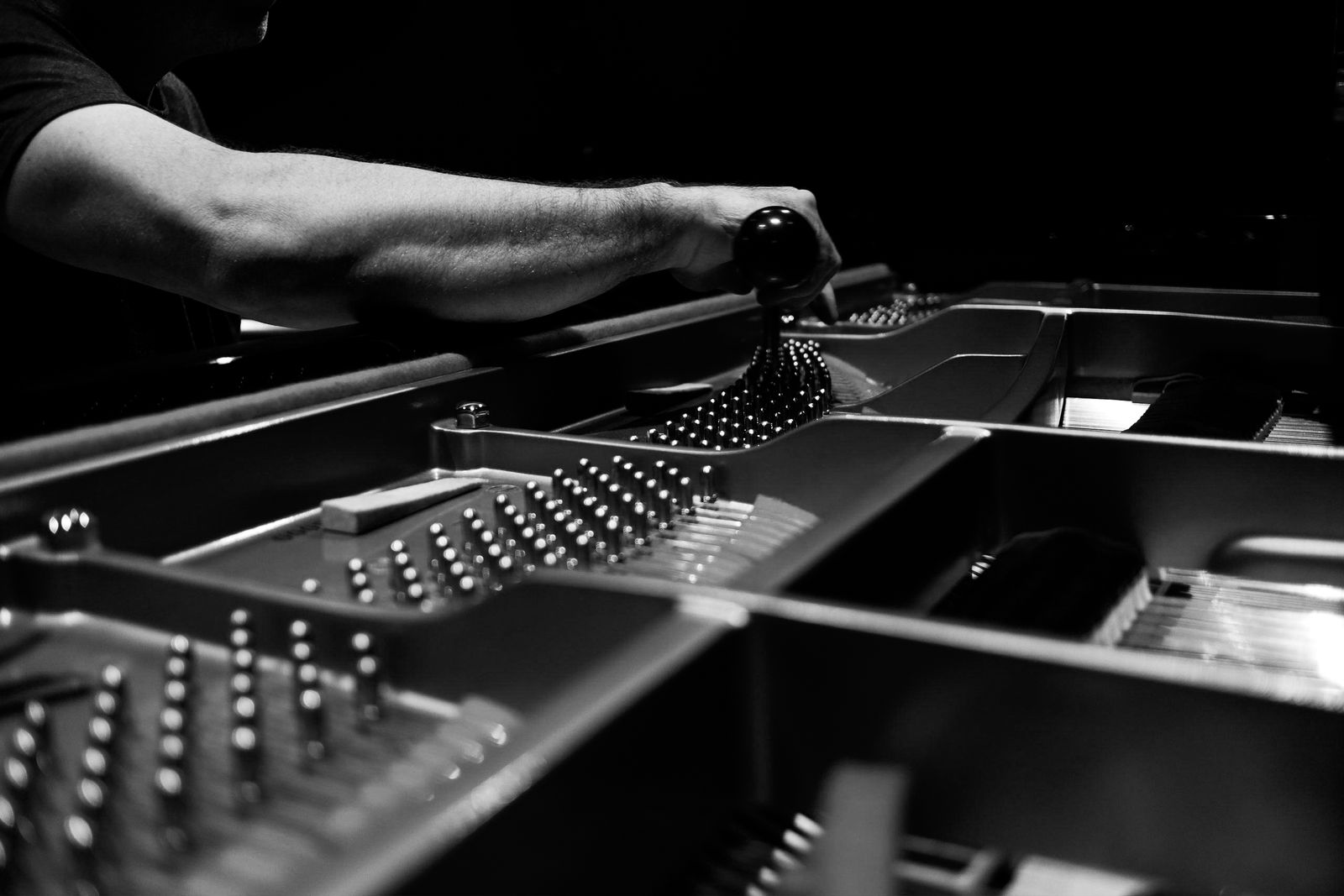
Organs: the budget rules change again
Everything above applies double to organs, with an electronic twist. A home or church organ at $400 to $900 to move professionally is heavy like a piano but fragile like a piece of electronics — and in the case of a pipe organ, it is not one instrument but a building system of pipes, chests and blowers that must be disassembled, catalogued and reassembled by an organ technician, with movers handling transport under that technician's direction. Never let a general crew "take apart" a pipe organ to save the technician's fee; reassembly from an unlabelled pile of pipes is where organ budgets go to die. For electronic organs, the savings logic mirrors digital pianos: padding, keeping the instrument upright and dry, and protecting the pedalboard and speakers matter more than specialist rigging.
A budget plan that actually works
Put it together and the economical piano move looks like this. Decide first whether the piano should move at all, with its value and its future player honestly assessed. If it moves, fold an upright into the household move with a mover who can describe the piano work in writing, or book a specialist for a grand, an organ, stairs or distance. Take the midweek, mid-month date. Prepare both ends yourself and photograph everything. Confirm the coverage for the instrument by name. Store it, if you must, in climate control. And hold back $100 to $300 for the tuner, two to four weeks after it lands.
This site lists 377 piano and organ moving listings, and the specialists among them earn their price the day the staircase turns. Save on the date, the preparation and the combination. Do not save on the crew, the board or the insurance — those are not the expensive parts of a piano move. The expensive part is the piano.
Sources
- ConsumerAffairs, piano moving cost survey of 13 professional movers — local flat rates averaging $275 for an upright and $450 for a grand; household-move upcharges of $75–$150 for an upright and $200–$1,000 for a grand.
- Angi, piano moving cost guide — costs by instrument type, including organs at $400–$900, and weight and crew factors.
- Lugg, piano moving guide — weights, crew sizes and local cost ranges by piano type, from spinet to concert grand.
- MovingPlace, piano moving cost data — local and long-distance ranges by type.
- Thumbtack, piano movers cost data — national average range $269–$472; a Fairfax Station piano mover's published rates and $7-per-step stair charge.
- Jordan River Moving, piano moving guide — stair charges, tuning at $100–$300 after a two-to-four-week wait, climate-controlled storage for pianos.
- Piano Technician Academy, piano moving safety guide — weight distribution, injury and soundboard risks, tuning timing.
- Cal's Moving, piano moving FAQ — organ moving, including pipe organs requiring disassembly by an organ technician.
- Photo by Stanislav Kondratiev, https://www.pexels.com/photo/12214095/
- Photo by Patrick Pecome, https://www.pexels.com/photo/29039292/
- Photo by Royal Moving & Storage, https://www.pexels.com/photo/20706506/
More guides
- How to Hire a Moving Company That Won't Hold Your Furniture HostageMovers › Moving & Storage
- How Much Do Movers Cost? Local vs. Long-Distance Pricing ExplainedMovers › Moving & Storage
- Binding vs. Non-Binding Estimates: The Difference That Decides Your Final BillMovers › Moving & Storage
- Moving Insurance and Valuation: What 'Full Value Protection' Really CoversMovers › Moving & Storage
- Long-Distance Moving: A Start-to-Finish Guide for Household GoodsMovers › Household Goods Moving & Storage
- All Guides & ArticlesBrowse the full guides library