Movers › Heavy Equipment Movers
Prepaying for Heavy Equipment Movers: Packages, Bundles and Gift Cards — When It Pays and When It Traps You
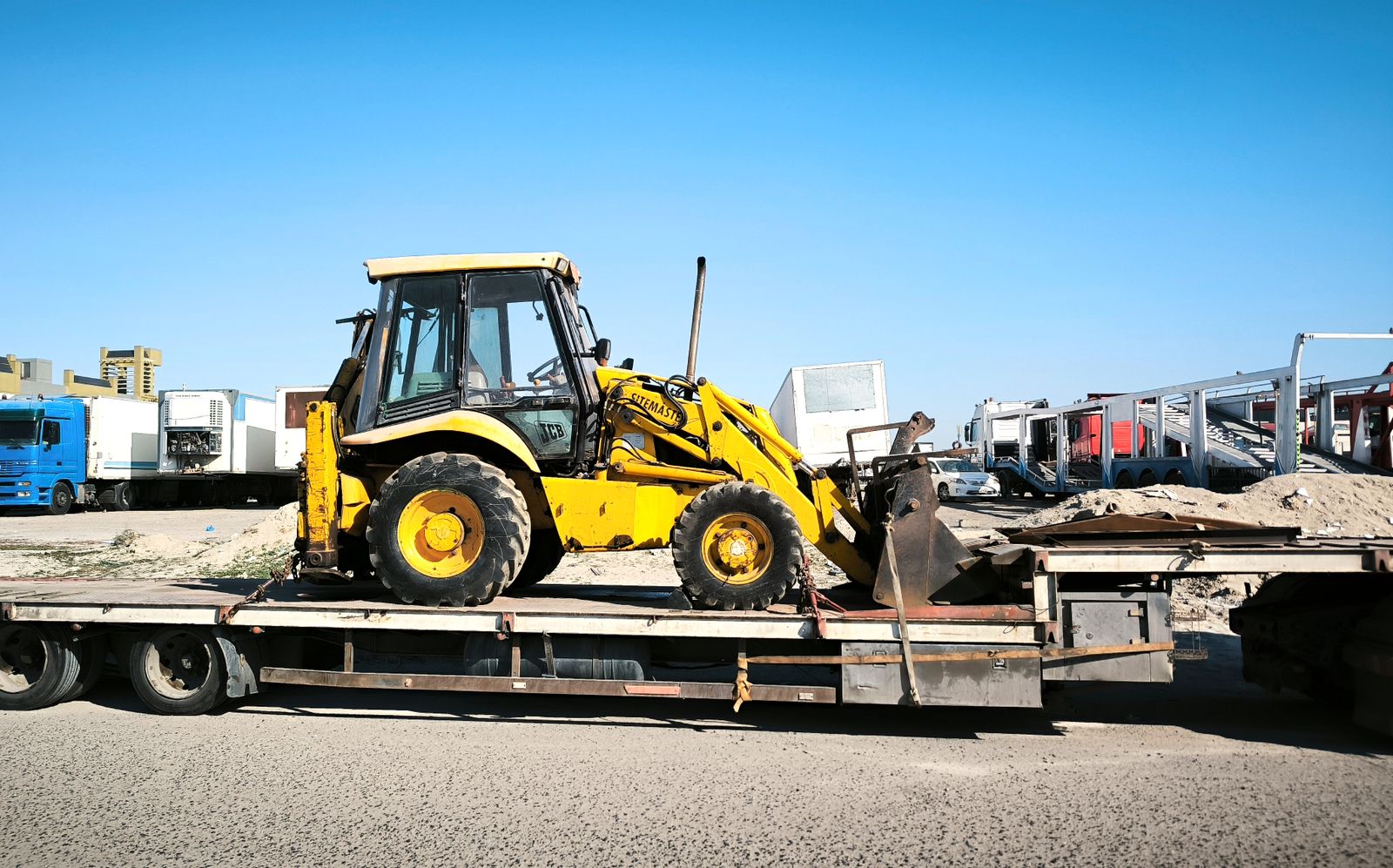
Heavy equipment moving is sold by the job, and the job is never quite the job. A lowboy haul is priced from a per-mile rate, a trailer type, a stack of state permits and, for wide or heavy loads, escort cars billed by the mile. Published 2026 rate guides put legal lowboy loads at roughly $3.50 to $8.00 a mile and oversize or overweight work, all-in, at $5.00 to $15.00 or more — before a crane, a route survey or a day of waiting time enters the picture. Into this proudly bespoke market has wandered a very retail idea: pay in advance. Buy the bundle. Load the gift card. Take the package discount now and move your machines whenever.
Sometimes that is a genuine bargain. More often, in the complaints I read, it is a loan — from you, to a trucking company, unsecured, at a discount that evaporates the first time the job changes. This site lists 2,791 heavy equipment movers; here is how to tell which prepayment offers deserve your money and which deserve a polite decline.
What is actually being sold
Packages bundle several moves — say, four equipment relocations a year for a rental yard, a farm or a small contractor — at a per-move price below the spot rate. Subscriptions sell priority: a monthly or annual fee for guaranteed capacity, a locked per-mile rate, or both. Gift cards and prepaid vouchers sell a dollar balance with one company's name on it, marketed to businesses at a bonus — pay $900, receive $1,000 of hauling.
All three share one structure: your money moves now, the service moves later, and the gap between those two events is where every risk in this article lives.
When prepaying genuinely pays
You move the same machines on the same lanes, repeatedly. A package discount is real when the work is predictable, because predictable work is genuinely cheaper to provide: the carrier already knows the machine's weight and dimensions, the loading sites, the permit profile of the route. If your last four invoices describe the job the package covers, the discount is the carrier sharing a real saving. If they do not, you are buying a discount on a job that will be re-priced at the kerb.
The locked rate covers the volatile lines. A package that fixes only the per-mile linehaul while permits, escorts and fuel float is locking the most stable number and floating the rest. Permits and escorts can add 20 to 50 percent or more to a permitted load's cost, and each escort car alone runs roughly $1.50 to $3.00 a mile. A bundle that honestly fixes the all-in price for a defined load on a defined lane is worth paying for. One that fixes the headline and floats the machinery around it is a coupon, not a contract.
You would pass a credit check you are effectively being asked to skip. Prepaying a financially solid, long-established carrier is a different act from prepaying a two-truck operation with a post-office box. The discount should be compensation for paying early — a few percent for money a few weeks ahead — not a yield that makes you wonder what the money is for. When the bonus starts looking like interest, you are no longer a customer. You are a lender, and an unsecured one.

The traps, in the order they spring
Trap one: the job changes and the credit does not stretch. Heavy haul prices are built per load: legal loads at one rate, oversize at another, superloads — the heaviest class — at $10 to $20 or more a mile with route surveys on top. A bundle priced on your usual legal-size moves may exclude, surcharge or simply not contemplate the day you buy a wider machine. Read the package for its load envelope: maximum weight, width, height, mileage and geography. Outside the envelope, your prepaid balance tends to convert from "moves" into "credit toward a new quote," which is the spot market wearing your money as a hat.
Trap two: expiry and fee rules are worse than you assume. For genuine gift cards and gift certificates, federal law is on your side: money on a card cannot expire for at least five years from purchase or last loading, and inactivity fees cannot start until the card has sat unused for a full year, and then only once a month. But the exclusions matter more than the rule. Promotional and loyalty credits — the "bonus $100" in a pay-$900-get-$1,000 offer is exactly this animal — sit outside the five-year protection and can expire far sooner. Paper-only certificates are excluded too, and a prepaid service package is not a gift card at all: its expiry is whatever the contract says, which in the complaints is often twelve months, in type nobody read. Ask one question of every offer: which part of this balance is a gift card under federal rules, and which part is a contract credit under yours?
Trap three: the company closes, and you queue. The Federal Trade Commission's gift card guidance says it plainly: before buying, consider the financial condition of the issuer, because a card from a company that files for bankruptcy or goes out of business may be worth less than you paid. In a bankruptcy, prepaid customers are generally unsecured creditors — behind the bank, behind the tax authorities, behind the secured lenders who hold the trucks. A company that honoured its vouchers for a decade can be sold, merged or wound down in a quarter, and the new owner's obligation to your balance is a matter of the sale terms, not your receipt. The larger the prepayment and the longer the redemption window, the more of this risk you are carrying for a discount of a few percent.
Trap four: capacity is not actually reserved. A subscription that promises priority booking but does not specify a remedy — a guaranteed slot, a defined response time, a refund trigger — sells a feeling. Peak season in heavy haul is real: spring through fall is when construction and agriculture move at once, and a carrier oversubscribed on paper members has the same trucks as before, now with more people holding promises. If priority matters to you, the contract should say what happens when the priority fails. If it says nothing, the honest reading is that nothing happens.
Trap five: refunds are store credit in a trench coat. Package terms commonly make prepaid balances non-refundable and transferable only with consent. That converts every dispute — the botched pickup, the machine delivered late to a job site — into a negotiation where the carrier already holds your money for the next job. Paying per job, by contrast, keeps the industry's oldest leverage intact: the final portion is paid when the machine is standing where you wanted it.
| Prepay product | When it pays | The trap to read for |
|---|---|---|
| Multi-move package | Same machines, same lanes, repeated work | Load envelope: weight, width, mileage and geography limits that re-price the real job |
| Rate-lock subscription | All-in price fixed for a defined load and lane | Linehaul locked while permits, escorts and fuel float; no remedy if priority fails |
| Gift card / voucher | Small balances, used quickly, solid issuer | Bonus portion is promotional credit outside the five-year federal protection |
| Annual capacity retainer | Genuine peak-season scarcity, contract specifies slots | "Priority" with no guaranteed slot, response time or refund trigger |
The safeguards, if you prepay anyway
Sometimes the deal is right. Then buy it like a creditor, because that is what you are:
- Keep the amount small against your volume. Prepay a quarter's worth of moves, not two years'. The discount difference is trivial; the exposure difference is not.
- Pay by credit card, not wire or cash. Card payments carry dispute rights that a wire does not, and they create a dated, third-party record of what was bought. Never let a discount for paying by wire talk you out of the one protection that survives a closure argument longest.
- Get the envelope in writing. Load limits, lanes, expiry per component — gift-card balance versus promotional credit versus package credit — refund terms, transfer terms, and what happens to your balance if the company is sold or closes. Verbal answers do not redeem.
- Check the carrier like a carrier. Federal registration and insurance for an interstate heavy hauler are verifiable public records. A company soliciting large prepayments while its authority or insurance filings are lapsed is telling you its risk profile in advance.
- Use the oldest credit first and diary the dates. Balances die quietly — a promotional tranche expiring, a package year closing. A simple calendar entry has saved more prepaid money than any negotiation.
- Keep per-job payment for the unusual loads. The oversize, the superload, the new route: those belong on itemised, line-by-line quotes — base hauling, permits, escorts and fuel separated — paid against delivery, not bundled into a balance priced for ordinary work.

The short version
Prepaying a heavy equipment mover pays in a narrow corridor: repeated, predictable work; an all-in price that names permits and escorts; a financially solid carrier; and an amount small enough that losing it would annoy rather than wound you. Outside that corridor, the same products become traps with friendly names — expiring promotional credit, balances that shrink to store credit in a dispute, and an unsecured place in line if the music stops. The spot market's price for a single move is honest in one specific way: you pay it when the machine arrives. Any discount for paying earlier should be weighed against exactly that, and this site's 2,791 heavy equipment movers give you the competing quotes to weigh it with.
Sources
- Federal Trade Commission, "FTC Has Gift Card Tips for Holiday Buying" — establishes that gift card money cannot expire for at least five years, that inactivity fees may begin only after a year of non-use and then only monthly, and that buyers should weigh an issuer's financial condition because a bankrupt or closed business's cards may be worth less than paid.
- LegalClarity, "Do Gift Certificates Expire? Laws, Fees, and Rights" — establishes the five-year federal floor under the Credit CARD Act and that promotional and loyalty cards fall outside the protected categories.
- O Trucking, lowboy and RGN trailer rate guides — establishes 2026 per-mile ranges for legal loads (about $3.50–$8.00), oversize and overweight loads (about $5.00–$15.00 or more), superloads ($10.00–$20.00 or more), escort costs of roughly $1.50–$3.00 per mile per car, and permits and escorts adding 20–50 percent or more to a load's cost.
- Photo by mali maeder, https://www.pexels.com/photo/69483/
- Photo by Tayssir Kadamany, https://www.pexels.com/photo/38095094/
- Photo by R9 Media Photo Collective, https://www.pexels.com/photo/40840366/
More guides
- How to Hire a Moving Company That Won't Hold Your Furniture HostageMovers › Moving & Storage
- How Much Do Movers Cost? Local vs. Long-Distance Pricing ExplainedMovers › Moving & Storage
- Binding vs. Non-Binding Estimates: The Difference That Decides Your Final BillMovers › Moving & Storage
- Moving Insurance and Valuation: What 'Full Value Protection' Really CoversMovers › Moving & Storage
- Long-Distance Moving: A Start-to-Finish Guide for Household GoodsMovers › Household Goods Moving & Storage
- All Guides & ArticlesBrowse the full guides library