Movers › Relocation Services
Relocation Services in a Small Town or Rural Area: Fewer Choices, Different Math, Better Tactics
Most moving advice assumes a city: get five quotes, play companies against each other, book the one with the best reviews. In a small town, that advice collapses on contact. There may be one relocation company within fifty miles, a regional carrier that passes through twice a week, and a national brand whose nearest crew is in a metro you have never visited. This site lists 2,055 relocation services — a big national number that says nothing about how many of them will actually send a truck down your road.
I investigate moving complaints for a living, and the rural files share a pattern. The disaster is seldom a broken table. It is a price that doubled because travel was never priced honestly, a delivery that slipped a week because a rural route runs when it fills, or a deposit handed to a company nobody local had ever heard of. Fewer choices does not mean no power. It means your power moves to different places: the written quote, the routing calendar, and the references in your own county. Here is how the math actually works, and the tactics that work with it.
What "relocation services" even means outside a metro
In a city, relocation services often means a managed, employer-paid package — and those are large numbers: industry benchmarks put average domestic employer packages around $19,000–$24,000 for renters and $73,000–$97,000 for homeowners, with managed domestic relocations commonly landing between $15,000 and $75,000 depending on what is included. Almost none of that machinery exists for a self-funded rural move. For you, "relocation services" is a bundle you assemble yourself: a mover or carrier, maybe a packing crew, maybe storage at one or both ends, a vehicle shipment, and the unglamorous logistics of cleaning, forwarding, and timing two properties that may be hours apart.
That distinction matters for your budget. A relocation management company sells coordination. In a rural move, coordination is the part you can do yourself with a notebook and a phone — and it is the part the complaints show people paying city prices for without receiving. Pay for trucks, labour, and insurance. Coordinate for free.
The different math, line by line
| Cost element | Metro move | Small-town / rural move |
|---|---|---|
| Travel | Often included or a short flat fee | Billed by the hour or mile from the depot — can add hours each way |
| Minimums | Two- to four-hour minimums are common | Higher minimums or day rates to justify the trip |
| Scheduling | Your date, chosen from many crews | The carrier's route day — your date is negotiable, theirs less so |
| Storage | Competitive, many facilities | Scarce; may mean storing in the nearest larger town |
| Backup options | Another company tomorrow | If the one crew cancels, the next option may be a week away |
Travel is the line that decides rural bills. A crew based ninety minutes away that bills travel both ways adds three hours before a single box moves. At typical hourly crew rates, that can rival the cost of the loading itself for a small household. It is not automatically a rip-off — fuel, wages, and a truck's day are real — but it must be in the written quote as a number, not discovered on the invoice as a surprise. In complaint files, "estimates and final charges" is the single largest category by far: one analysis of federal complaint records for 2023–2025 found it in about two-thirds of complaints. Rural travel charges are that category wearing work boots.
Waiting is the second cost, and it is paid in life disruption rather than dollars. Rural and regional carriers consolidate: your household may wait for a route to fill, a delivery window measured in days rather than hours, or a start date chosen by the company's loop through your county. Build slack into everything that depends on the delivery — time off work, the start of a lease, a child's school start — and get the delivery window in writing, with what happens if they miss it.
The tactics that actually work
Buy the route, not the brand. Ask every company the same question: "On which days are your trucks already in my area, and what does my price become if I take one of those days?" A carrier would rather fill an empty return leg than deadhead home. Flexible rural customers routinely get the best effective rate in the market — not by haggling, but by fitting the route that already exists.
Combine forces locally. In small towns, moves cluster: a neighbour selling, a teacher arriving, an estate being cleared. A carrier quoting two jobs in the same area on the same trip splits the travel across both. Ask the company whether it has other work near you around your dates, and ask locally — the hardware store and the church noticeboard know who is moving before any website does.
Shrink the shipment ruthlessly. Distance and volume drive rural pricing harder than anything else. Rural households accumulate — barns, sheds, freezers, project vehicles, the second of everything. Decide what is genuinely travelling before the survey. Selling or gifting heavy, low-value items locally is not tidiness; at rural per-mile and per-pound economics, it is the largest discount available to you.
Use the hybrid structure. Hire professionals for the parts that injure people and break things — loading, driving, unloading the heavy core — and handle the rest yourself: your own vehicle for boxes over several trips, a rented trailer, a storage unit in the destination town as a buffer. Labour-only crews and rental equipment exist precisely for this, and in a rural market the hybrid is often half the full-service price.
Get the survey done properly. For an interstate move, federal rules require a written estimate based on a survey of your goods, a copy of "Your Rights and Responsibilities When You Move," and a choice between Full Value Protection and released value at 60 cents per pound. A virtual survey by video is acceptable and is how most rural surveys should happen — it leaves a record. A quote given over the phone from a room count, with no survey at all, is the opening scene of a very familiar complaint file.

Verifying a company when reviews are thin
Rural companies have small review footprints — a good local mover may have eleven reviews because their town has 900 people. Verify differently:
- Federal record first. For any move crossing a state line, look up the USDOT number in the FMCSA's public systems and check the complaint history in the National Consumer Complaint Database. The reassuring national context: in that 2023–2025 federal analysis, more than eight in ten registered movers had no complaints at all, and a small minority of companies generated half of all complaints. You are not choosing between good and bad industries; you are avoiding a short, identifiable list of bad actors.
- Carrier or broker — make them say which. A broker sells your move to someone else; a carrier performs it. Federal data shows companies owning no trucks are heavily over-represented in complaints. In a rural move, where you cannot easily supervise a substitution, knowing whose truck is coming is not a detail.
- Local references over internet stars. Ask for two customers in your county from the last season, and call them. Ask about the final bill versus the quote and about the delivery window. In a small market, a company that will not name local references is declining the only audit that matters.
- Insurance and valuation in writing. What is covered, at what value, with what deductible, and what does the upgrade to full-value protection cost? Rural routes are long; long routes are where damage claims live.
Deposits, paperwork, and the red flags that travel well
The complaint files agree on the warning signs, and they are the same in a village as in a city: a large cash deposit demanded before any survey; a quote far below every other on an identical inventory; blank or incomplete documents you are asked to sign; a company that will not provide a physical address; and pressure to decide today because "the truck is in your area tomorrow" — a line that weaponises the real rural routing logic described above. Legitimate routing flexibility is offered as a saving with dates and numbers attached. The scam version is offered as urgency with neither.
Keep your own file from day one: the survey, the written estimate, the bill of lading, the inventory, every message about dates and travel charges. If a dispute comes, that file — not your memory of a phone call — is what a state consumer-protection office, the FMCSA complaint process, or an arbitration programme can act on. For loss or damage on an interstate move, the federal claim window is nine months; do not let a rural delivery's slow paperwork eat it.

A realistic rural plan, on a tight budget
Put together, a budget rural relocation usually looks like this: a video survey and a written, itemised quote that names the travel charge; a move date chosen from the carrier's existing route days, even if it is four days off your ideal; a shipment edited down before the survey, not after; your own vehicle or a rented trailer absorbing the light, bulky overflow; storage, if you need it, priced in the destination town rather than assumed; and a delivery window in writing with slack in your own calendar around it. None of that requires five competing quotes. All of it is available in a market with one good company — and most of it is free.
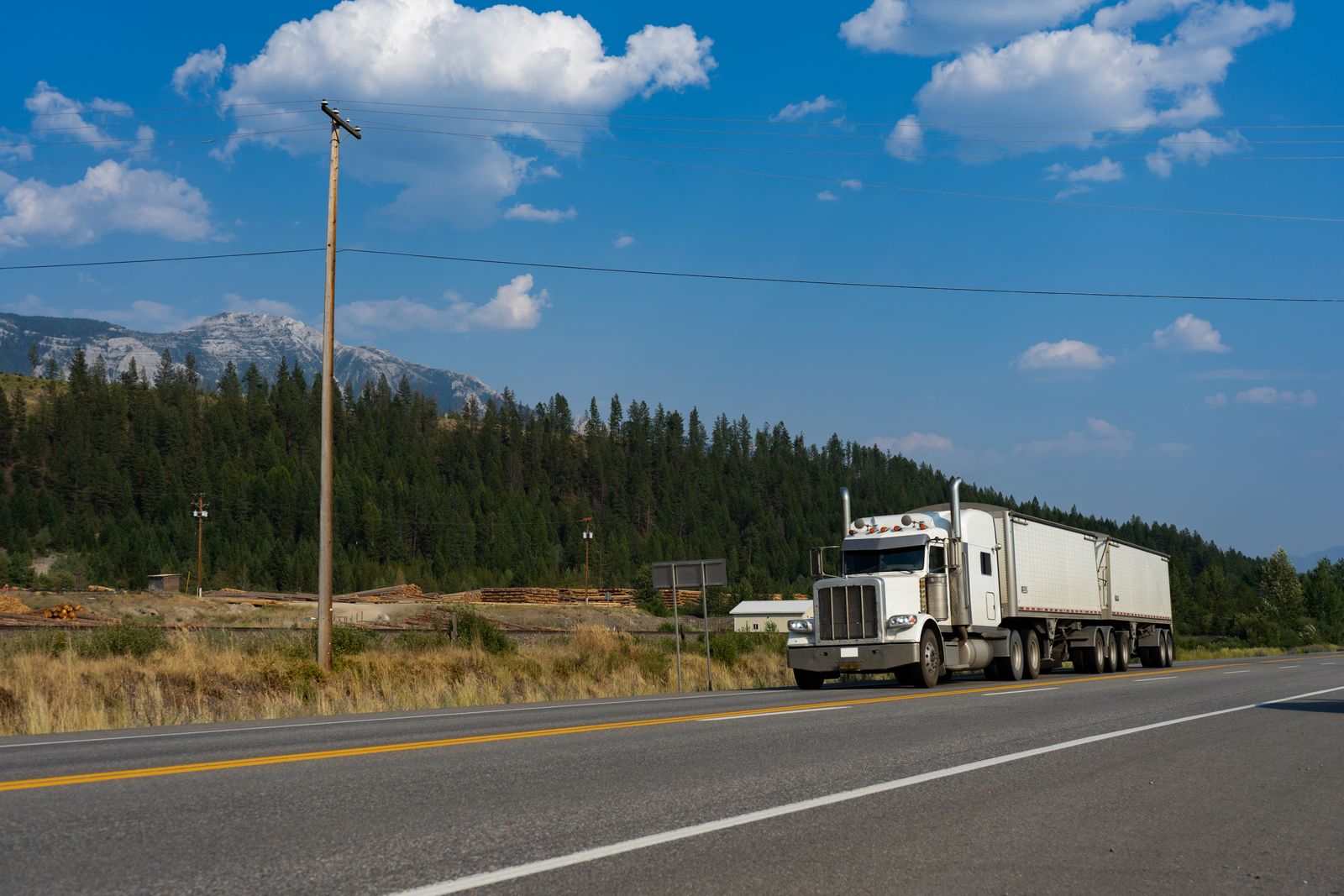
Fewer choices changes the math, but it does not have to change the outcome. The city customer wins by comparison-shopping. The rural customer wins by fitting routes, shrinking shipments, verifying through federal records and local voices, and refusing to let travel, timing, or deposits stay vague. This site lists 2,055 relocation services; your job is narrower and more achievable — find the one or two that truly serve your road, and hire them on terms written down clearly enough that a complaint investigator, if it ever came to that, would have nothing to investigate.
Sources
- USMPO analysis of FMCSA National Consumer Complaint Database records — 5,359 registered movers, 8,492 complaints in 2023–2025, estimates/final charges in about 66 percent of complaints, 82.7 percent of movers with no complaints, and 66 companies accounting for half of all complaints.
- FMCSA, "Your Rights and Responsibilities When You Move" and Protect Your Move — written estimates based on a survey, USDOT registration checks, valuation choice, complaint hotline and database.
- Move.org, employer-paid move guide, citing ARC and CapRelo benchmarks — average employer relocation packages of roughly $19,309–$24,216 for renters and $72,627–$97,116 for homeowners.
-
Gullie, relocation package cost guide — typical domestic packages of $15,000–$75,000, with most standard managed moves between $15,000 and $40,000.
-
Photo by cottonbro studio, https://www.pexels.com/photo/family-unpacking-after-moving-4569340/
- Photo by Artem Podrez, https://www.pexels.com/photo/man-carrying-boxes-beside-a-van-5025669/
- Photo by Braeson Holland, https://www.pexels.com/photo/a-truck-on-the-road-8994766/
More guides
- How to Hire a Moving Company That Won't Hold Your Furniture HostageMovers › Moving & Storage
- How Much Do Movers Cost? Local vs. Long-Distance Pricing ExplainedMovers › Moving & Storage
- Binding vs. Non-Binding Estimates: The Difference That Decides Your Final BillMovers › Moving & Storage
- Moving Insurance and Valuation: What 'Full Value Protection' Really CoversMovers › Moving & Storage
- Long-Distance Moving: A Start-to-Finish Guide for Household GoodsMovers › Household Goods Moving & Storage
- All Guides & ArticlesBrowse the full guides library