Movers › Car Storage
Reviews of Car Storage Providers, Read Properly: Separating Signal From Noise
Car storage reviews have a peculiar shape, and if you do not know why, you will misread them. A customer can store a car for six months and have almost nothing happen — that is the product working — so the reviews cluster at the two ends of the experience: the booking, which was easy or was not, and the pickup, which is where the truth comes out. The dead battery, the flat-spotted tires, the scratch nobody photographed at intake, the rodent nest under the hood, the bill that grew fees like barnacles: all of it is discovered in one bad half-hour at the end, and all of it gets written up that night.
If you are a renter between leases, storing a car because the new place has one space and you have two cars, or because the move itself has left the car behind for a season, you cannot afford that half-hour. This site lists 458 car storage providers. Their reviews are a usable map — if you read them for the moments that predict your pickup, and ignore the considerable noise around them.
Read backwards: start at pickup
For most services, reviews are best read in chronological order of posting. For car storage, read them in order of the story: find the reviews that describe collecting the car, and start there. Pickup reviews are the only ones that can tell you:
- Whether the car started. Repeated dead-battery stories mean there is no tender program, whatever the website says about battery maintenance. One dead battery after eight months is physics. Four in a year of reviews is a system.
- Whether the car was as it was left. Damage disputes live or die on the intake record. Reviews that say "they photographed everything when I dropped it off, so the dent was settled in five minutes" and reviews that say "no photos, no record, just an argument" describe two different companies wearing similar websites. Weight the first kind heavily in a facility's favor; it is the sound of a process working.
- Whether the bill matched the quote. Storage pricing commonly steps up after an introductory period, and fees accumulate around late payment, retrieval, and administration. Pickup reviews are where "my $120 space was $214 by month three" gets documented, with numbers. Numbers in reviews are gold: specific, checkable, and hard to fake convincingly at scale.
- Whether getting the car back was easy. Notice periods ignored, cars blocked in, gates that would not open, a retrieval that took a week of calls. Between leases, your retrieval date is often the day you finally have a driveway again. A facility casual about giving cars back is a risk aimed directly at you.
Booking reviews, by contrast, mostly tell you the sales process was pleasant. Of course it was. Nobody has your car yet.

Sort the complaints into car, place, and paper
Dispatch taught me to sort fast. Every car storage complaint you will ever read belongs to one of three piles, and each pile predicts a different part of your experience.
The car pile — dead batteries, flat spots, rodent damage, moldy interiors, a cover that scratched the paint, fluids never checked. This pile measures whether the facility maintains stored cars or merely parks them. It matters in proportion to your storage length. For three weeks between leases, almost any dry, secure space will do, and a rodent story from a two-year storage should barely move you. For six months, this pile is the review section. Look for whether the facility's routine — tenders, tire checks, periodic starts at the premium tier — shows up in reviews unprompted. Satisfied long-term customers mention the tender. It is a small detail nobody invents.
The place pile — a roof leak over the cars, flooding in the lot, a break-in, a gate broken for a month, outdoor cars under trees dropping sap, an indoor space that turned out to be a shared, dusty warehouse. This pile measures the building and the security, and its reviews age slowly: a facility that flooded in 2023 may have fixed its drainage, or may flood every spring. Read the dates, and read the company's reply for what was actually done.
The paper pile — rate step-ups nobody mentioned, fees at retrieval, insurance confusion after an incident, a lien threat over a disputed month, an account sent to collections while the customer was abroad. This pile measures the office, and for a renter between leases it may be the most important of the three, because your address, your mail, and possibly your attention are all in transit at exactly the moment a billing dispute would need them. Reviews describing clear written terms and a human who resolved a billing problem are worth more than a page of praise for the gate.
Complaints that belong in no pile: the facility would not store an unregistered, uninsured car (that is the rules working); the customer's car was towed after months of non-payment described as if it were theft (read the company's reply); the outdoor lot was hot in August. Note them, discount them, move on.
The noise: patterns that should carry no weight
The star average across platforms. Expect disagreement. A provider can hold a strong average on one platform and a miserable one on a complaints board, because the two collect different populations — ordinary customers in one place, the furious in the other. Neither is lying; both are incomplete. The shape of the distribution tells you more than the average: lots of fours and fives, a thin line of specific ones, and few twos and threes is a healthy business. A wall of fives with a cliff down to furious ones suggests two different realities — often a good facility with one terrible practice, which the one-star reviews will usually name consistently. Read for the name.
Generic praise. "Great place, great people, highly recommend," with no car, no duration, and no pickup in it, is weather, not climate. Real storage satisfaction has a texture: "Six months, car on a tender the whole time, started first turn, they had it washed and waiting when I gave them two days' notice." That review was written by a person whose car came back well. It is worth ten of the other kind.
The storage that never happened. A surprising share of one-star storage reviews are about booking, price shopping, or a unit rented for furniture, not a car. Filter mentally for reviewers who actually stored a vehicle, for a duration like yours, in a space like the one you are considering — indoor reviews do not predict an outdoor lot, and a collector facility's reviews do not predict its budget annex.
Bursts, in either direction. A run of five-star reviews in a single week, praising staff by names that appear nowhere else, after months of quiet. A sudden cluster of one-stars mentioning a competitor. Both are marketing wearing a costume. Treat a burst as a reason to widen your reading, not as evidence about the facility.
Fakes are common enough that the law now has a rule for them
This is not cynicism; it is arithmetic. Trustpilot reported removing 4.5 million fake reviews in 2024, 7.4 percent of everything submitted. A study of roughly 73 million reviews across home services, legal, and medical businesses estimated 13.7 percent were inauthentic, and car storage sits inside the home-services economy that study measured.
Since October 21, 2024, the Federal Trade Commission's rule on consumer reviews and testimonials has made the practices behind those numbers illegal for businesses: no creating, buying, or selling fake reviews, including AI-generated ones; no incentives offered for positive sentiment; no undisclosed reviews from insiders; no suppressing honest negative reviews. Violations carry civil penalties of up to $51,744 per violation. For you as a reader, the rule's practical value is a character test: a small storage operator who buys praise is telling you, in advance, how a damage claim will be handled. Believe them.
The rule does not scrub the platforms clean in real time. Your scrubbing method is unglamorous and effective: sort by recent, read the pickup stories, weight numbers and specifics, and treat volume as the least informative thing on the page.
| Review pattern | What it usually means | How much weight to give it |
|---|---|---|
| Repeated dead-battery or rodent stories across seasons | No real maintenance routine, whatever the website claims | Heavy for storage over two months; light for a few weeks |
| Damage dispute settled fast because intake photos existed | A documented intake process that protects customers | Heavy, in the facility's favor |
| Pickup bills higher than quotes, with figures given | Rate step-ups or fees that were not made clear at booking | Heavy — ask for the full fee schedule before you book |
| Retrieval delays, cars blocked in, unanswered calls at pickup | Weak operations at the exact moment you will need them | Heavy if your dates are fixed, as renters' dates usually are |
| Short generic five-star praise, arriving in bursts | Possibly incentivized or purchased; at best, empty | Almost none |
| Angry review from someone who never stored a car there | A sales or pricing dispute, not a storage experience | None on storage quality |
Read the replies, then make one phone call
A facility's replies are its dispute process, published. The good pattern: the failure is named, the record is referenced ("our intake photos from March show…"), a remedy or a direct phone number is offered. The bad patterns: a template with the name swapped in; an argument conducted in public; replies under every five-star review and silence under the detailed ones. Silence under a specific, dated complaint about a leak or a break-in is itself a review — of the office.
Then verify the best story and the worst story with a single call. Ask: Is my car put on a battery tender, and is that in the contract? What photographs do you take at intake? What is the rate after any introductory period, and what are all the fees, in writing? How much notice for retrieval, and who besides me may collect the car? A facility whose answers match its good reviews has earned your car. A facility whose answers dodge what its bad reviews describe has confirmed them, free of charge.
One more cross-check takes two minutes: for facilities large enough to have one, look at the Better Business Bureau complaint record — not the grade, but whether complaints were answered and closed. Storage complaints are inevitable over years of operation. Answered ones are a business. Unanswered ones are a warning.
Between leases, match the reviewer to your situation
Your storage is probably short, date-bound, and attached to a move — which makes you a specific kind of customer, and other reviewers' experiences transfer to you unevenly. The long-term collector's review tells you about maintenance culture, which matters some. The snowbird's review tells you about retrieval after months away, which matters more. The review from someone who stored between apartments, needed the car back on a fixed Friday, and either got it washed and waiting or got a week of voicemail — that review is addressed to you personally. Read it twice.
And hold the whole exercise to a half hour. Two or three facilities that actually serve your area, ten pickup reviews each, the replies, the BBB record, one call. That is the entire method, and it will reliably separate a facility that returns cars well from one that merely rents space confidently. In car storage, the return is the product. Read for it.
Sources
- Federal Trade Commission, Rule on the Use of Consumer Reviews and Testimonials — establishes the ban on fake, purchased, and AI-generated reviews, sentiment-conditioned incentives, undisclosed insider reviews, and review suppression, effective October 21, 2024, with civil penalties of up to $51,744 per violation.
- Trustpilot transparency reporting — establishes that 4.5 million fake reviews were removed in 2024, 7.4 percent of submissions.
- Transparency Company study of home-services, legal, and medical reviews — establishes an estimated 13.7 percent inauthentic share across roughly 73 million reviews.
- AAA and State Farm long-term storage guidance — establish the maintenance facts reviewers' stories are judged against here: battery drain within weeks, tire flat-spotting, and comprehensive coverage for stored cars.
- Better Business Bureau complaint records for vehicle storage providers — establish the answered-versus-unanswered complaint cross-check for storage businesses.
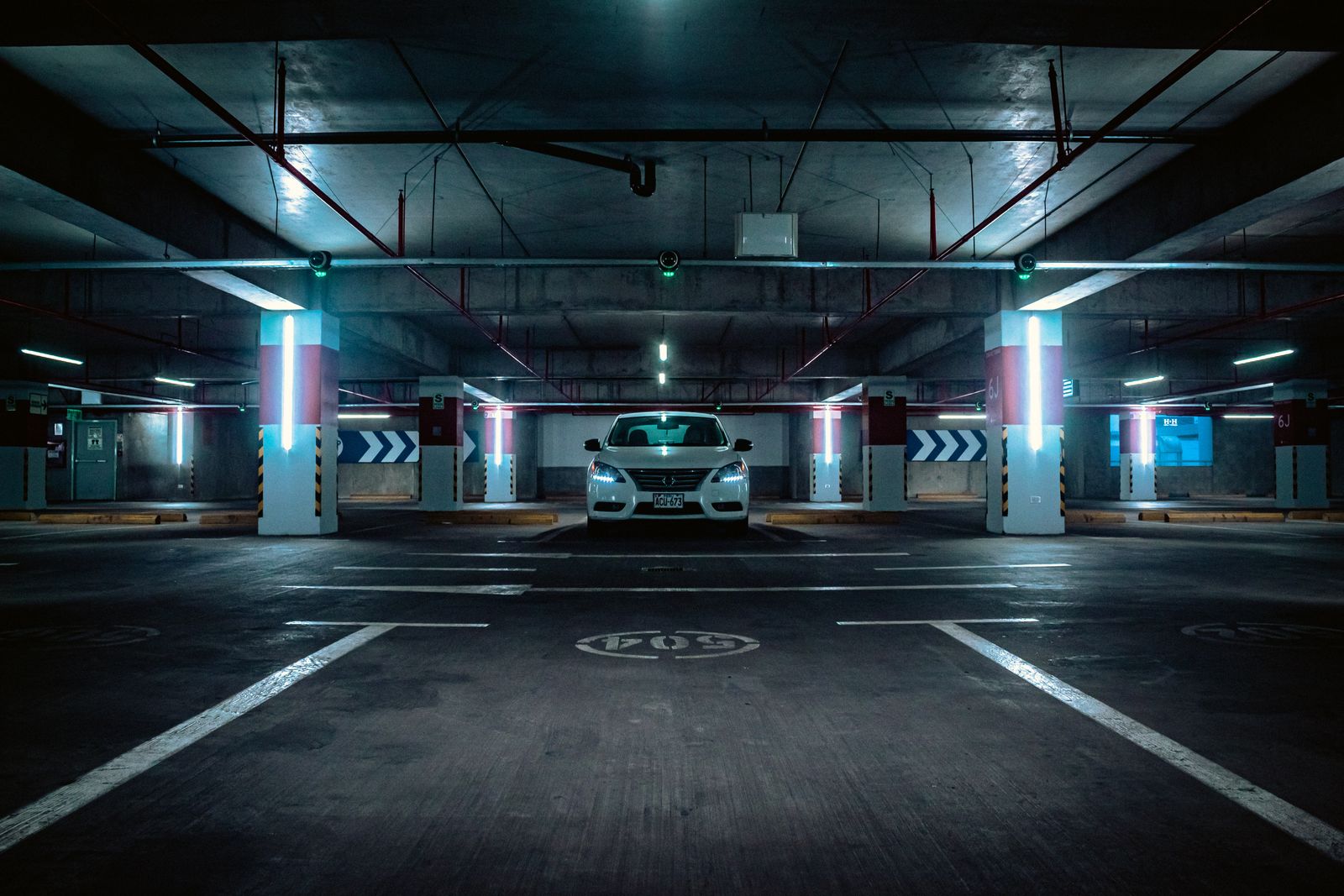
Photo credits: Sports car in a garage — photo by Erik Mclean on Pexels. Cars in an underground garage — photo by Joaquin Delgado on Pexels.
More guides
- How to Hire a Moving Company That Won't Hold Your Furniture HostageMovers › Moving & Storage
- How Much Do Movers Cost? Local vs. Long-Distance Pricing ExplainedMovers › Moving & Storage
- Binding vs. Non-Binding Estimates: The Difference That Decides Your Final BillMovers › Moving & Storage
- Moving Insurance and Valuation: What 'Full Value Protection' Really CoversMovers › Moving & Storage
- Long-Distance Moving: A Start-to-Finish Guide for Household GoodsMovers › Household Goods Moving & Storage
- All Guides & ArticlesBrowse the full guides library