Movers › Storage Trailers & Containers
Reviews of Storage Trailers and Containers Providers, Read Properly: Separating Signal From Noise
Dispatch teaches you how to read reviews, because dispatch lives inside them. When a one-star review said "they never showed up," I often knew the fuller story: the truck had showed up, at a house with a gate the customer swore was wide enough, in the rain, and left. When a five-star review said "perfect, flawless, best company ever," I also knew something: nobody talks like that about a steel box.
If you are a renter between leases — a closing that slipped, a landlord who sold, a new place that is not ready — you do not have time to become a review scholar. You need a container, on a date, at a price you can defend. This site lists 495 storage trailers and containers providers, and their reviews range from genuinely useful field reports to material that should carry no weight at all. Here is how to tell one from the other, quickly, the way someone who has been on the other end of the phone reads them.
Start with the complaints, and sort them by what they predict
Five-star reviews tell you a company can do the job. One- and two-star reviews tell you how it fails — and failure mode is what you are actually shopping against, because your move will stress the same joints.
Read the low reviews and sort every complaint into one of three piles:
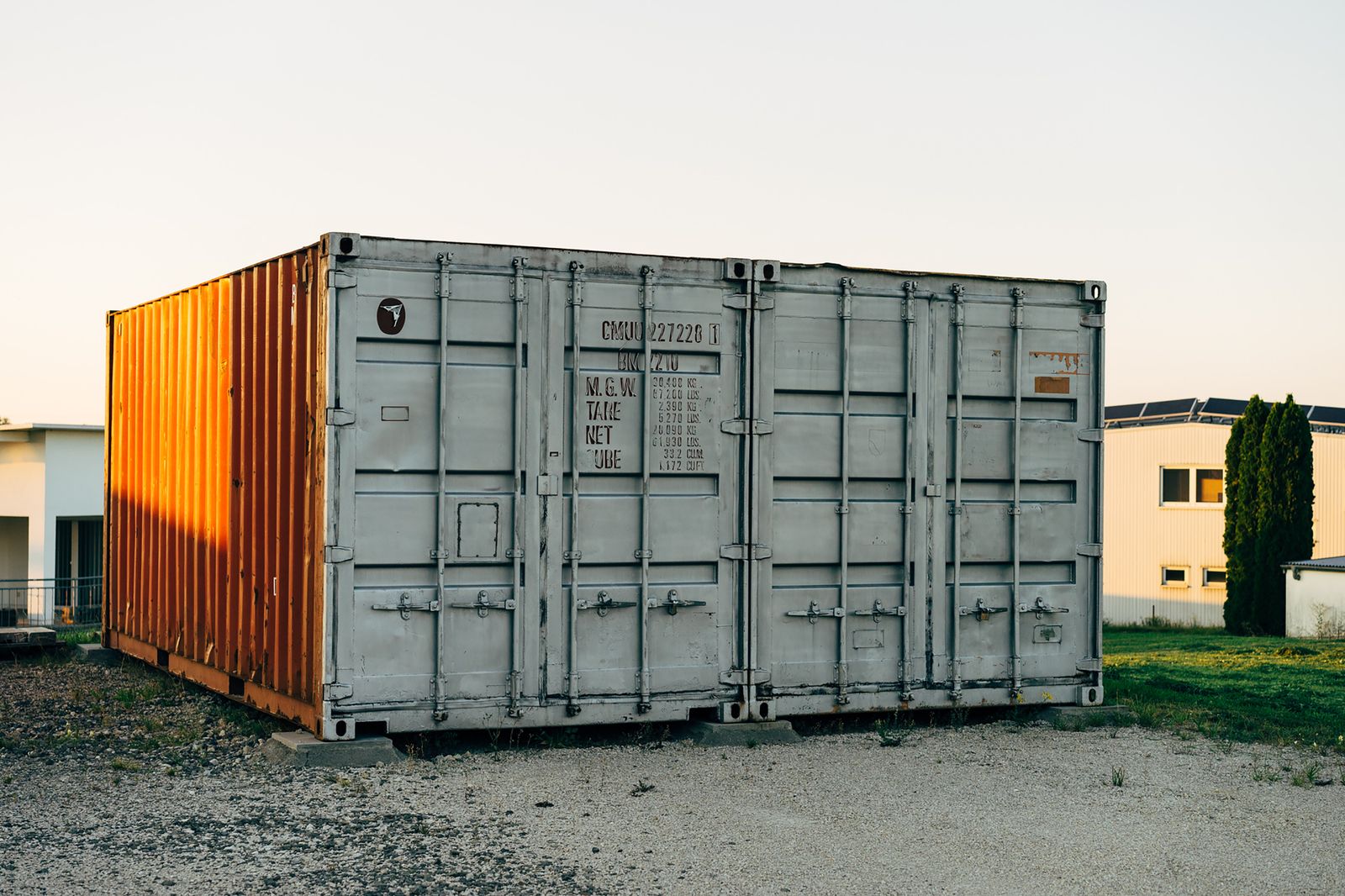
Pile one: the box itself. Leaks. Doors that would not seal. A unit that arrived dirty, with debris or broken glass inside. A grade problem — the customer paid for cargo-worthy and received a rougher wind-and-watertight box with daylight visible through the frame. For storage that will sit through weather with your furniture inside, this pile matters most, and it matters in proportion to how long you will store. A leak complaint from a three-day rental is a nuisance story. The same complaint repeated across seasons is a maintenance story, and maintenance is a choice the company makes every week.
Pile two: the calendar and the road. Late delivery. Pickup that took two weeks longer than promised. A unit collected late and billed as another month. Placement that tore up a lawn or clipped a garage door because nobody confirmed the approach. Between leases, this is your pile: you have a hard date to be out and a soft date to get in, and a provider who is casual about pickup scheduling will charge you rent for their delay. Look for specifics — "promised Tuesday, came Friday, charged for the extra month" predicts your experience far better than "terrible service."
Pile three: the phone. Hours on hold. Template replies. A refund that required four calls. This pile predicts what happens if piles one or two happen to you. Every container company has a bad week; the reviews that describe being made whole — slowly, grudgingly, or not at all — are the truest picture of the company you are hiring.
What does not belong in any pile: complaints about things the customer controlled. The box was too small for a four-bedroom house (a 20-foot container holds what it holds). The city ticketed a container the customer placed on the street without a permit. The customer's own lock froze. Read those, note them, and discount them — then notice whether the company replied with help or with blame, because that reply is data too.
The patterns that mean nothing
Some review patterns feel informative and are not. Learn to walk past them.
The star average, alone. A 4.6 and a 4.2 can describe the same company on different platforms, because platforms draw different customers. Complaint sites attract the furious — it is normal for a provider to sit near two stars on a complaints board while holding four and a half across thousands of ordinary reviews elsewhere. Neither number is the truth. The distribution is closer: a healthy provider has a thick band of fours and fives, a thin band of ones with specific stories, and very few twos and threes. A strange shape — floods of fives, a cliff, then furious ones — is itself a finding.
The generic rave. "Great service, highly recommend, will use again," posted by a first-name-only reviewer with no detail, predicts nothing. Real satisfaction is specific and usually a little grudging: "Driver got the 20-footer into a tight side yard without touching the fence. Box was clean. Pickup took nine days, which they warned me about." Grudging and specific beats glowing and vague every time.
The single catastrophe. One detailed disaster can be true, important, and still unrepresentative — a subcontracted driver, a depot in transition, a week when two trucks were down. It becomes representative when you find its cousins: the same failure, in different words, from different towns, across different months. Three is a pattern. One is a warning to ask a question, not a verdict.
Review bursts. A cluster of five-star reviews in a single week after months of quiet — especially reviews that praise an employee by a name no other review mentions — deserves suspicion. So does a sudden run of one-stars that all mention a competitor by name. Both happen. Both are marketing, in opposite directions.
The fake problem is real, regulated, and still your problem
You are not imagining the fakery. Trustpilot reported removing 4.5 million fake reviews in 2024 alone — 7.4 percent of everything submitted to it. One study of roughly 73 million reviews across home services, legal, and medical businesses estimated 13.7 percent were inauthentic. Storage and moving sit squarely in the home-services world those numbers describe.
Since October 21, 2024, fake reviews have also been plainly illegal in the United States. The Federal Trade Commission's rule on consumer reviews and testimonials bans businesses from creating, buying, or selling fake reviews — including AI-generated ones — from offering incentives conditioned on positive sentiment, from using undisclosed insider reviews, and from suppressing honest negative reviews. Violations carry civil penalties of up to $51,744 per violation. That rule helps you in one specific way: it makes the patterns above — bursts, incentives, suppression — worth reporting and worth treating as a character test. A small container company willing to buy reviews is telling you how it will handle your damage claim.
What the rule does not do is clean the platforms for you in real time. So do the cleaning yourself, with the cheapest tool there is: sort by most recent, read the middle, and weight detail over volume.
| Review pattern | What it usually means | How much weight to give it |
|---|---|---|
| Specific complaint about leaks or grade, repeated across months | A maintenance or grading problem, not bad luck | Heavy — this predicts your stored goods' safety |
| Pickup delays and extra-month billing, in reviewers' own numbers | Scheduling is loose and billing follows the calendar, not the service | Heavy if you are between leases on fixed dates |
| Placement damage with photos, company replies with a template | Subcontracted or rushed delivery; weak accountability | Moderate to heavy — ask who actually delivers |
| Short, generic five-star praise in a burst | Possibly incentivized or purchased; at best, uninformative | Almost none |
| One detailed disaster, no similar reviews around it | A real bad job, possibly an outlier | Light — turn it into a question, not a verdict |
| Angry review about box size, street tickets, or the customer's own lock | Customer-controlled problem | None on the provider; note the company's tone in reply |
Read the company's replies like an interview
The reply column is the most underread part of any review page, and for a dispatch veteran it is the first place to look. A good reply names the failure, states what was done, and gives a working way to reach a human. A bad reply is a template with the reviewer's name pasted in. A worse reply argues, blames the customer in public, or — the true tell — appears under the praise and never under the complaints.
Also watch what companies do not reply to. Silence under a detailed, photograph-supported complaint about a leaking box is a decision. Companies that suppress or ignore the hard reviews while polishing the easy ones are showing you their dispute process in advance.

Cross-checks that take ten minutes
Reviews are one witness. Before you book, call two more.
Check the complaint record, not just the star record. The Better Business Bureau's files and, for companies that also move household goods across state lines, the Federal Motor Carrier Safety Administration's complaint database let you see whether complaints were answered and resolved, which is a different question from whether they exist. Every busy provider accumulates complaints. The ones who answer and close them are measurably different from the ones who let them age.
Ask for the grade in writing, then check reviews against it. Container condition has a shared language — one-trip at the top, then cargo-worthy, then wind- and watertight. If reviews repeatedly say the delivered box was a grade below the paid grade, believe the pattern and either choose another provider or get the grade, with photographs of the actual unit, confirmed before dispatch.
Call, and time the phone. You will need this company on your worst day, not your best. A ten-minute call before booking tells you whether a human who knows your county answers, whether delivery and pickup dates are given plainly, and whether the total — rent, both truck trips, taxes, fees — is quoted as one number or dripped out line by line. Reviews that complain about hold times and drip pricing are easy to test in advance. Test them.
Match the reviewer to yourself. A contractor reviewing a 53-foot storage trailer for a job site and a renter reviewing a 16-foot portable unit between apartments are reviewing different products from, often, different depots of the same brand. Filter for reviews that mention your use: storage duration like yours, a delivery like yours, a pickup that mattered. A national brand's reviews are really dozens of local operations wearing one logo; the depot that serves you is the company you are hiring.
A working method, start to finish
Put it together and the whole job takes about half an hour:
- Pick two or three providers who actually serve your address — coverage first, stars second.
- For each, read the ten most recent one- and two-star reviews and sort the complaints into box, calendar, and phone.
- Read five recent fours. Look for grudging specifics about the driver, the placement, and the pickup warning.
- Read the company's replies to the hardest complaints. Template or ownership?
- Check the BBB or federal complaint record for answered-versus-ignored.
- Call. Ask for the full-period total, the grade, the pickup notice period, and how long pickup really takes in your area. Compare the answers with what the reviews predicted.
When the call and the reviews agree, you have found signal. When a charming quote contradicts a year of pickup complaints, believe the year.

The point of reading properly
Reviews will not find you a perfect container company, because there is not one — there are companies whose failures are rare, honestly described, and made right, and companies whose failures are a business model with good marketing on top. Between leases, with your household in a steel box and two deadlines pressing from opposite directions, that distinction is the entire purchase. Read for failure modes, weight the specific over the glowing, check the replies, and make one phone call. Half an hour of reading properly is the cheapest insurance in the whole move.
Sources
- Federal Trade Commission, Rule on the Use of Consumer Reviews and Testimonials — establishes the ban on fake, purchased, and AI-generated reviews, sentiment-conditioned incentives, undisclosed insider reviews, and review suppression, effective October 21, 2024, with civil penalties of up to $51,744 per violation.
- Trustpilot transparency reporting — establishes that 4.5 million fake reviews were removed in 2024, 7.4 percent of submissions.
- Transparency Company study of home-services, legal, and medical reviews — establishes an estimated 13.7 percent inauthentic share across roughly 73 million reviews.
- Better Business Bureau and Trustpilot customer reviews of portable container providers — establish the recurring complaint patterns used here: leaking and dirty units, grade delivered below grade paid, placement damage, pickup delays billed as extra months, and template company responses.
- Federal Motor Carrier Safety Administration, National Consumer Complaint Database — establishes a cross-check for complaints against interstate household-goods carriers and whether they were resolved.
Photo credits: Shipping containers — photo by Markus Winkler on Pexels. Family packing — photo by cottonbro studio on Pexels. Mover carrying boxes — photo by Artem Podrez on Pexels.
More guides
- How to Hire a Moving Company That Won't Hold Your Furniture HostageMovers › Moving & Storage
- How Much Do Movers Cost? Local vs. Long-Distance Pricing ExplainedMovers › Moving & Storage
- Binding vs. Non-Binding Estimates: The Difference That Decides Your Final BillMovers › Moving & Storage
- Moving Insurance and Valuation: What 'Full Value Protection' Really CoversMovers › Moving & Storage
- Long-Distance Moving: A Start-to-Finish Guide for Household GoodsMovers › Household Goods Moving & Storage
- All Guides & ArticlesBrowse the full guides library