Movers › Self Service Moving & Storage
Self-Service Moving and Storage by Season: When to Book, When to Wait, and What Timing Changes
Self-service moving — the rental truck, the portable container, the storage unit you load yourself — sells itself on control. You choose the equipment, you set the pace, you do the lifting. What the brochures underplay is that you also absorb the industry's calendar. A full-service mover caught in the summer crush sends you a tired crew; a self-service customer caught in the same crush may find there is no truck in the county, the container company is quoting three weeks out, and the storage facility's last 10×10 just rented at a price that would have embarrassed it in February.
The good news, especially for downsizers — the readers I most often hear from, and the one group whose move is usually planned months ahead rather than forced by a lease — is that timing is the one variable entirely in your hands. Allied Van Lines puts it plainly: roughly 60–80 percent of household moves happen between May and September. Everything in the self-service market — price, availability, quality — bends around that single fact. This guide maps the year, season by season, and shows where a flexible calendar converts directly into money.

The shape of the year
Moving demand is not a gentle wave; it is a cliff with a plateau. The plateau runs May through September, with June, July, and August at the top — July is generally the single busiest month. The cliff drops after Labor Day, keeps falling through the holidays, and bottoms out in January and February, the two quietest months of the year. Prices follow the same contour. Industry guides put peak-season premiums at roughly 15–35 percent over off-peak for full-service carriers, and the self-service market swings at least as hard, because its prices are more openly dynamic: rental trucks and containers are repriced as local inventory tightens, sometimes daily.
Storage follows its own version of the same calendar, delayed and damped. StorageAtlas's index of nearly 6,000 facilities puts a standard 10×10 unit at about $99 a month nationally, and notes that demand peaks May through August, pushing prices 10–20 percent higher in competitive markets, with November through February the lowest-price window. Industry pricing data tells the same story from the operator's side: street rates have peaked in July and declined month-over-month from September onward. The storage decision and the moving decision are linked — the month you move is usually the month you rent the unit — so a summer move tends to buy both products at their annual high.
| Season | Truck & container availability | Storage market | What it means for a downsizer |
|---|---|---|---|
| Peak: Jun–Aug | Tightest; book 8–12 weeks out; one-way trucks scarce on popular routes | Highest street rates; move-in specials scarce; popular sizes sell out | The worst month to start a staged downsize; the price of urgency |
| Shoulder: Apr–May, Sep–Oct | Good in April, tightening in May; loosening fast after Labor Day | Rates soften from September; specials return | The planner's window: decent weather, real availability, negotiable prices |
| Off-peak: Nov–Mar | Widest availability; shortest lead times; most flexible delivery windows | Lowest rates of the year; strongest promotions | Cheapest season to rent, load, and store — if you can work in the cold |

What peak season actually does to self-service
The complaints I read from summer self-service customers cluster into four patterns, and none of them is "the truck was expensive," though it was.
The reservation that isn't. In peak weeks, rental fleets run so tight that a confirmed truck reservation can still end with a smaller truck, a truck at a location across town, or a wait while one is returned and turned around. This is a known industry practice — reservations are matched against expected returns, and expected returns slip. The defense is timing inside the timing: pick up early in the day, avoid the last weekend of the month (when every lease in America turns over at once), and confirm the specific vehicle the day before.
Container lead times stretch. Portable containers — the kind dropped in your driveway and hauled away when loaded — are scheduled assets. In summer, delivery and pickup slots book out weeks ahead, and a missed pickup can strand a loaded container in a driveway through an HOA deadline or a closing date. In winter, the same companies will often deliver within days and leave the container longer without pressing.
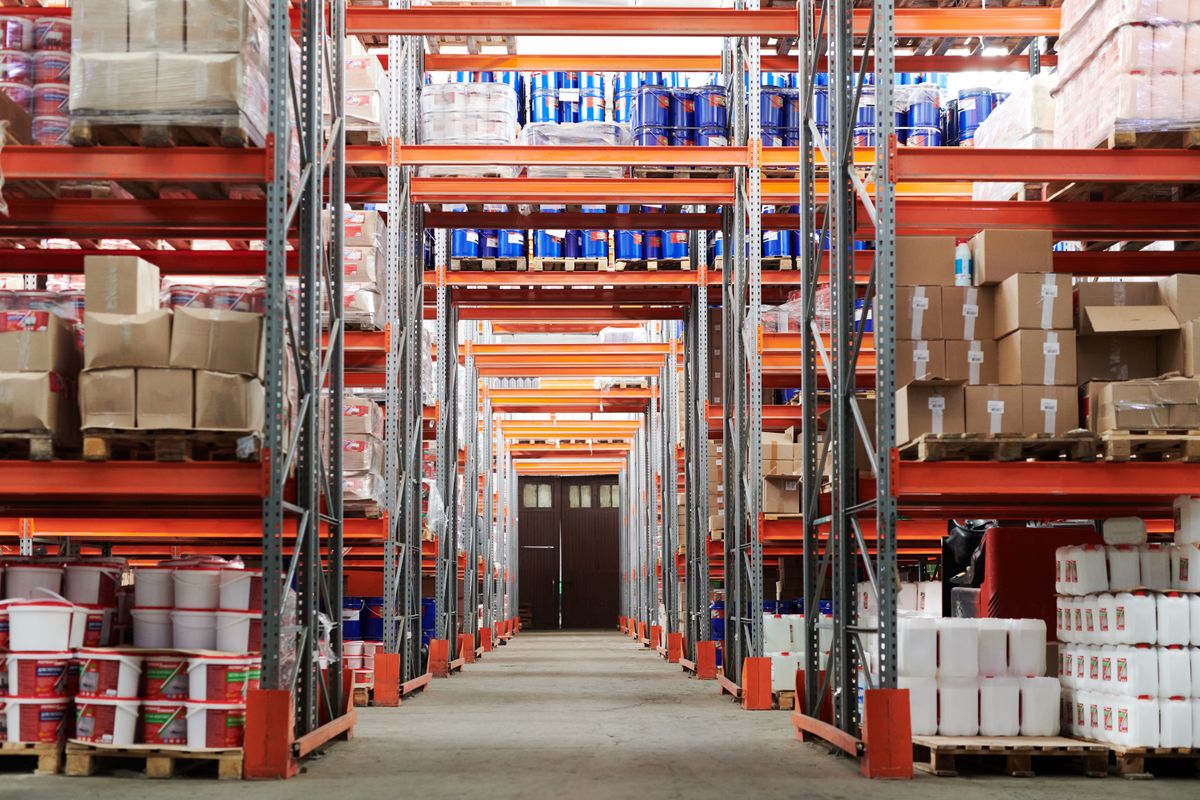
Storage fills from the top of the market down. In June, the well-located, climate-controlled facilities fill first, and the choice narrows to what's left: the far side of town, the upper floor, the odd size. Downsizers storing furniture and family records for months should care about which unit, not just its price — and that choice is widest in the off-season.
Your labor is the crew, and summer taxes it. Self-service quality is your own stamina. Loading a container in 95-degree heat, at 70, with a closing deadline, is how both belongings and people get hurt. The calendar is a safety variable for this audience in a way it simply isn't for a 30-year-old hiring a crew.
The downsizer's staged move, timed properly
Downsizing is rarely one move; it is three. Belongings go to family, to donation and sale, and into the new, smaller home — with storage holding the undecided middle. That staging is a gift, because it lets you assign each leg to the season that suits it:
- Rent the storage unit in late fall or winter, when street rates bottom and promotions are strongest — then keep it through the sorting months. One caution from the complaint file: the promotional first month is not the rate. Operators price by occupancy and raise in-place rents over time, so ask, before you sign, what the rate becomes after the special and how increases are handled. A cheap November unit you empty in March is a bargain; the same unit still holding boxes the following November may have quietly become an expensive one.
- Do the heavy sorting in the shoulder months. April and September–October give you working weather without peak prices for the truck days you need in between — the donation run, the trip to your daughter's house, the furniture that goes to consignment.
- Schedule the final move — the one with a closing date attached — for a weekday in the second or third week of the month, whatever the season. Allied's guidance matches every dataset I have seen: demand concentrates in the first and last weeks, when leases turn; mid-month, mid-week is the year's standing discount. In summer this matters most; it is the difference between a container slot existing and not existing.
- If the final move must land in summer, book everything 8–12 weeks ahead, take the earliest pickup slot of the day, and build one buffer day between the container pickup and the closing. The buffer day is the cheapest insurance in this entire guide.
One-way moves have their own geography of seasons
Everything above assumes demand rises and falls evenly across the map. One-way self-service doesn't work that way, because a truck or container rented in one city has to be in that city, and migration is not symmetrical. Through the summer, far more households move into fast-growing metros — and out of expensive coastal ones — than the reverse. The result is a directional shortage: the one-way truck out of a high-outflow city in July can be scarce and priced accordingly, while the same company is practically paying people to take trucks the other way, repositioning its fleet. Container companies manage the same imbalance with scheduling instead of price: the delivery you want in a destination city everyone is moving to may be easy, while the pickup in the city everyone is leaving queues behind a yard full of other people's loaded boxes.
For a downsizer this has a practical edge. If your move runs against the summer flow — out of a popular destination, into a quieter market — summer may treat you far better than the national averages suggest, and it is worth getting quotes rather than assuming the peak premium applies to you. If your move runs with the flow, the opposite holds: your route is exactly the one the fleet planners are short on, and the shoulder seasons stop being a preference and become the plan. Either way, get the quote for your actual direction. One-way pricing is quoted by route and date, not by national season, and the difference between the two directions of the same highway can be larger than the difference between two months.
There is a second, quieter directional trap in the complaint file: the one-way rental picked up in one state and dropped in another sometimes carries a drop-off promise the receiving location can't honor on a peak weekend — no space, no staff, no record. Confirm the drop-off location and hours directly with the destination outlet before you load, in any season, and keep the confirmation. It takes four minutes in April. In July, it is the difference between returning a truck and storing one at your own expense for two extra days.
When waiting is the wrong call
Timing advice cuts both ways, and three situations argue against chasing the off-season price. First, a house sale with a hard closing date is not negotiable with the calendar — book early instead, and spend your flexibility on the day of the week and the week of the month. Second, winter moving in cold climates trades money for risk: ice on the driveway you are loading from, short daylight for a job you are doing yourself, and belongings sitting in an unheated container through a freeze. For a staged downsize, winter is for storing and sorting indoors, not necessarily for the final load. Third, storage rented "temporarily" in any season has a way of becoming permanent; the seasonal saving on a unit you keep for two extra years is dwarfed by the rent itself. The cheapest storage decision is the honest one about what is actually coming back out.
The booking rules, distilled
- Book the season before the date. Decide which season each leg of the move belongs to; then pick dates inside it.
- Peak season (Jun–Aug): reserve trucks and containers 8–12 weeks out; confirm the vehicle the day before; take morning pickups; never plan a container pickup and a closing on the same day.
- Shoulder seasons (Apr–May, Sep–Oct): the best ratio of weather to price to availability; the right home for sorting, donating, and the final move if your closing allows it.
- Off-peak (Nov–Mar): rent storage now, at the year's floor, but ask what the rent becomes after the promotion and how in-place increases work; use the months for indoor sorting, not heroic loading days.
- Always: mid-week, mid-month beats month-end weekend in every season; and a one-day buffer beats a one-day saving.
The self-service market is not hidden — this site alone lists 117 self-service moving and storage providers, 495 storage trailer and container listings, and 2,753 mini and self-storage facilities — but it is seasonal to its bones. The customers who pay the least and complain the least are not the ones who found a magic company. They are the ones whose calendar did the negotiating for them.
Sources
- Allied Van Lines, "When Is the Cheapest Time to Move" — 60–80 percent of household moves occur between May and September; volume lowest in January and February; winter rate reductions of up to roughly 30 percent; mid-month, mid-week booking advice: https://www.allied.com/moving-resources/faqs/cheapest-time-to-move
- Interstate Moving Now, "Best Time of Year to Move Long Distance 2026" — month-by-month price indices (January 15–30 percent below peak; July the peak month) and the peak/semi-peak/off-peak structure: https://www.interstatemovingnow.com/best-time-year-move-long-distance/
- StorageAtlas, "Storage Unit Cost 2026" — index of 5,921 facilities; 10×10 average near $99/month; seasonal demand peak May–August pushing prices 10–20 percent higher in competitive markets; November–February the lowest-price window: https://storageatlas.co/storage-unit-cost/
- Propty / industry pricing analysis, "What is a good self storage pricing strategy" — street rates peaked in July and declined month-over-month from September onward (Storable Storage Monitor data); occupancy-triggered rate increases: https://www.getpropty.ai/learn/what-is-a-good-self-storage-pricing-strategy
- Bolt Storage, "How Much Does a Storage Unit Cost in 2026?" — 10×10 at $100–$135/month nationally; climate control adding 20–30 percent; late fall and winter bringing better rates and stronger move-in deals: https://www.boltstorage.com/post/how-much-does-a-storage-unit-cost
Photos: labeled boxes — photo by cottonbro studio, https://www.pexels.com/photo/4554242/ ; loading a van — photo by Pexels contributor, https://images.pexels.com/photos/6169056/pexels-photo-6169056.jpeg ; storage warehouse — photo by Tiger Lily, https://www.pexels.com/photo/4483610/
More guides
- How to Hire a Moving Company That Won't Hold Your Furniture HostageMovers › Moving & Storage
- How Much Do Movers Cost? Local vs. Long-Distance Pricing ExplainedMovers › Moving & Storage
- Binding vs. Non-Binding Estimates: The Difference That Decides Your Final BillMovers › Moving & Storage
- Moving Insurance and Valuation: What 'Full Value Protection' Really CoversMovers › Moving & Storage
- Long-Distance Moving: A Start-to-Finish Guide for Household GoodsMovers › Household Goods Moving & Storage
- All Guides & ArticlesBrowse the full guides library