Movers › Shelving Commercial & Industrial
Shelving Commercial and Industrial at Three Budgets: What Budget, Mid-Range and Premium Really Buy
Every warehouse I ever dispatched from had the same archaeology: a row of handsome racking near the office, a middle territory of honest steel, and a far corner of bent wire shelves and swollen particleboard that somebody's budget decision had sentenced us to work around. Commercial and industrial shelving is sold as a commodity — steel is steel — and priced as if the tiers were interchangeable. They are not. What changes as you climb from budget to premium is not mostly the look of the thing. It is load capacity you can trust, deck surfaces that suit your goods, adjustability when your inventory changes, safety hardware, and whether the system is an engineered installation or a pile of parts with your name on the liability.
This guide prices the three tiers side by side, in the units the trade actually uses — per bay for shelving, per pallet position for racking — and says plainly what each step up buys and what it does not. It is written for anyone fitting out working space, including the growing number of renters equipping a leased unit, a rented warehouse corner or a serious garage between leases, for whom one extra question applies throughout: what does your lease let you anchor, and what can you take with you when you go?
First, the vocabulary the prices hide in
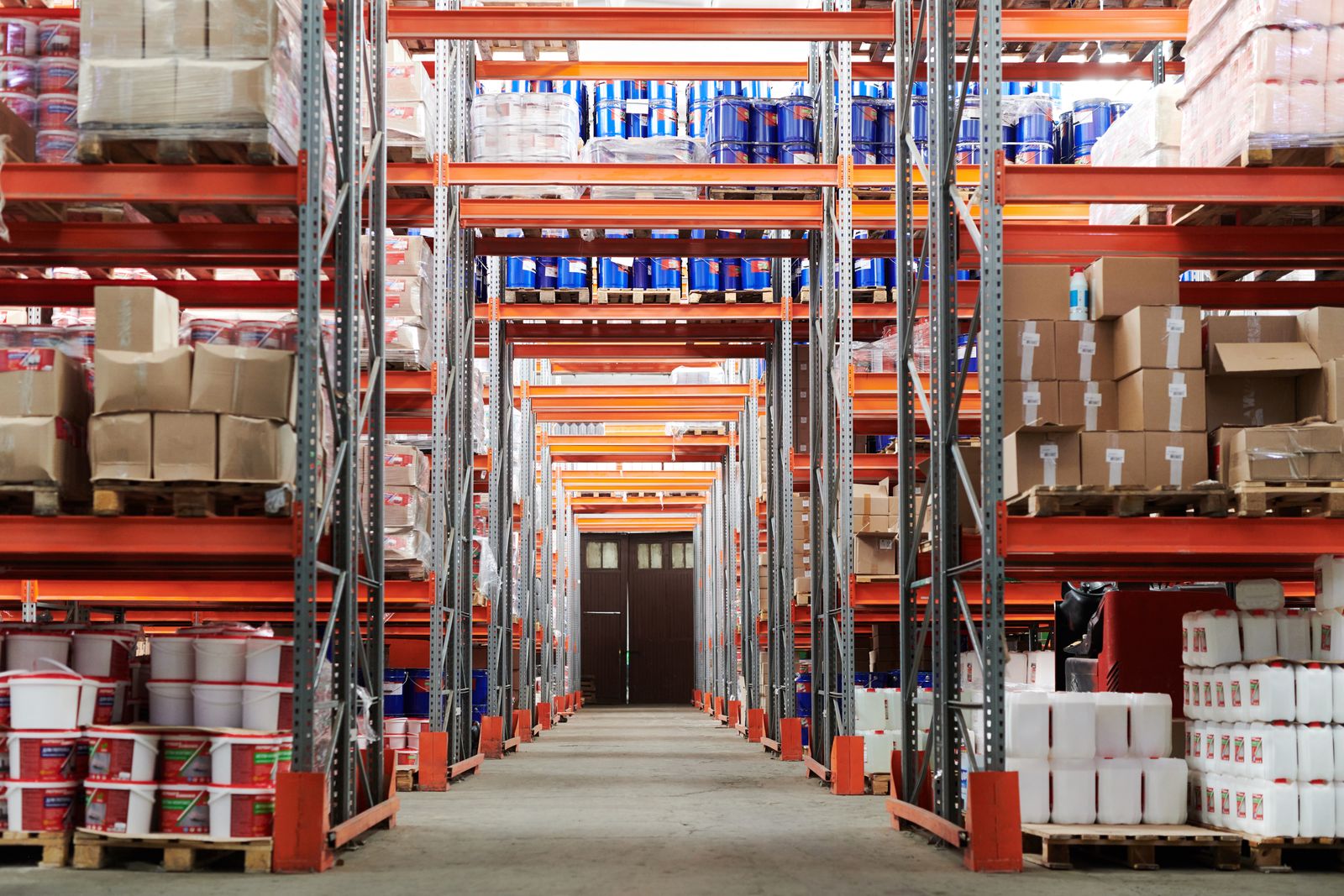
Shelving is hand-loaded: bays of uprights and shelves, loaded by a person standing on the floor or a step. Racking is machine-loaded: pallet rack, loaded by forklift, priced per pallet position — one pallet, one slot. Comparing a shelving quote in bays against a racking quote in positions without converting is how budgets get blown politely.
Capacity claims need the same care. A shelf rating assumes an evenly distributed load; a point load — a motor, a safe, a stack of tile — is a different and harsher test. And the per-shelf number times the shelf count is a marketing total, not an engineering one: the uprights carry the sum, and they have their own limit. At every tier below, the honest question is the same: rated by whom, distributed how, and anchored to what?
Tier one: budget — roughly $60–$180 a bay, and used racking at 40–60 percent of new
The budget tier is boltless and rivet steel shelving with board decks, light wire shelving, and — the connoisseur's budget move — used pallet racking.
Boltless and basic rivet shelving runs about $60–$180 per bay, assembles with a rubber mallet in minutes, adjusts in small increments, and carries roughly 150–350 kg per shelf evenly distributed. Wire shelving runs about $80–$250 a bay, carries less per shelf, and earns its place where airflow, visibility and cleanliness matter — food, kitchens, clean storage — with the standing caveat that small items fall through wire unless they live in bins, and point loads bend it.
Used selective pallet racking is the budget tier's heavy artillery: sound used rack commonly sells at 40–60 percent of new material prices, and selective rack is the simplest, most repairable system there is. The discipline is inspection — bent uprights, damaged beam connectors and unknown history are the price of the discount, and in seismic country used rack may not meet current requirements at all.
What budget buys you: storage that works, today, for hand-loaded goods of ordinary weight, in space you control informally. What it does not buy: certified capacities you would defend to an insurer, decks that shrug off forklifts, or any engineering at all. For a renter, budget has one more virtue that is easy to miss — it is portable. Boltless bays knock down flat, move in a van, and leave no anchor holes for a landlord to bill you for. Between leases, that is not a compromise. That is the correct specification.
Tier two: mid-range — roughly $180–$600 a bay, selective racking at $50–$200 a position
Mid-range is where shelving becomes a system rather than a purchase.
Heavy-duty rivet and long-span shelving runs about $180–$600 a bay, with per-shelf capacities in the 450–900 kg range for the heavy rivet class, wider spans for bulky goods, and the accessory ecosystem — extra shelves, dividers, bin fronts — that lets a bay be reconfigured instead of replaced. New selective pallet racking is the mid-range of the racking world: materials at $50–$200 per pallet position across published 2026 guides, with one complete starter bay — frames, beams, wire decking, anchors, column guards — listing around $900–$1,480. Installed selectively at scale, reckon on the order of $65–$150 per position all-in for a large system, with basic installation itself a modest $3–$8 per position.
What the step up actually buys:
- Rated, defensible capacity. Load plaques, manufacturer engineering behind the numbers, and beam-and-upright combinations tested as a system.
- Decking that matches the load. Wire decks that spread pallet weight and satisfy fire officers, instead of whatever board was lying around.
- Safety hardware as standard. Anchors, column guards, beam safety clips — the unglamorous parts whose absence is discovered by forklifts.
- Expandability. Teardrop and standard profiles mean next year's bays connect to this year's, from multiple suppliers, at market prices.
What mid-range does not buy: density. Selective rack gives every pallet its own address and charges you an aisle for the privilege. If your constraint is floor space rather than money, that is the problem the premium tier exists to solve.

Tier three: premium — density, engineering and paperwork, from $150 a position to $850
Premium money in this trade buys three things, only one of which is steel.
Density systems. Double-deep racking runs $80–$300 a position in materials and needs a deep-reach truck. Push-back systems, storing pallets several deep on carts, run roughly $220–$400 a position installed. Pallet flow — gravity roller beds, first-in-first-out — is the connoisseur's premium: $150–$450 a position in materials in some guides, $550–$850 installed in others, and worth every cent exactly when stock rotation is a legal or spoilage requirement, and a waste of money when it is not. Drive-in racking packs the most pallets per square foot and asks the most of your forklift drivers.
Engineering and compliance. A premium project includes stamped drawings, seismic calculations where required, and permits — typically $2,000–$8,000 for the engineering-and-permit package — plus professional installation at $10–$25 per position for complex systems. This is the tier at which your insurer, your fire marshal and your landlord all become readers of your shelving decision, and the paperwork is not overhead. It is the product.
Cantilever and speciality systems for long goods — lumber, pipe, extrusions — priced per arm level, solving the problem ordinary racking simply cannot hold.
What premium does not buy: forgiveness. Dense systems punish mixed inventory, sloppy pallets and optimistic driving far faster than selective rack does. The premium tier is a bet that your operation is disciplined enough to use the density you paid for.
| Budget | Mid-range | Premium | |
|---|---|---|---|
| Typical kit | Boltless/rivet bays, wire shelves, used selective rack | Heavy rivet, long-span, new selective rack | Push-back, pallet flow, drive-in, cantilever |
| Price anchor | $60–$180 per bay; used rack 40–60% of new | $180–$600 per bay; $50–$200 per position materials | $220–$850 per position installed for dense systems |
| Capacity story | Claimed, evenly distributed | Rated, manufacturer-backed | Engineered, stamped, permitted |
| Best for | Hand-loaded goods, rented space, now | Growing stockrooms and warehouses | Space-constrained, rotation-critical operations |
| Moves with you? | Yes — knocks down flat | Mostly | No — it is a building project |
The renter's paragraph, because it changes the answer
If the space is leased, three questions precede all tiers. Does the lease permit anchoring into the slab — most racking above a modest height must be anchored, and an unanchored premium installation is both unsafe and unpermitted. Who owns the improvement at lease end, and what reinstatement does the lease demand — premium racking can cost real money to remove and make good. And does the landlord's insurer need to approve the system and its loads. Renters who ask these first routinely land, correctly, on heavy mid-range boltless and long-span: near-industrial capacity, no anchors, flat-pack exit. It is not the cheap option dressed up. For a lease, it is the engineered one.

Maintenance: the cost line nobody budgets at any tier
Shelving does not wear out politely; it gets hit. A working installation needs an inspection rhythm — uprights checked for forklift damage and lean, beams for dislodged clips and bowing, anchors for looseness, decks for damage — and a small stock of the parts that fail: a spare upright or the money for a column repair kit, spare beams in your working lengths, replacement clips and deck panels. Budget-tier installations fail this test by having no parts ecosystem at all; the bay was a one-off import and its replacement is a new bay. Mid-range systems pass it almost by definition, because standard profiles mean the part exists in a catalogue. Premium installations usually carry it in the project: inspection schedules, damage reporting and repair are part of what the engineering fee quietly bought. Whichever tier you choose, write the inspection into the calendar the week the shelving goes up. The most expensive shelving accident in any warehouse I worked in began, months earlier, as a bent upright everybody had learned to walk past.
Buying rules that hold at every tier
- Convert every quote to the same unit — per bay, or per pallet position, materials separated from installation, engineering and permits.
- Ask for the capacity basis: per shelf or per position, distributed or point, and the upright limit behind it.
- Price the accessories in the first quote — decks, anchors, guards, clips, extra shelves — not as month-two surprises.
- For used rack, pay for inspection or buy from a dealer who inspects; the discount is real, and so is the reason some of it was sold.
- Match the deck to the goods: boards for mixed boxes and tins, wire for airflow and crates, nothing for small loose parts without bins.
This site lists 363 commercial and industrial shelving providers, and the spread among them is the honest spread of the trade itself: the same square footage can be shelved for the price of a good dinner out or a good car. Neither number is wrong. What is wrong is buying a tier without knowing which of its promises — portability, rated capacity, density, paperwork — you were actually paying for.
Sources
- Speedrack West, "How Much Does Pallet Racking Cost in 2026?" — materials at $50–$200 per position for selective rack, $80–$300 double-deep, $150–$450 gravity-flow, a complete starter bay at $908–$1,483, and used racking at 5–50 percent below new.
- WarehousingCosts, "Pallet Racking Cost in 2026" — installation at $3–$8 per position basic and $10–$25 complex, engineering and permits at $2,000–$8,000, used racking at 40–60 percent of new, and a 1,000-position selective system at $65,000–$150,000 installed.
- Hammerhead, "Warehouse Pallet Racking Systems" — installed prices: selective $80–$120 per position, push-back $220–$400, pallet flow $550–$850, and used selective at 30–50 percent off new.
- CoreStorage, "How to Choose the Right Adjustable Shelving" — per-bay prices and per-shelf capacities for basic boltless ($60–$180), rivet, wire ($80–$250) and heavy-duty rivet shelving ($180–$600).
- Photo by Tiger Lily, https://www.pexels.com/photo/warehouse-with-concrete-floors-4483610/
- Photo by Alexander Isreb, https://www.pexels.com/photo/men-going-around-a-warehouse-1797428/
- Photo by RODNAE Productions, https://www.pexels.com/photo/two-men-standing-carrying-cardboard-boxes-7464703/
More guides
- How to Hire a Moving Company That Won't Hold Your Furniture HostageMovers › Moving & Storage
- How Much Do Movers Cost? Local vs. Long-Distance Pricing ExplainedMovers › Moving & Storage
- Binding vs. Non-Binding Estimates: The Difference That Decides Your Final BillMovers › Moving & Storage
- Moving Insurance and Valuation: What 'Full Value Protection' Really CoversMovers › Moving & Storage
- Long-Distance Moving: A Start-to-Finish Guide for Household GoodsMovers › Household Goods Moving & Storage
- All Guides & ArticlesBrowse the full guides library