Storage › Moving
Storage During a Move: Bridge Storage, Portable Containers, and Timing Gaps
The gap is the most common problem in moving, and the least planned for. You must be out of the old home on Friday; the new one is not yours until the following Thursday. Or the sale closes, the purchase stalls, and a household's worth of furniture needs somewhere to be for six weeks that is not a relative's garage. Every storage product sold during a move is an answer to that gap — but they are very different answers, at very different prices, with opposite trade-offs on the one question that matters most once your things are inside: can you get to them?
There are three real options. Your mover can hold the shipment — storage-in-transit, usually in wooden vaults in the mover's warehouse. A portable container company can park a box at your home, let you load it, and store or move it for you. Or you can rent a self-storage unit and move things into it yourself, twice. Here is how each one actually works, what each costs, and which gap each is built for.
Option one: bridge storage with your mover
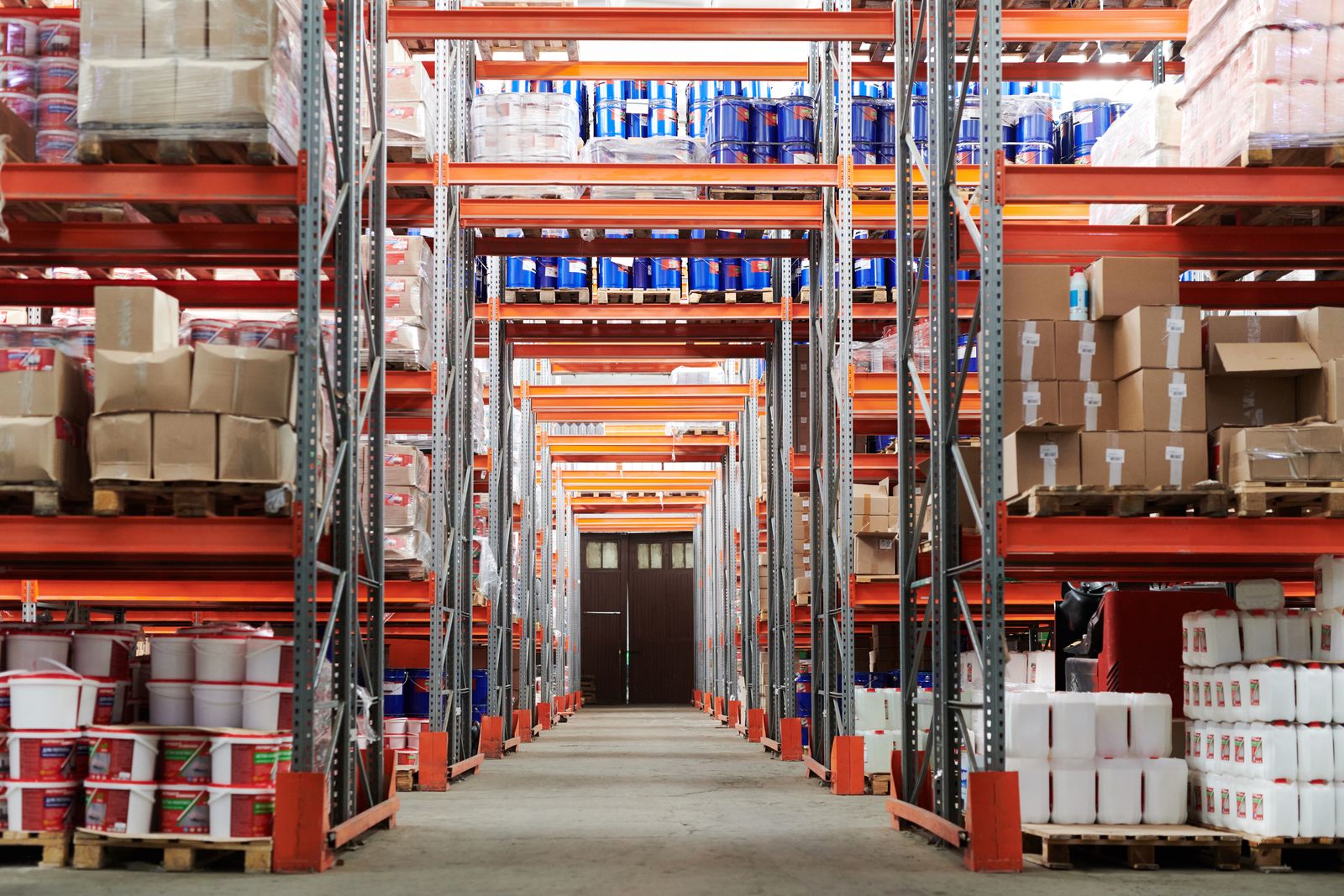
Storage-in-transit — SIT — is the moving industry's built-in bridge. The crew loads your home, drives to the mover's warehouse, and your shipment is packed into large wooden vaults, typically around 5×7×7 feet, holding roughly 245 cubic feet each. A two- to three-bedroom home usually fills three or four vaults. The shipment stays under the same bill of lading that started the move, with one company responsible from pickup to final delivery.
Published mover rate cards put standard SIT at roughly $300–$800 per month for a household shipment, though vault-by-vault pricing tells a more precise story: one Dallas mover's written rate card charges $75–$95 per month per vault, so a three-vault household runs $225–$370 a month, plus handling each way and the crew time to load in and out. Most carrier tariffs treat SIT as a bridge, not a residence: it typically covers the first 90 days, and some tariffs extend to 180, after which the shipment converts to permanent storage, often on different terms and a different valuation basis. Ask which day your shipment converts, and what changes when it does.
The trade-offs are structural. Handling is minimal — your furniture is loaded once, vaulted, and unloaded once at the new home, instead of being handled four times in a two-move shuffle. Access is minimal too — a vaulted shipment is, for practical purposes, sealed. Retrieving one box mid-gap usually means a warehouse handling fee and advance scheduling, if it is possible at all. And the clock is the mover's: delivery out of SIT needs scheduling like any other move, so a closing that suddenly moves up three days may not move your furniture three days.
SIT is the right answer for a short, defined gap — days to a few weeks, up to about 90 days — where you will not need anything you own in the meantime, and where one contract and one chain of custody are worth more than access.
Option two: the portable container
The container companies — PODS is the name most people know; U-Haul's U-Box and 1-800-PACK-RAT compete in the same space — sell control of the calendar. A container is delivered to your driveway, you load it over days rather than hours, and the company either leaves it with you, stores it at its facility, or transports it to your new address when you are ready.
The pricing is modular, so add it up properly. A 16-foot container — rated for roughly a two-bedroom home — rents for about $175 a month kept at your property or $239 at a company storage centre, using PODS' published averages; broader 2026 market guides put monthly container rent at $150–$359 depending on size and market, with delivery and pickup fees of roughly $75–$150 per trip. A local container move with the first month included typically totals a few hundred dollars; long-distance transport is quoted separately and is where the bill grows, with cross-country 16-foot moves quoted in the $5,439–$7,448 range in moveBuddha's 2026 pricing data.
Access sits between the other two options. A container on your driveway is fully accessible, on your schedule — which is why containers suit renovations and staged moves so well. A container stored at the company's facility is not: you will generally need to schedule access or have it redelivered, for a fee. Loading quality is also yours: a container you pack badly travels badly, and the contents protection sold with containers is not the same as a mover's valuation. Finally, the unglamorous constraints decide many container moves — driveway space, street-parking rules, HOA restrictions, and whether the delivery truck can place a 16-foot box where you live at all.
Option three: a self-storage unit, and two moves
Self-storage is the cheapest rent and the most expensive handling. A standard 10×10 unit — the workhorse size, holding a one- to two-bedroom apartment — averages about $120 a month nationally in 2026 market data, with climate-controlled versions around $136–$137; a 10×20 averages roughly $193–$207. Month-to-month terms are standard, access is the best of any option — gate hours, often 6 a.m. to 10 p.m., sometimes 24-hour — and you can retrieve, swap and reorganise at will.
The catch is arithmetic, not rent. Unless you move yourself, you pay for two moves: one into the unit, one out. Each handling cycle also doubles the opportunities for damage, and the liability chain breaks in the middle — the first mover's responsibility ends at the unit door, and damage discovered on the second move is genuinely hard to attribute. Budget honestly too: an admin fee of roughly $10–$25, a lock, and tenant protection or insurance commonly adding $8–$38 a month sit on top of the headline rent, and introductory first-month pricing that later steps up is a documented industry habit worth checking in reviews of the specific facility.
Self-storage wins when the gap is long or indefinite, when you need regular access, or when only part of the household is being stored. For a gap measured in months, its rent advantage overwhelms the double handling; for a gap measured in days, it rarely does.
The comparison that matters
| Mover's bridge storage (SIT) | Portable container | Self-storage unit | |
|---|---|---|---|
| Typical monthly cost | ~$300–$800 per household shipment; per-vault pricing from ~$75–$95/vault | ~$150–$359 rent, plus $75–$150 per delivery/pickup trip | 10×10 ~$120 standard, ~$136 climate-controlled; 10×20 ~$193–$207 |
| Handling | Loaded once, unloaded once | You load and unload (or hire labour) | Two full moves — four handlings |
| Access during the gap | Very limited; scheduled, fee likely | Full if on your property; scheduled if at their facility | Best — gate access, often extended hours |
| Time limit | Usually 90 days, some tariffs 180, then converts | Open-ended monthly rental | Open-ended, month-to-month |
| Responsibility | One carrier, one bill of lading throughout | Split: your loading, their transport; contents protection is separate | Breaks at the unit door between the two moves |
| Best for | Short, defined closing gaps | Staged moves, renovations, driveway loading at your pace | Long or uncertain gaps; partial-household storage; frequent access |

What happens to your protection while things sit
Storage is where moving paperwork quietly changes meaning, and it is worth understanding before the gap, not during a claim. On an interstate move held in SIT, your shipment stays under the mover's valuation — the protection you selected on the bill of lading — while it sits in the vault. But when SIT converts to permanent storage at the tariff deadline, many tariffs move the shipment onto a different basis: the mover's responsibility can shrink, end, or transfer to a storage contract with its own limits. The day of conversion is therefore not an administrative detail. Ask for it in writing, diarise it, and if your gap threatens to run past it, renegotiate before it passes rather than discovering the change afterwards.
Containers and self-storage put the risk in different hands. A container company's contents protection is a separate product with its own declared-value limits, and it generally responds to damage in transit and at the facility — not to the consequences of how you loaded the box. In a self-storage unit, the facility is typically not liable for your property at all beyond its own negligence; that is why tenant protection or a rider on your own insurance is effectively mandatory, and why facilities sell it at the counter for $8–$38 a month. One more wrinkle catches sellers out: your household insurance may cover belongings in storage, away from the insured home, only for a limited period or a limited percentage of your contents cover. A two-week gap is usually a non-issue. A six-month gap deserves one phone call to your insurer before it starts.
A worked example: three weeks, two bedrooms
Put the three options side by side for the most common gap in the business — a two-bedroom household, three weeks between homes, same city. In SIT, at per-vault pricing of $75–$95 for roughly three vaults, the storage itself runs about $225–$285 for the month, with handling each way and the load-out crew still to count — but there is no second move to buy, because delivery out of the warehouse is the second half of the original one. The container route costs roughly $175–$239 for the month's rent plus two trips at $75–$150 each, and you supply the loading labour at both ends, or hire it by the hour. Self-storage is the cheapest rent of the three — about $120 for a 10×10, plus fees and protection — and the most expensive logistics, because a crew and truck are needed twice, at local hourly rates, for a load-out and a load-in that SIT folds into one contract. For three weeks, the totals land surprisingly close together, which is exactly why the decision should be made on access and handling rather than on the monthly figure in the largest type. Stretch the same gap to six months and the ranking inverts: rent dominates, self-storage pulls away, and the container's convenience premium becomes the thing you are paying for. The products are not rivals so much as tools shaped for different lengths of uncertainty.
Deciding by the shape of your gap
A few days, dates firm. SIT, almost always. The shipment never leaves the mover's custody, and the premium over other options is small at this duration.
Two to eight weeks. SIT if you need nothing in storage; a container if the gap is really a staging exercise — work being done on the new home, rooms becoming available one by one.
Months, or dates genuinely unknown. Self-storage or a stored container. SIT's conversion deadline and per-vault pricing stop being friendly, and open-ended monthly terms matter more than handling elegance.
You will need things mid-gap. Rule out vaulted SIT first, whatever the quote says. Access you have to schedule a week ahead, at a warehouse across town, is not access.
Whichever you choose, get three things in writing before the gap starts: the monthly rate and every fee around it, the date or condition that changes the deal (SIT conversion, container redelivery charges, a self-storage rate step-up), and the exact process and notice period for getting your things out. Gaps have a way of ending suddenly, usually because a closing finally lands.
The directory behind this site lists 24,571 businesses under Moving & Storage, 2,753 under Mini & Self Storage in the Movers category and 1,010 storage businesses under Moving in the Storage category — the options above are not scarce in any metro. What is scarce, in the week your closing dates collide, is time to compare them. Run the comparison now, while the gap is still hypothetical, and it becomes a phone call instead of a crisis.

Sources
- SafeBound Moving, "Booking Movers and Storage With the Same Provider in 2026" — storage-in-transit at $300–$800/month, typically 1–90 days, under one bill of lading; long-term self-storage $100–$400/month: https://www.safeboundmoving.com/blog/movers-plus-storage-same-provider
- Evolution Moving Company, Dallas storage rate card — vault storage at $75–$95 per 5×7×7 ft vault per month, handling $23 per vault each direction, worked multi-vault examples: https://evolutionmoving.com/dallas/storage-solutions/
- SafeBound Moving, "Moving to Florida from Rental to Purchase in 2026" — SIT conversion after 90–180 days under most carrier tariffs; vault rates $90–$200 per vault per month: https://www.safeboundmoving.com/blog/moving-to-florida-rental-to-purchase
- moveBuddha, "How Much Does PODS Cost? (2026 Data)" — container rent $150–$359/month, delivery/pickup $75–$150 per trip, cross-country 16-ft moves $5,439–$7,448: https://www.movebuddha.com/blog/pods-cost/
- Storage Unit Costs, "Pod Storage Cost (2026)" — PODS monthly rent $139–$175 at your home, $189–$239 at a storage centre, delivery/pickup about $80 each: https://storageunitcosts.com/pod-storage-cost/
- Neighbor, "10×10 Storage Unit: Cost, Capacity, and When to Size Up" — 10×10 averages $120/month standard and $137 climate-controlled nationally; admin fees and insurance add-ons; climate range roughly 55–85°F: https://www.neighbor.com/storage-blog/10x10-storage-unit-guide/
- Public Storage, "The Complete Guide to Storage Unit Prices in 2026" — national pricing examples by size (10×10 $123, 10×20 $207): https://www.publicstorage.com/blog/public-storage/the-complete-guide-to-storage-unit-prices-in-2026.html?utm_source=nsastorage&utm_medium=redirect
- Photos: warehouse interior — photo by Tiger Lily, https://www.pexels.com/photo/4483610/ ; carrying boxes — photo by Andrea Piacquadio, https://www.pexels.com/photo/3791617/ ; family packing — photo by cottonbro studio, https://www.pexels.com/photo/4569340/
More guides
- How to Hire a Moving Company That Won't Hold Your Furniture HostageMovers › Moving & Storage
- How Much Do Movers Cost? Local vs. Long-Distance Pricing ExplainedMovers › Moving & Storage
- Binding vs. Non-Binding Estimates: The Difference That Decides Your Final BillMovers › Moving & Storage
- Moving Insurance and Valuation: What 'Full Value Protection' Really CoversMovers › Moving & Storage
- Long-Distance Moving: A Start-to-Finish Guide for Household GoodsMovers › Household Goods Moving & Storage
- All Guides & ArticlesBrowse the full guides library