Movers › Storage Sheds & Buildings
Storage Sheds and Buildings for Seniors: Costs, Comfort and the Adjustments Worth Asking About
Downsizing arithmetic is brutal. The house shrinks by a third; the lifetime of tools, garden equipment, holiday decorations, files and furniture shrinks by much less. For many older homeowners, a storage shed or a small outbuilding is the honest answer to that arithmetic — cheaper than a storage unit over any horizon longer than a couple of years, steps from the back door instead of a drive across town, and yours.
It is also a purchase with traps that land hardest on older buyers: a kit that assumes two strong people and a free weekend, a delivered building that will not fit through the gate, a step up into the doorway that becomes a daily hazard, and a permit rule nobody mentioned until the building was sitting on the lawn. This guide prices sheds and small storage buildings honestly, explains where the senior-specific decisions actually are, and lists the adjustments worth asking about — most of which good providers make routinely, for customers who know to ask.
What sheds and small buildings cost
The market splits by how the building arrives. Prefab and kit sheds — resin, metal or pre-cut wood — run about $10 to $30 per square foot for the structure: compact resin or metal models under 100 square feet start around $779 to $1,500, mid-size kits of 100 to 200 square feet run $1,500 to $4,000, and a typical 10x12 kit averages $1,500 to $4,000. Pre-built sheds, delivered finished on a truck, price higher and simpler: published 2026 builder lists put site-built or delivered base prices at about $4,200 for an 8x10, $5,300 for a 10x12 and $6,000 to $6,500 for a 12x12 — roughly $42 to $53 per square foot at these sizes. Custom and contractor-built buildings run $25 to $150 per square foot depending on ambition, with turnkey contractor installs commonly quoted at $60 to $150 per square foot; the average homeowner spend across all types is around $4,000.
| Route | Typical total for a 10x12 | What you supply |
|---|---|---|
| Resin/metal kit, self-assembled | $800–$2,500 installed range for the type | Two able people, a level base, a weekend or two |
| Wood kit, professionally assembled | $2,500–$5,000 | The base, and decisions |
| Pre-built, delivered finished | ~$5,300 base at one published 2026 list | A prepared site and clear access |
| Custom / contractor-built | $5,000–$12,000+ | Patience; permits handled or shared |
Then the lines nobody puts in the advertisement. A foundation or base — gravel pad, deck blocks or a concrete slab — runs $300 to $2,000, with a slab for a 10x12 commonly $1,000 to $3,500. Delivery and assembly beyond the included radius runs $200 to $1,500. A permit, where your size triggers one, adds $100 to $500. Options that matter disproportionately to older users — a ramp, a wider door, an extra window for light, shelving — are priced per item, and removing an old shed runs about $8.50 to $9 per square foot of the old building. Price the project, never the shed.
The permit and placement rules that surprise people
Most jurisdictions exempt small accessory buildings from a building permit below a size threshold — commonly around 120 to 200 square feet, varying by town — but three qualifications catch buyers out. First, exemption from a building permit is not exemption from zoning: setback rules, typically five to ten feet from property lines, apply to a 60-square-foot shed as firmly as to a garage, and a building placed in an easement or over a utility line can be ordered moved at your expense. Second, electrical service changes everything: run power to a shed and you have a permitted electrical job in almost every jurisdiction, needing a licensed electrician. Third, HOAs govern where codes do not — many require approval of size, style and colour regardless of permit thresholds, and retirement communities often have their own architectural rules entirely. The sequence that avoids all of it is dull and perfect: call the building department, call the HOA, then order. A reputable shed company will ask you whether you have done both, and will know the local threshold by heart. One that waves the question away is selling you its problem.
Where the senior decisions actually are
Assembly is the first decision, and it is not a character test. Kit marketing shows two smiling people and a Saturday. The reality is panels that need holding overhead, hundreds of fasteners, roof work at ladder height, and instructions written for the already-handy. For an older buyer, professional assembly or a pre-built delivered building is not an indulgence — it is the product. Price it in from the start, and treat any quote that assumes your labour as a quote for a different, younger customer.
Access is a design specification, not an afterthought. The standard shed doorway has a raised threshold and a door sized for a mower. For a customer with a walker, a cane, or simply knees that have opinions, specify instead: a ramped or ground-level entry with no step; a double door or a door at least 36 inches wide; a lever handle rather than a knob; and a level, firm path from the house — gravel that swallows a cane tip or a rollator wheel is a fall designed in advance. Every one of these is a standard option or a trivial change at order time, and a miserable retrofit later.
Height and light are safety features. Standard shelving puts the heavy boxes overhead — exactly where an older person should not be lifting from. Ask for shelving and hanging storage between knee and shoulder height, the heavy items at waist level, and enough window or a solar light fitting that nobody is reaching into a dark building. A loft sounds like free storage; for most senior users it is storage that might as well be on the moon, priced as a feature.
Ventilation and dryness protect the contents and the visitor. A sealed shed in summer sun is an oven; in winter it condenses. Vents are cheap at build time. If the building will store paperwork, photographs or upholstered furniture — the classic downsizing overflow — ask honestly whether a shed is the right building at all in your climate, or whether those boxes belong in the house and the mower in the shed.
Delivery day needs a plan for the customer, not just the truck. A pre-built shed arrives on a trailer or a shed mule and needs roughly ten feet of clear gate access, a firm route across the lawn and an hour or two of noise and choreography. Ask the company to confirm access by photo or visit beforehand — a failed delivery on the day costs money and tempers — and arrange to supervise from a chair with the paperwork, not by trailing the crew across wet grass.
The adjustments worth asking about, as a list
- Turnkey pricing in writing — building, base, delivery, assembly, options and permit handling as one number, with the exclusions named.
- Ramp and wide door fitted at build, not promised as a later add-on.
- Shelving installed at reachable heights before delivery, heavy storage at waist level.
- A pre-delivery access check — gate width, route, overhead lines — confirmed by the company, with the failed-delivery fee stated in advance.
- Permit and HOA reality stated plainly: who files, who pays, and what happens to the schedule if approval takes weeks.
- Old shed removal priced into the same visit where one exists, at the going per-square-foot rate, rather than left as your separate problem.
- Warranty and service in writing — workmanship, roof and door hardware, and a local name to call when a door swells in its first winter.
- A realistic delivery window and a single contact for the day, so nobody waits by a window from dawn.
Renting a unit versus owning the building, briefly
The comparison that frames the purchase: a 10x10 storage unit at typical national prices costs roughly $90 to $150 a month, forever, across town. A $4,000 to $5,300 shed passes that cumulative rent in about three to four years and then keeps going for a decade or more with minor maintenance — stain or paint every two to five years at $200 to $500 for a wood building. For a homeowner staying in the house, the shed wins on money and wins larger on daily life: the walker, the decorations and the tools are twenty steps away, at ground level, in daylight, with no gate hours and no monthly bill. For a move still in progress, or a stay that may be short, the unit remains the flexible tool. Know which situation you are in before you buy a building to solve it.

Keeping it up: the decade view
A shed is a small building, and small buildings have a maintenance rhythm that belongs in the purchase decision — especially for an owner who will not be climbing to inspect a roof. A wood building wants stain or paint every two to five years, at $200 to $500 a time done professionally; metal and resin buildings trade that chore for eventual panel and door-hardware wear. Shingle roofs on better sheds age like the house's roof and can be re-covered; the cheap roll roofing on budget kits ages faster, and a buyer planning a fifteen-year building should ask which they are getting. Doors are the moving part that fails first: a door that swells, sags or loses its latch in year two is a warranty conversation, which is why the written workmanship warranty on the adjustments list matters more than the brochure's promises about the walls. Budget honestly for the decade — a few hundred dollars every few years, or a maintenance visit folded into the same call-out that services the house — and ask the provider, before you buy, what their own service visit costs. A company that sells buildings it never expects to see again is telling you its business model. The providers worth buying from expect to be back: to adjust a door, to add the shelving you did not know you needed, and to be the name you call when the building is twenty years old and the roof finally wants attention. For a senior buyer, that continuing relationship is not a soft benefit. It is the difference between a building that stays safe and easy for as long as it is needed, and one that slowly becomes a place nobody opens.
The bottom line
This site lists 262 storage shed and building providers, and the good ones share a recognisable habit: they talk about your site, your access and your permit before they talk about colours. Buy the building the way an older household actually lives: assembled by other people, entered without a step, lit well, shelved at reachable heights, and priced as a whole project in writing. A shed bought that way is not a compromise forced by a smaller house. It is the room the smaller house was missing, twenty steps across the garden.
Sources
- HomeGuide and Angi shed cost data, via ConstructlyTools' 2026 shed cost calculator — prefab sheds at $10–$30 per square foot, a 10x12 prefab at $1,200–$3,600, custom builds at $3,000–$18,000, and an average homeowner spend around $4,000.
- Wilmington NC Sheds, 2026 shed prices and permit rules — published builder base prices of about $4,223 for an 8x10, $5,300 for a 10x12 and $6,000–$6,490 for a 12x12, per-square-foot figures of $42–$53, and old-shed removal at $8.50–$9 per square foot.
- Backyard Oasis, How Much Do Storage Sheds Cost, 2026 — the $10–$30 per square foot structure price, foundation at $300–$2,000, delivery and assembly at $200–$1,500, permits at $100–$500, and permit thresholds around 120–200 square feet.
- BuildsAndBuys, Shed Installation Cost Guide — installed costs by shed type and size, professional assembly ranges, setbacks of five to ten feet, HOA approval practice, and the ten-foot delivery clearance requirement.
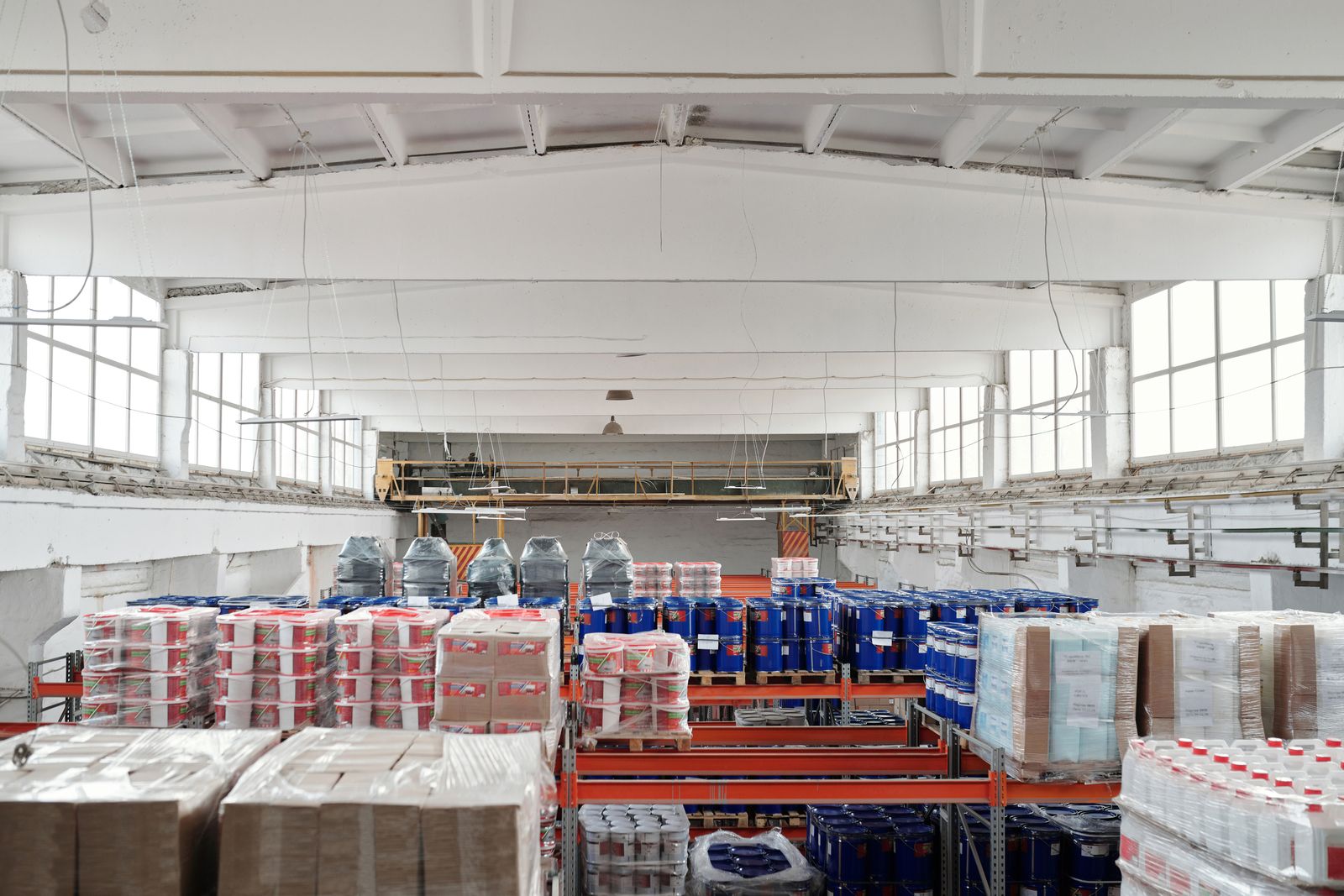
Warehouse shelving — photo by Tiger Lily, https://www.pexels.com/photo/photo-of-warehouse-4481326/ Sealing a box — photo by Ketut Subiyanto, https://www.pexels.com/photo/4246120/
More guides
- How to Hire a Moving Company That Won't Hold Your Furniture HostageMovers › Moving & Storage
- How Much Do Movers Cost? Local vs. Long-Distance Pricing ExplainedMovers › Moving & Storage
- Binding vs. Non-Binding Estimates: The Difference That Decides Your Final BillMovers › Moving & Storage
- Moving Insurance and Valuation: What 'Full Value Protection' Really CoversMovers › Moving & Storage
- Long-Distance Moving: A Start-to-Finish Guide for Household GoodsMovers › Household Goods Moving & Storage
- All Guides & ArticlesBrowse the full guides library