Movers › Storage Trailers & Containers
Storage Trailers and Containers at Three Budgets: What Budget, Mid-Range and Premium Really Buy
From the dispatch desk, storage trailers and containers look like one product: a weather-tight steel space, delivered. They are not. They are three products wearing the same shape, and the price steps between them buy specific, nameable things — condition, access, speed, and somebody else's problem when it leaks. This site lists 495 storage trailer and container suppliers, and if you are moving on a tight budget, the worst outcome is not overpaying. It is paying mid-range money for a budget unit, or premium money for features your load will never use.
Here are the three tiers as they actually exist in the market, what each dollar buys, and the tier most people should be in.
The three tiers, side by side
| Budget | Mid-range | Premium | |
|---|---|---|---|
| Typical kit | Used wind-and-watertight container, bought outright; or an older 45–53 ft storage trailer on a basic rental | Cargo-worthy or one-trip container; newer 53 ft dry-van storage trailer | New one-trip high-cube container, bought or on a full-service lease; modified units (offices, double doors, lock boxes) |
| What it costs | Container: $1,400–$2,500 to buy a used 20 ft; trailer rental from about $125/month | Container: $1,800–$3,000 cargo-worthy 20 ft, $3,000–$5,000 one-trip; trailer rental about $225–$250/month | Container: $5,000–$7,500 for a new 40 ft high-cube; container offices rent at $200–$500/month |
| Condition you should expect | Weather-tight and structurally sound; surface rust, dents, faded paint, worn floor | Light use, tight seals, clean floor, presentable in front of customers | One voyage or none; near-new paint, floor, and seals; CSC-plated if it will ever ship |
| Access | Container: ground level. Trailer: dock height — you load up a ramp, a dock, or by forklift | Same shapes, but doors and seals work like it | Double-door and side-door options, lock boxes, vents, shelving, power in modified units |
| Service level | Delivery when the schedule allows; the unit is the unit | Delivery in days; a supplier who will swap a bad unit | Priority delivery and pickup, swap guarantees, term flexibility, one invoice |
Budget: the steel is the product
Budget money buys exactly one thing — a sound, dry box — and buys it well. A used 20-foot wind-and-watertight container at $1,400 to $2,500, owned outright, is the cheapest secure storage most households and small businesses will ever find: no monthly rent, ground-level loading, and a resale value years later that returns a large share of the price. On the trailer side, budget rentals start around $125 a month for a 45 to 53 foot dry van in some markets — one South Carolina operator rents from $125 with a three-month minimum — which for sheer cubic volume is remarkable: a 53-footer holds roughly 4,000 cubic feet, about 26 floor-loaded pallets.
What budget money does not buy is forgiveness. The trailer is dock-height, so loading a household into one means a ramp, a dock, or strong backs and a tailgate plan — the detail that surprises budget renters most. The container will look like what it is: a retired freight box with rust blooms and a floor that has carried cargo on three oceans. And the service is the schedule's, not yours: delivery when a truck is nearby, and if the unit disappoints, the remedy is a conversation. For a farm, a job site, a renovation, or a household storing tools and furniture behind a house, none of that matters. Budget is the right tier far more often than the industry admits — provided you inspect the actual unit, or get photographs of the actual unit, before it ships. At this tier, the specific box is the whole purchase.
Mid-range: you are buying condition and a working relationship
The step from budget to mid-range — roughly $225 to $250 a month for a late-model 53-foot storage trailer with no or short minimum terms, or the move from a wind-and-watertight container to a cargo-worthy or one-trip unit at $1,800 to $5,000 — buys three things. Condition you do not have to inspect your way into: seals that close with one hand, a floor you would put a sofa on, paint that does not embarrass a business in front of its customers. Certification, if you might ever ship the box: cargo-worthy means the container meets international freight standards and carries a valid CSC plate, which a wind-and-watertight unit, however dry, does not. And a supplier who behaves like a service: delivery quoted in days rather than weeks, paperwork in order, and — the clause worth asking for by name — a swap if the unit leaks or a door fails.
The comparison that justifies this tier is against the alternative, not against budget. An analysis across 421 trailers in real customer fleets put trailer storage at about $6.64 per square foot against $11.05 for a leased warehouse, with a 53-foot trailer working out near $249 a month — and trailer rent typically arrives without the warehouse lease's pass-through costs, property tax obligations, or building insurance requirements. Mid-range is where a business parking overflow inventory, or a household mid-move that needs the box somewhere respectable for six months, should default. It is also the tier where term flexibility lives: several operators rent 53-footers at this level with no minimum term at all, which for a move with an uncertain closing date is worth more than a discount.
Premium: you are buying time, appearance, and modifications
Premium money — a new one-trip 40-foot high-cube at $5,000 to $7,500, a container office renting at $200 to $500 a month, modified units with double doors, side doors, lock boxes, vents, insulation, or power — buys things the lower tiers structurally cannot. Appearance: a one-trip container has made a single voyage from the factory and arrives near-new, the only tier you would put in front of retail customers or convert into space people work in. Geometry: the high-cube's extra foot of height for tall equipment and stacked pallets, doors at both ends so the back of the box is not a spelunking trip, side doors for forklift loading. Speed and certainty: priority delivery, guaranteed windows, swap commitments in writing — the service level a business buys when a late box idles a crew, which dispatch can price precisely, because the crew's day rate is the number the premium is compared against. And modification: at this tier the container stops being a box and becomes a building component — site office, workshop, retail overflow with shelving and lights — work that also changes the unit's tax and permitting picture, and belongs in a planning conversation, not a rental form.
What premium does not buy is more dryness. A sound budget unit keeps rain out exactly as well as a one-trip unit; water does not respect price tiers. If your load is furniture, tools, or stock that does not care how it looks and nobody will work inside the box, premium is a donation.
The fourth cost nobody tiers: delivery, twice
Every tier comparison quietly omits the charge that narrows the gaps between them. A container costs roughly $150 to $800 to deliver within about 50 miles of a depot — $300 to $1,200 for a 40-footer — and the pickup at the end costs about the same again; trailer operators likewise quote delivery and pickup separately from the rent. On a three-month rental, two delivery movements can equal two or three months of the rent itself, which is why a $125-a-month trailer with $300 of movements can cost more over a short stay than a $225-a-month trailer delivered free, and why a bought budget container, delivered once and never collected, pulls ahead of every rental faster than the monthly figures suggest. It is also why term length is a tier decision in disguise: the shorter the stay, the more the delivered price — not the rate — should decide, and the more a no-minimum-term mid-range rental beats a cheaper rate locked to a three-month minimum you may not use. Ask every supplier the same question — "what is the total, on my site, for ninety days, and what does month four cost if I keep it?" — and compare those two numbers. They are the only prices in this market that cannot be gamed by a tier label.
Choosing, on a tight budget
Decide by the failure you cannot afford. If the failure is cost itself — the storage is long, the load is indifferent, the site is yours — buy the used wind-and-watertight container, inspect it in person, and own the problem for $1,400 to $2,500 once. If the failure is friction — an uncertain timeline, a landlord or customers watching, a load you will access weekly — rent mid-range, where the flexibility and the swap clause live, at $225 to $250 a month for trailer volume no container matches. If the failure is downtime or appearance — a crew waiting, a storefront, a conversion — premium is not indulgence, it is insurance priced below the loss.
And at every tier, the same dispatch rules: get the all-in number — unit, delivery, pickup, minimum term, taxes — on one page; confirm the access height before the truck is booked, because dock-height and ground-level are different products; and photograph the unit you are actually getting. The tiers are honest. The only dishonest transaction in this market is a budget box sold at a mid-range price to someone who did not ask which one they were looking at.

Sources
- Tuff Shipping Containers, Shipping Container Cost Calculator — used 20 ft containers at $1,400 to $2,500 wind and watertight and $1,800 to $3,000 cargo-worthy; new one-trip 20 ft at $3,000 to $5,000 and 40 ft high-cube at $5,000 to $7,500; monthly rentals from $75 to $250 by size.
- Soni Containers, "Shipping Container Prices in 2026" — one-trip containers have made a single voyage and carry a premium of typically 40 to 60 percent over used units; cargo-worthy units meet international freight standards and carry a valid CSC plate.
- Coaxle, Storage Trailer Rental in Sumter, SC — 45 to 53 ft dry-van storage trailers from $125 a month with a three-month minimum; a 53 ft trailer holds about 4,000 cubic feet and roughly 26 floor-loaded pallets; ground-level loading offered; delivery, pickup, and tax quoted separately.
- Southwest Trailer Rentals, Fontana, CA — 53 ft storage trailers at $225 a month with no minimum term, about 4,050 cubic feet, delivered to the customer's site or kept at the operator's lot.
- Fort Collins Mobile Storage, Storage Trailer Rentals — 48 ft trailers from $200 a month and 53 ft trailers from $250, dock-height rear entry, one-month minimum terms.
- Warehouse on Wheels, "Trailer Storage vs. Warehouse Leasing" — across 14 customers and 421 trailers, storage trailers cost about $6.64 per square foot against $11.05 for a warehouse lease, putting a 53 ft trailer near $249 a month; trailer rental carries no triple-net pass-throughs, property tax obligations, or building insurance requirements for the tenant.
- On-Site Storage Solutions, "Rent or Buy Containers" — container offices rent at $200 to $500 a month; 40 ft high-cube rentals at $185 to $250 a month for tall equipment and commercial storage.
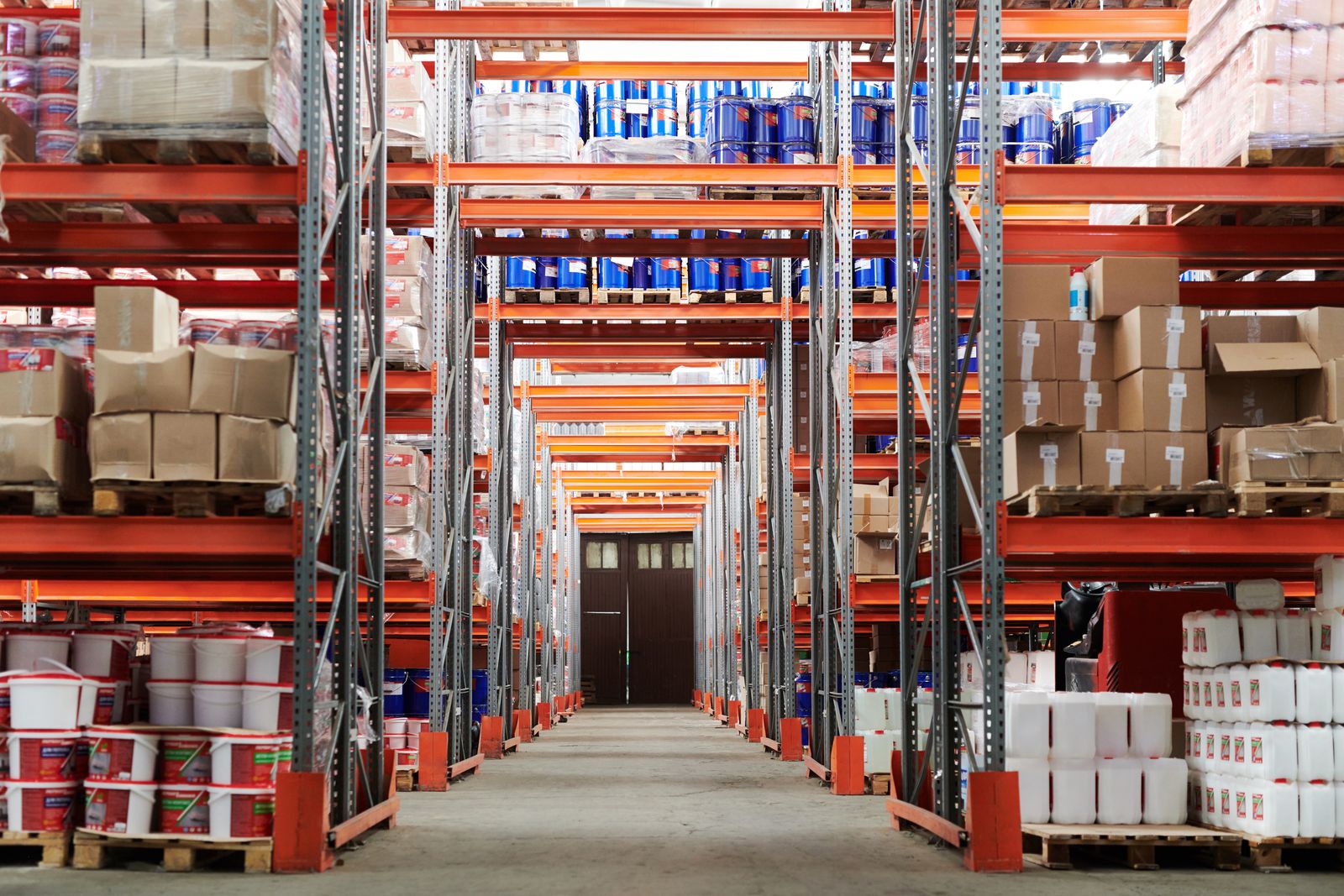
Photos: warehouse aisle — photo by Tiger Lily, Pexels photo 4483610, https://www.pexels.com/photo/warehouse-with-concrete-floors-4483610/; empty industrial plant floor — photo by Pexels photo 236698, https://images.pexels.com/photos/236698/pexels-photo-236698.jpeg
More guides
- How to Hire a Moving Company That Won't Hold Your Furniture HostageMovers › Moving & Storage
- How Much Do Movers Cost? Local vs. Long-Distance Pricing ExplainedMovers › Moving & Storage
- Binding vs. Non-Binding Estimates: The Difference That Decides Your Final BillMovers › Moving & Storage
- Moving Insurance and Valuation: What 'Full Value Protection' Really CoversMovers › Moving & Storage
- Long-Distance Moving: A Start-to-Finish Guide for Household GoodsMovers › Household Goods Moving & Storage
- All Guides & ArticlesBrowse the full guides library