Movers › Storage Trailers & Containers
Storage Trailers and Containers for Renters: What You Can Arrange, What Needs Permission and What the Landlord Covers
The portable storage container is the renter's best moving tool: it arrives at ground level, you load it at your own pace over days instead of hours, and it leaves when you say. It is also, from a landlord's point of view, a multi-ton steel box that someone has parked on their property, possibly on their lawn, possibly against their lease, their HOA's rules, and their city's code — without asking. The complaints I investigate in this corner of the moving world are rarely about the container. They are about the permission nobody got, the driveway nobody protected, and the removal date nobody honored.
This guide sorts the whole arrangement into the three piles that matter: what you can simply arrange as a tenant, what needs your landlord's written permission first, and what — when things go wrong — is whose cost.
What you are renting, and what it costs
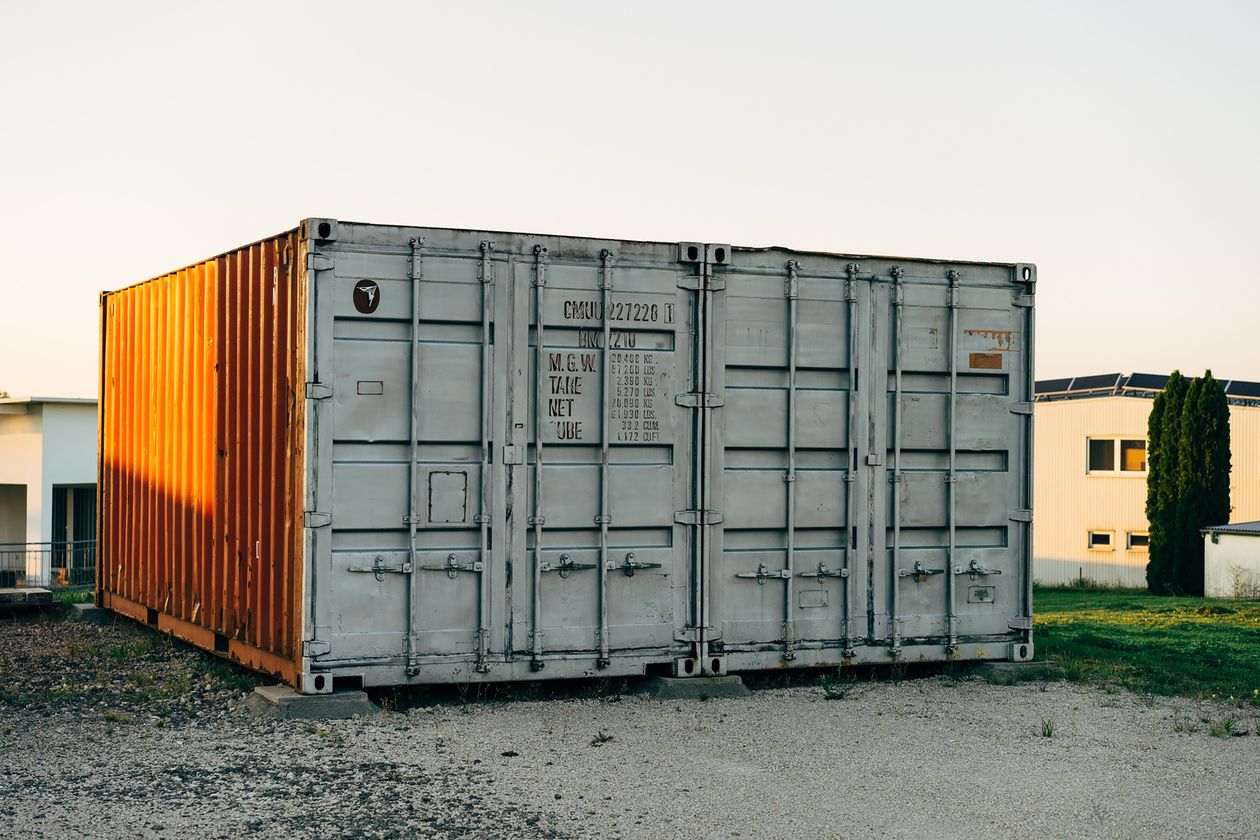
Portable storage comes in two families. Container services (the PODS and PACK-RAT model) deliver a weather-resistant steel or steel-framed container — commonly 7, 12, or 16 feet for residential service — that sits at ground level with no ramp or steps, and is later picked up and taken to your new address or to a storage center. Published pricing puts a 16-foot container at roughly $139 to $175 a month stored at your address and $189 to $239 a month at the company's center, with delivery and pickup fees commonly in the $75 to $150 range each way and local-move totals typically landing between about $220 and $813 depending on distance and duration. Rented industrial containers and storage trailers — the 20- and 40-foot boxes and semi-trailers rented from container yards — run roughly $100 to $250 a month for a 20-foot unit and $150 to $350 for a 40-foot, with delivery and pickup at $150 to $400 per trip. Either way, the rental itself is a contract between you and the container company. No landlord signature is needed to rent one. Everything interesting is about where it may sit.
What you can arrange yourself
The rental contract. Booking, paying for, insuring your contents in, and scheduling delivery and pickup of a container are your business. The company will ask where it is going and who is responsible for it; that person is you.
Loading and using it on your own schedule. Within the rental terms — weight limits, prohibited contents, no living or sleeping in the unit, no hazardous materials — how you fill it and how often you open it are up to you. This ground-level, own-pace loading is the product's entire advantage for renters between leases: no truck deadline, no elevator booking, no crew clock.
Placement that your lease already allows, in space that is exclusively yours. If your lease gives you a driveway or parking space as part of your tenancy and says nothing prohibiting containers or trailers, a short placement for an active move — days to a few weeks — is generally within what you rented. Read that sentence's conditions again, because each one is a place complaints are born: your lease allows it, the space is yours, the stay is short. Change any one and you have moved into the next section.
Off-site storage entirely. A container stored at the company's center never touches the landlord's property at all. For renters in apartments, condos, and strict HOAs, this is often the clean solution: load a container delivered to a permitted spot for a day, or load at the facility, and let the landlord question never arise.
What needs the landlord's written permission
Placement on shared or common areas. Courtyards, shared parking lots, lawns, and any space other tenants also use are not yours to allocate. A container that takes two shared spaces for three weeks is a landlord decision, full stop.
Placement that outlasts a move. A container sitting for months stops looking like moving equipment and starts looking like a structure — to the landlord, to the neighbors, and in many cities to the code enforcement office. Municipal rules on portable containers in residential areas commonly limit how long one may sit, and placement in a public street or right-of-way typically requires a city permit on top of everything else. The landlord's written consent, with dates, is what separates an arrangement from a violation the landlord gets cited for.
Anything touching the building or the ground. A storage trailer's landing gear and a heavy container concentrate weight in ways driveways notice. Placement on grass, over septic systems or sprinkler lines, against the building, or blocking utility access, meters, or fire lanes all need the owner's agreement — because the damage, if it happens, happens to the owner's property.
HOA and condo properties, doubly so. Where an association governs the exterior, the landlord's permission is necessary but may not be sufficient; the association's rules bind the owner, who will pass their conditions — duration, screening, placement — down to you. Get the whole chain in writing. "My landlord said yes" is not a defense against an HOA fine, and the fine, under most leases, lands on the tenant who placed the box.
Get permission the way professionals get everything: in writing, before delivery, naming the container's size, its exact placement spot, the delivery and removal dates, and who is responsible for any damage to surfaces. A landlord who agrees by text message has still agreed — save the message. A landlord who will not put it in writing has not agreed, whatever the phone call sounded like.
What the landlord covers — and what lands on you
The money rules follow a simple principle: each party pays for their own property and their own decisions.
Yours: the rental, delivery, and pickup fees; your contents and their insurance (the container company's cover, if any, is for its box — your goods inside a rented container are insured, if at all, under your own renter's policy, and you should confirm that goods in a container on the property or in storage are within its terms); damage the container or its delivery causes to the driveway, lawn, sprinklers, or building, where your placement caused it — delivery trucks are heavy, and a cracked driveway section or a lawn torn up in a wet week is routinely charged to the tenant who ordered the placement, often out of the deposit; fines from the city or HOA that your placement triggered; and removal — a container left past the agreed date is your cost to move and, if the landlord must act after notice, potentially your cost at their prices.
The landlord's: the property's pre-existing condition — a driveway already cracked, a drainage problem the container merely revealed — and anything the landlord agreed in writing to absorb. If the landlord requires a container's removal for their own reasons mid-arrangement, or orders work that damages your tenancy, the costs of their decision are theirs to negotiate, not yours to absorb silently.
The container company's: the box's own roadworthiness and weather-tightness as rented, honest delivery and pickup within the booked windows, and the charges exactly as contracted. Keep the rental agreement and delivery photographs — of the container, and of the driveway and lawn before the truck arrives. In deposit disputes, the before photograph is the whole case.
| Question | Default answer |
|---|---|
| Can I rent a container without asking? | Yes — the rental is your contract |
| Can I park it in my own leased driveway for a short move? | Usually, if the lease is silent and the space is exclusively yours — check the lease first |
| Can I put it on the lawn, shared parking, or the street? | Landlord's written permission; a city permit for the street or right-of-way |
| Can it stay for months? | Only with written consent, and possibly within city time limits |
| Who pays for a cracked driveway or torn lawn? | The tenant whose placement caused it — photograph surfaces before delivery |
| Who insures my things inside? | You, under your own policy — confirm containers and storage are covered |
| Who pays city or HOA fines for the placement? | Usually the tenant, under the lease — get the full permission chain in writing |
A final note on timing, because renters between leases live inside it: container companies book delivery and pickup slots days ahead in the moving season, landlords answer permission requests on their own schedule, and leases end on fixed dates that forgive nothing. Start the permission conversation the week you decide to use a container — not the week it arrives — and the whole arrangement, box, landlord, and lease, tends to end the way it should: with your deposit intact and nothing heavier than your furniture having moved.
The renter's five-step routine
This site lists 495 storage trailers and containers providers, so the box is easy to find. The routine that keeps it trouble-free is the same every time. Read the lease for container, trailer, parking, and alteration clauses before you book. Ask in writing whenever placement touches shared space, grass, the street, or more than a few weeks — and wait for the written yes. Photograph the surfaces the morning of delivery. Book pickup when you book delivery, with the removal date inside the permission you were given. And confirm your renter's insurance treats the container's contents as covered, wherever the box is sitting.
Do those five things and the portable container is what it promises to be: the calmest way ever invented to move out of one lease and into another. Skip the second one, and it becomes what my complaint files say it can be — a very heavy, very visible lesson in the difference between renting a box and having the right to park it.
Sources
- Portable container pricing from provider comparisons (Storage Unit Costs pod-storage data; MoveBuddha and RecNation summaries) — 16-foot containers at roughly $139–$175 a month at the customer's address and $189–$239 at a storage center, delivery and pickup commonly $75–$150 each way, and typical local totals of about $220–$813.
- Container rental pricing from rental providers' published rates (Container One and Soni Containers summaries) — 20-foot rentals roughly $100–$250 a month, 40-foot $150–$350, delivery and pickup $150–$400 per trip.
- Placement practice from mobile-storage placement guides — ground-level loading without ramps, driveway placement as the default, city permits and time limits for placement in a public right-of-way, and association rules governing exterior placement in HOA properties.
Photos: container at a facility — photo by Markus Winkler, https://www.pexels.com/photo/18609057/ ; container behind a fence — photo by Shane Eckert, https://www.pexels.com/photo/12393185/
More guides
- How to Hire a Moving Company That Won't Hold Your Furniture HostageMovers › Moving & Storage
- How Much Do Movers Cost? Local vs. Long-Distance Pricing ExplainedMovers › Moving & Storage
- Binding vs. Non-Binding Estimates: The Difference That Decides Your Final BillMovers › Moving & Storage
- Moving Insurance and Valuation: What 'Full Value Protection' Really CoversMovers › Moving & Storage
- Long-Distance Moving: A Start-to-Finish Guide for Household GoodsMovers › Household Goods Moving & Storage
- All Guides & ArticlesBrowse the full guides library