Movers › Storage Trailers & Containers
Storage Trailers and Containers Gone Wrong: Your Options, Your Rights and How Fixes Actually Work
Something has gone wrong with the container. It arrived late, or not at all. It leaked, and the sofa smells of mildew. It was picked up with your mother's china still inside the “empty” box you meant to retrieve, or the bill has grown a fee you have never seen before, or — the complaint that fills my notebook most often — the container is sitting in a storage centre three towns away and nobody will say exactly when it is coming back.
Take a breath. Container disputes feel uniquely helpless because the company has your property and you have a phone number. But the situation is more structured than it feels. There is a contract, there are regulators, there is a ladder of escalation that works in a known order — and the customers who recover money are, with remarkable consistency, the ones who climbed it calmly, in writing, with photographs. Here is the ladder.
First, name what actually went wrong
Container failures sort into five kinds, and each has a different fix. Naming yours correctly — in the company's language, not yours — is the first act of the recovery.
Scheduling failures are the most common: late or missed delivery, pickup or final delivery, and rescheduling imposed on you. The largest operator's own review coverage is candid that compensation for a company-caused reschedule is considered case by case, depending on which party is responsible for the delay. That sentence is the whole game: your job is to establish, with timestamps, that the delay was theirs.
Billing failures come next: charges beyond the quote, fees for “failed service” (up to $150 in the market leader's published terms, when it cannot complete a service because of something on your side), non-paved-surface fees, and cancellation charges. Know the published cancellation frame: free cancellation or rescheduling until 4 p.m. local time three days before the first delivery, $150 after that — and after delivery, the delivery fee, first month's rent and contents protection are non-refundable. Many “unfair fee” disputes are really this clause, unread. Some are genuine errors. The paperwork separates them.
Condition failures are the wet, the damaged and the pest-visited. The hard truth sits in the fine print of every review: portable containers are weather-resistant, not waterproof. They are steel boxes with seals, designed to shed weather, not to guarantee a dry interior through months of standing water, a damaged door seal or a roof strike during placement. That does not end your claim — a container delivered with a visibly damaged seal, a holed roof or a door that never closed properly is a defective product, which is a different argument from “it rained.” Photographs of the container at delivery, which almost nobody takes, are what prove which argument you have.
Access and custody failures: the container moved between facilities without notice, access appointments that cannot be had (storage-centre access typically must be scheduled a day or two ahead), or a container collected while still loaded in error.
Damage by the company: placement damage to driveways, roofs and gutters, and items broken during a company handling event. These are property-damage claims, handled differently from service complaints — with estimates, and slowly, as the complaint files attest. Start them early and keep them separate.
Your rights, such as they are — and where they live
There is no single “container law” protecting you, and anyone who promises one is selling something. Your rights are a patchwork, and knowing which patch covers your problem is most of the battle.
The contract is the first law. Your rental agreement and order confirmation govern fees, cancellation, liability limits and the dispute process — including, in many agreements, an arbitration clause or a requirement to use a specific forum before suing. Read yours now, with a pen. The clauses that matter are the cancellation terms, the fee schedule, the protection plan's terms, and the notice address for disputes.
The protection plan is the second. Container companies split cover in two, and customers constantly confuse them: a container-only option covers damage to the box itself — which is otherwise your liability while you have it — while contents protection covers what is inside, typically offered from $5,000 up to $300,000 of cover with a deductible (around $100 per claim in the market leader's terms) and paying depreciated value, not replacement cost. If you declined contents protection, water damage to your furniture is usually your own insurance conversation — homeowners or renters policies are the next call — not the company's. If you bought it, file promptly and in the plan's own format; protection claims die of lateness and vagueness more often than of merit.
Regulators are the third patch, and they split by journey. If the container move crossed state lines, the carrier operates under federal authority — the biggest operator, for instance, is FMCSA-licensed as carrier and broker — and a complaint to the FMCSA's consumer portal becomes part of its record. If everything happened inside one state, your state attorney general's consumer protection office and any state storage or transportation regulator are the route; state self-storage lien and consumer laws govern the storage side. The Better Business Bureau is not a regulator, but it is a working lever: the big container company carries an A+ BBB rating alongside well over a thousand complaints in three years, which tells you both that complaints are common and that the company staffs a team to answer them. A BBB complaint gets a written response from a person whose job is closing it. That is often the fastest fix available.
Small claims court is the fourth. For a dispute that is really about a sum of money — a fee, a refund, a defined loss — small claims courts handle amounts that vary by state, roughly $2,500 to $15,000, without needing a lawyer, for a modest filing fee. Its power in container disputes is often indirect: a company that ignored six emails responds differently to a court date. But file only a claim you can document to the dollar.
How fixes actually work: the escalation ladder
Step one: the documented first contact. Call, by all means — but follow it the same day with a written message through the company's own portal, chat or email (note: at least one major operator does not accept cancellations by email or voicemail at all; use the channel the contract names). State the facts in dates and times, name the remedy you want — refund of a specific fee, redelivery on a specific date, a damage claim opened — and attach the evidence. Keep everything in one thread. Customer-service systems reward the file that a new agent can understand in ninety seconds.
Step two: the formal complaint inside the company. Ask for the escalation or resolutions team by name, reference your written record, and give a deadline: “Please respond in writing by [date ten days out].” Vague dissatisfaction gets vague replies; a dated, specific, polite ultimatum gets a caseworker.
Step three: outside pressure. File the BBB complaint and the regulator complaint that fits your journey — FMCSA for interstate, attorney general for in-state — and tell the company, factually, that you have. Do not threaten what you have not done, and do not skip steps one and two first: regulators and the BBB both ask what the company said when you asked it directly, and “nothing, in writing, twice” is the strongest sentence you can hand them.
Step four: the money levers. If you paid by credit card and the company has charged for a service it did not provide, a chargeback through your issuer is a real remedy — issuers want the contract, the correspondence and proof of non-delivery or error, which is another dividend of the paper trail. If the loss is larger and documented — ruined contents with protection in force, placement damage with contractor estimates — a consumer attorney's demand letter or small claims filing is proportionate. Free legal-aid and state bar referral services exist for exactly this size of problem, and seniors in particular should use them rather than paying contingency fees on a three-figure dispute.
| Problem | First fix | Escalation that works |
|---|---|---|
| Late or missed delivery | Written record of the promised window; ask for rescheduling compensation | BBB complaint citing the timestamps |
| Fee you did not agree to | Contract clause check; written dispute naming the clause | Card chargeback with the contract attached |
| Wet or damaged contents | Photograph everything in place; file under contents protection promptly | Homeowners/renters claim; AG complaint if the container was defective |
| Container or contents unreachable | Written demand for location and access appointment | Regulator complaint (FMCSA if interstate, AG if not) |
| Placement damage to your property | Photos, contractor estimates, separate damage claim | Demand letter; small claims for a defined sum |
| Cancellation charge | Check the three-day / 4 p.m. rule against your timestamps | Written appeal with the booking record |
The evidence habit that decides most cases
Every investigator of these complaints will tell you the same thing: outcomes track documentation, not outrage. For your current problem, assemble the file now — order confirmation and quote, the contract, every message, call logs with dates, photographs of the container and contents, receipts for every cost the failure imposed (hotel nights, replacement essentials, a second mover). For the next container you ever rent, the file starts at delivery: photograph the box on all sides, the seals, the roof if you can see it, and the interior before loading; photograph the loaded, locked container; and keep the inventory you packed from. Ten minutes of photographs is the difference between “weather-resistant, not waterproof” as a conversation-ender and as the start of a settlement.
And a word of proportion, from the files: most container moves end uneventfully, and most failures end at step one or two with a refund, a credit or a redelivery. The companies run complaint teams because resolving you is cheaper than fighting you. Your task is simply to be the customer it is easiest to resolve — specific, documented, calm, and visibly prepared to climb the ladder if the first rung does not hold.
This site lists 495 storage trailers and containers listings, so if this experience ends the relationship, alternatives exist in every market. Whoever you choose next, rent them the way this guide resolves disputes: everything in writing, photographs at delivery, and the contract read before the box arrives — not after it leaks.
Sources
- BestGuide, “PODS Review 2026” — complaint patterns around billing and scheduling, the cancellation window and $150 late-cancellation fee, failed-service and non-paved-surface fees, contents protection from $5,000 to $300,000 with a $100 deductible at depreciated value, and containers described as weather-resistant, not waterproof.
- NerdWallet, “PODS Moving Review” — case-by-case compensation when the company must reschedule a delivery, cancellation by 4 p.m. three days before delivery, non-refundable charges after delivery, and the two protection types (container-only versus contents).
- Money.com, “PODS Review” — FMCSA licensing as carrier and broker under USDOT #1397252, and complaint themes of missed delivery dates and difficulty reaching representatives.
- Better Business Bureau, PODS Moving & Storage profile and customer reviews — A+ rating with 1,454 complaints in three years, and complaint narratives covering storage conditions, rate increases and placement damage claims handling.
- StorageUnitsNear.me, “How Do I Handle Disputes with the Storage Unit Company?” — the written-complaint method, contract and dispute-resolution clauses, and filing damage claims with your own insurer.
- Lawyers.com, “Where Can I Find Legal Help for Consumer Issues?” — attorney general complaints, the FTC, the BBB's dispute role, and small claims courts handling roughly $2,500 to $15,000.
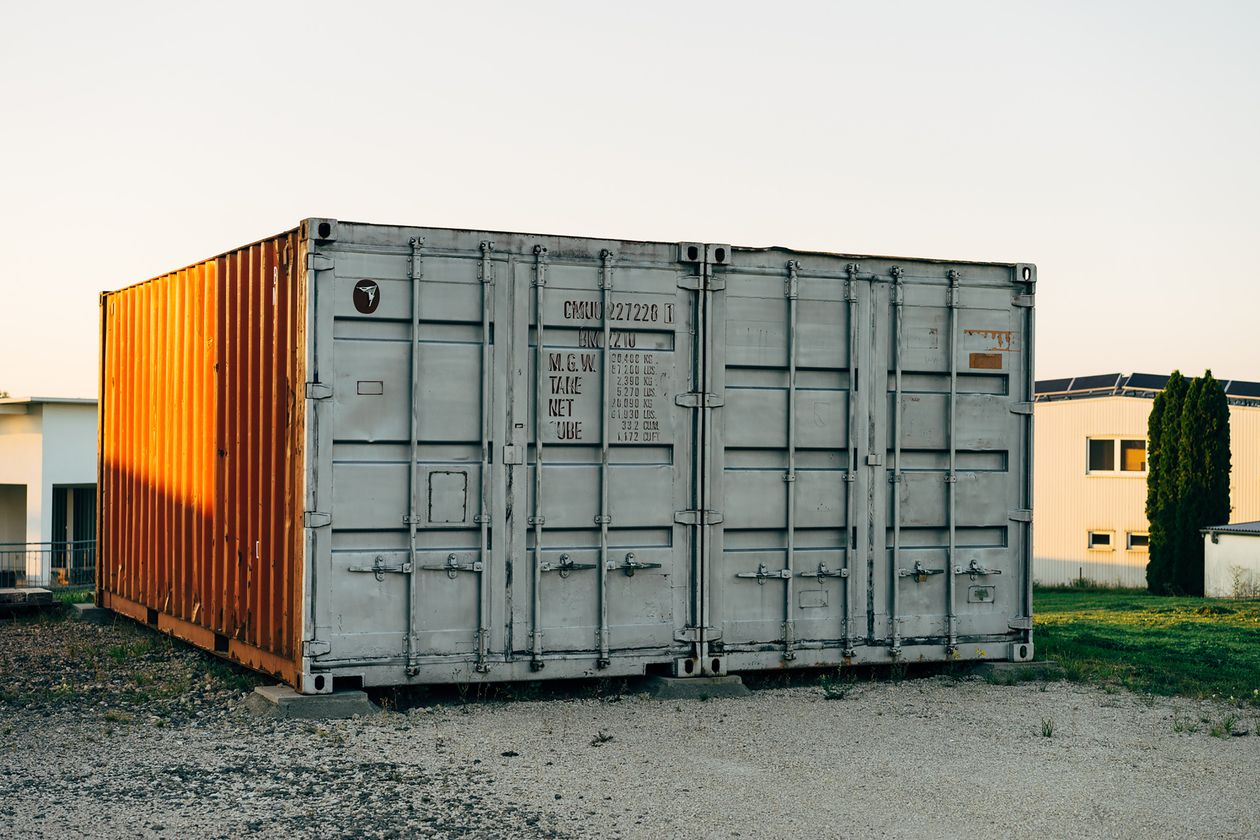
Photos: - Storage container at a facility — photo by Markus Winkler, https://www.pexels.com/photo/18609057/ - Storage container behind a fence — photo by Shane Eckert, https://www.pexels.com/photo/12393185/
More guides
- How to Hire a Moving Company That Won't Hold Your Furniture HostageMovers › Moving & Storage
- How Much Do Movers Cost? Local vs. Long-Distance Pricing ExplainedMovers › Moving & Storage
- Binding vs. Non-Binding Estimates: The Difference That Decides Your Final BillMovers › Moving & Storage
- Moving Insurance and Valuation: What 'Full Value Protection' Really CoversMovers › Moving & Storage
- Long-Distance Moving: A Start-to-Finish Guide for Household GoodsMovers › Household Goods Moving & Storage
- All Guides & ArticlesBrowse the full guides library