Movers › Storage Trailers & Containers
Storage Trailers and Containers in a Small Town or Rural Area: Fewer Choices, Different Math, Better Tactics
In a city, a storage container is a commodity. You open a browser, five companies quote you before lunch, and a truck appears in two days. In a small town, the same steel box is a logistics problem. The nearest depot may be ninety miles away. The company that delivers to your county may run that route only on Tuesdays. And the monthly rent — the number every website leads with — is often the smallest part of what you will actually pay.
I learned this coordinating relocations into plant towns, county seats, and farm country, where the transferee's household goods needed somewhere to sit for six weeks while a house closed. The tactics that work there are not the city tactics. They are slower, more deliberate, and — once you understand where the money really goes — considerably cheaper than panicking and taking the first quote that will drive to you.
This site lists 495 storage trailers and containers providers. Out in rural country, only a handful of them will be relevant to you, and finding which handful is the real work.
First, understand what you are actually renting
Two different products hide under one search term, and rural customers get hurt when they confuse them.
A shipping container is a steel freight box — usually 20 feet or 40 feet long, about 160 or 320 square feet of floor — delivered by a tilt-bed or flatbed truck and set on your land. You load it, you lock it with your own padlock, and it stays on your property until the same company comes back for it. Most container suppliers do not haul your loaded box across the country. It is storage that happens to be portable, not a moving service.
A storage trailer is a semi-trailer — 45, 48, or 53 feet, dock-height, meant to sit at a loading dock or on a level yard and swallow pallets. Farms, contractors, and small businesses rent them for overflow. A 53-foot trailer holds roughly 4,000 cubic feet, far more than most households need, but in farm country it may be what the local rental yard actually stocks.
A branded portable unit — PODS, 1-800-PACK-RAT, U-Haul U-Box and their kin — is the third option, and in rural areas it is often not an option at all. Those networks are built around metro depots. Enter a rural ZIP code and you may get no service, a long delivery window, or a quote with a distance surcharge buried in it. Check coverage first, before you fall in love with the advertised monthly price.
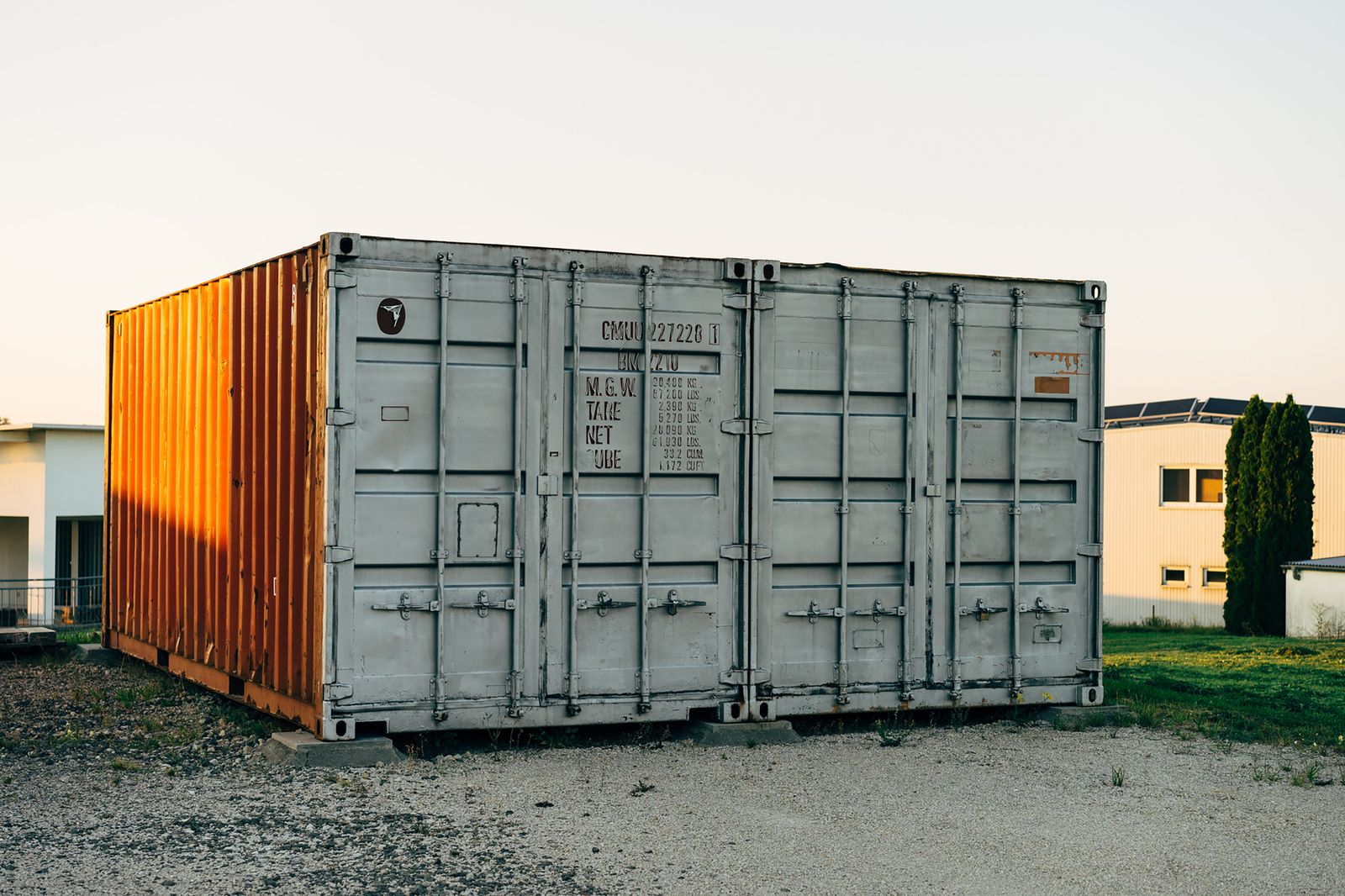
The rural math: delivery is the price
Here is the central fact. Published rental ranges for a standard container run roughly $75 to $200 a month for a 20-foot box and $100 to $300 for a 40-foot. In a port city or near a big depot, delivery might add $100 to $300 each way. Move 300 miles inland, away from any depot, and the same sources put delivery at $400 to $800 each way — and pickup costs about the same again when you are done.
Do that arithmetic on a tight budget and the shape of the deal changes completely:
| Scenario | Monthly rent | Delivery + pickup | Total for 3 months |
|---|---|---|---|
| 20 ft, near a depot | $95–$175 | $200–$600 combined | About $485–$1,125 |
| 20 ft, rural, 300+ mi from depot | $140–$200 | $800–$1,600 combined | About $1,220–$2,200 |
| 40 ft, rural, 300+ mi from depot | $175–$300 | $800–$1,600 combined | About $1,325–$2,500 |
The box did not get more expensive. The road did. Which means the rural customer's job is not haggling $15 off the rent. It is shrinking, sharing, or eliminating the two truck trips.
That produces tactics that sound odd in a city and are obvious in the country:
- Lengthen the term, shorten the trips. If delivery and pickup together cost $1,200, keeping the box an extra month at $150 is cheap insurance against a second delivery later. Do not return a container optimistically and re-rent it six weeks later.
- Ask about the route, not just the rate. A supplier who already delivers to a co-op, a school district, or a contractor near you may fold your drop into an existing run. Ask plainly: "When is your truck next in my county, and what is the delivery fee if I take that slot?" Flexible dates are the rural discount.
- Get the empty-mile answer in writing. Some suppliers charge per mile beyond a radius — one published rural model is $6 a mile with a $275 minimum per leg. Others quote a flat zone fee. Either is fine. What is not fine is discovering the model after the truck is in your driveway.
- Consider buying sooner than a city customer would. A used, cargo-worthy 20-foot container commonly sells in the $2,000 to $3,500 range before delivery, and a one-trip — nearly new — box costs more. Against rural rent plus two long hauls, purchase can cross over in well under a year, and in farm country a sound box resells. If you have the land to keep it, run the buy numbers at the same time as the rent numbers, not after a year of rent.
Scarcity is real, and it changes how you book
In a metro, a sold-out weekend means you call the next company. In a small town, there may be no next company within a hundred miles, and local supply has seasons a city renter never sees.
Harvest puts every farm trailer and container in use at once. Hunting season, county-fair season, and the start of school do smaller versions of the same thing. A plant closing or a flood can empty a county's supply in a week. The practical consequences:
Book the box before you book everything else. In relocation work, I learned to reserve the container before confirming the closing date shuffle around it, not after. If the one supplier in range has two 20-foot boxes and one is rented, your schedule is now their schedule.
Take the size that exists, with one exception. If only a 40-foot box is available and you needed a 20, the extra space is an inconvenience, not a disaster — you will pay somewhat more in rent and the same for the road. The exception is access: a 40-foot box needs a much longer, straighter approach and a bigger clear patch to set down. A box that cannot be placed is not a bargain at any rent.
Put your name on a waiting list, and say what you will accept. "A 20 or a 40, any condition that is wind- and watertight, any Tuesday or Thursday in the next three weeks" gets called back. "Call me when a perfect 20-foot one-trip is cheap" does not.
Ask the people who are not in the directory. In small towns, feed stores, farm-equipment dealers, self-storage owners in the next town over, and even the lumber yard often know who rents trailers locally, who sold theirs, and whose cousin hauls containers on a gooseneck. Some of the best rural capacity never advertises. Verify it like any other supplier — condition, lock, delivery, pickup, total price in writing — but do not assume the internet has seen the whole market. It has not.

The ground has to be ready before the truck is
City deliveries land on concrete. Rural deliveries land on whatever you have — gravel, grass, frozen ruts in January, soft ground in April — and a container set badly is a container whose doors will not close by June.
A loaded 20-foot container can weigh well over 20,000 pounds, concentrated at its four corner castings. Set it directly on soft soil and it will settle unevenly; a twist of even an inch or two can rack the frame enough that the double doors bind. The standard rural fix is simple and cheap if you do it before delivery day:
- Lay a level bed of compacted gravel, or set the corners on concrete blocks, railroad ties, or treated timbers. Level matters more than fancy.
- Keep the box out of the low spot. Containers are wind- and watertight against rain, not against standing water pooled under the floor, and the underside is where rust starts.
- Clear the approach honestly. A tilt-bed delivering a 20-foot box needs roughly 60 to 100 feet of straight run and about 12 feet of overhead clearance with no low wires, branches, or gate headers; a 40-foot box needs considerably more. Walk it, photograph it, and send the photos to the supplier before they dispatch. A failed delivery in rural country is not a quick second attempt — it is another week and, often, a dry-run fee.
- Think about the pickup in mud season. If the truck can only reach the box on frozen or dry ground, your end date is set by the weather, not the calendar. Say so when you book, and price the extra weeks then, while you have leverage.
Permits: rural is easier, not exempt
The good news is genuine: a storage-only container sitting on blocks on rural or agricultural land, outside town limits, very often needs no permit at all. It is treated as movable — closer to a trailer than to a building.
The exceptions are predictable, and one phone call to the county planning or zoning office settles them. Call before delivery if any of these apply: your parcel is inside town or village limits; you have an HOA or deed covenants, which can ban a visible box even where the county allows it; you intend to set the box on a permanent foundation, which can pull it into building-code territory; or anyone will work inside it, with power, lights, or heat, which is occupancy, not storage. Ask about setbacks from property lines and the road while you have them on the phone. Five minutes now is cheaper than a removal notice with a loaded box.
Loading for a box that will sit, not travel
Rural containers often sit longer than city ones — through a winter, a probate, a house build that slipped. Load for sitting.
Put weight low and even, heaviest items toward the center, and nothing irreplaceable directly on the steel floor: condensation — container sweat — forms on cold steel and drips. Pallets, shelving, or even strips of lumber under furniture and boxes lift your goods out of the damp. Leave an aisle if you will need anything before the box leaves; in a 20-foot box loaded door-to-back, the thing you need is always at the back. Use your own heavy padlock — at most suppliers the lock is yours, not theirs — and photograph the loaded box, door seals, and container number before you close it. If there is ever a dispute about condition or contents, those photographs are your evidence.
Ventilation is the quiet issue. A sealed steel box in summer sun gets hot, and in a cold snap it gets cold and damp in cycles. Candles, aerosols, paint, fuel, and anything that would suffer in an unheated barn do not belong in one. If it would not survive your barn, it will not survive the box.
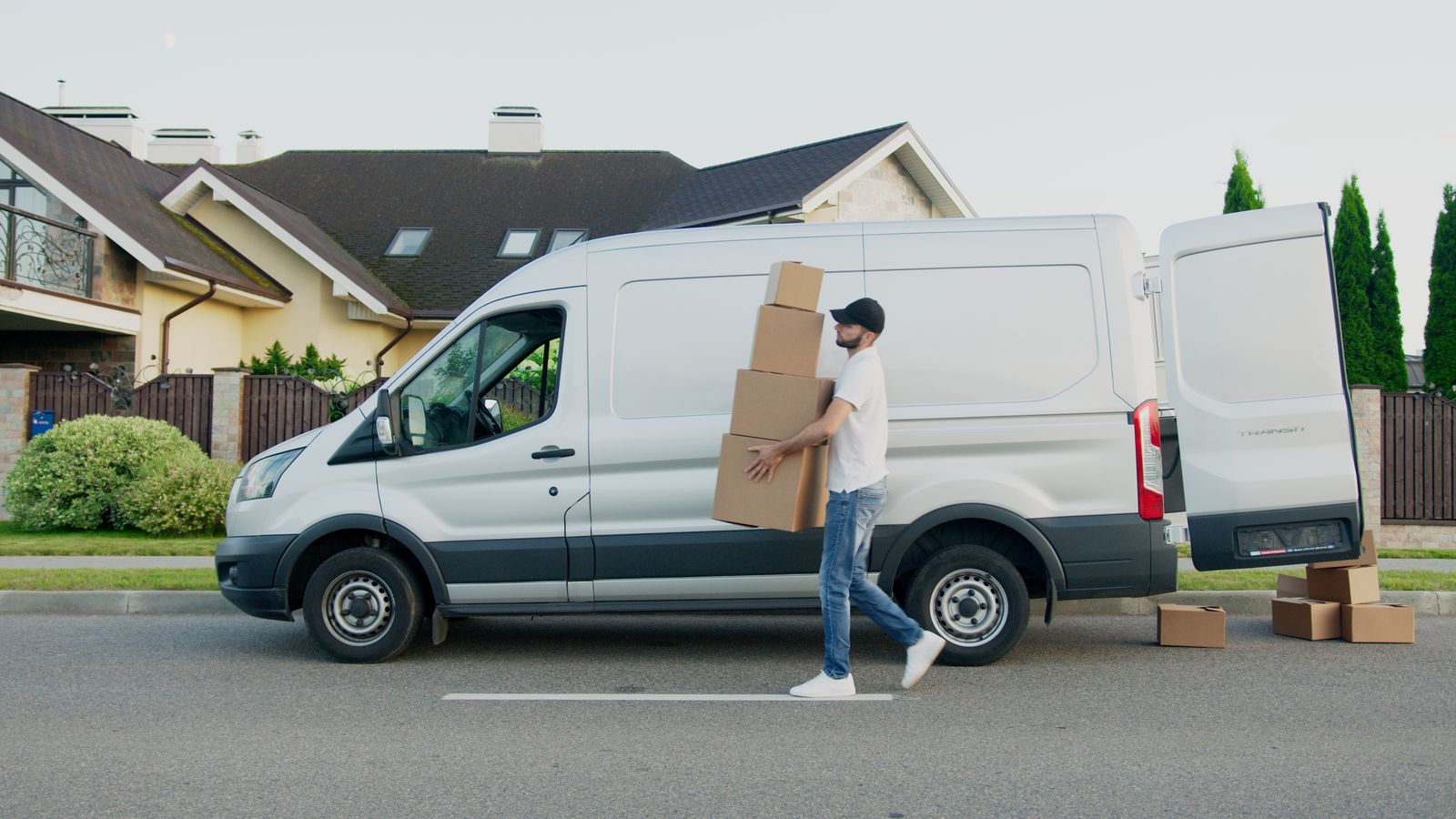
Questions that separate a fair rural quote from a trap
Ask these, and get the answers in writing:
- What is the total for my whole period — rent, delivery, pickup, taxes, and any damage waiver or service fee — not just the monthly rent?
- How far is your depot from my address, and is delivery flat or per mile? What is the dry-run fee if you cannot place the box?
- What condition grade is the box — one-trip, cargo-worthy, or wind- and watertight — and can I see photographs of the actual unit?
- What are the minimum term, the notice period for pickup, and how long does pickup actually take out here once I call?
- What happens if I need it longer? Does the rent step up after a term, and by how much?
- Who supplies the lock, and who is responsible if the box leaks?
A supplier who answers all six plainly is the supplier you want, even at $20 a month more. In a market with few choices, the cheapest quote from a company that will not come back for pickup is the most expensive one you can sign.
The rural bottom line
In a small town, you are not really shopping for a container. You are shopping for two truck trips, a piece of level ground, and a supplier who will still answer the phone in four months. Rent is the visible price; distance, timing, and ground are the real ones. Book early, be flexible on the delivery day, prepare the site before the truck rolls, and do the full-period arithmetic — rent plus both hauls — before you compare anything. Do that, and having fewer choices stops mattering very much. You only needed one good one.
Sources
- Container Compass, shipping container rental prices — establishes size-by-size rental ranges, delivery and pickup ranges, and the higher rent and delivery costs for rural and inland locations far from a port or depot.
- Container Compass, portable storage comparison — establishes branded portable unit sizes, monthly ranges, and that shipping containers are typically stored on your own property and not moved long-distance for consumer moves.
- Containers Delivered and Container Koala, shipping container permit guides — establish that a storage-only container on blocks on rural or agricultural land often needs no permit, and the situations that trigger one: town limits, HOAs, permanent foundations, and occupancy.
- Container supplier rental listings for ranch and agricultural customers — establish zone-based rural delivery pricing, per-unit delivery and pickup as separate lines, deposits equal to a month's rent, and short-term rent premiums.
Photo credits: Shipping containers — photo by Markus Winkler on Pexels. Trucks on a highway — photo by Quintin Gellar on Pexels. Mover carrying boxes — photo by Artem Podrez on Pexels.
More guides
- How to Hire a Moving Company That Won't Hold Your Furniture HostageMovers › Moving & Storage
- How Much Do Movers Cost? Local vs. Long-Distance Pricing ExplainedMovers › Moving & Storage
- Binding vs. Non-Binding Estimates: The Difference That Decides Your Final BillMovers › Moving & Storage
- Moving Insurance and Valuation: What 'Full Value Protection' Really CoversMovers › Moving & Storage
- Long-Distance Moving: A Start-to-Finish Guide for Household GoodsMovers › Household Goods Moving & Storage
- All Guides & ArticlesBrowse the full guides library