Movers › Storage Trailers & Containers
Storage Trailers and Containers Prices Across the Country: Why the Same Job Costs Twice as Much Two States Away
The complaint arrives in a familiar shape. A reader in Ohio paid $420, all in, to have a container dropped, loaded over a weekend, and hauled twelve miles. Her sister in California was quoted $890 for what sounds like the identical job. Same size box. Same weekend loading. Nearly the same distance. One of them, the reader is sure, was robbed.
Usually, neither of them was. Storage trailers and containers are priced by a stack of local costs — land, labour, permits, insurance, competition and demand — that vary so sharply across the United States that a two-to-one gap between states is not an anomaly. It is the market working exactly as markets do, on a product that cannot be shipped cheaply from the cheap place to the expensive one. This site lists 495 storage trailers and containers, and the spread among them is the subject of this guide: what drives it, how to tell a fair local price from an inflated one, and where a tight budget actually has leverage.
The evidence that the gap is real
Start with plain storage, because the data is cleanest there. Marketplace figures averaged over twelve months to mid-2026 put a comparable storage unit at about $56 a month in Oklahoma and $58 in Arkansas, against about $136 in Hawaii, $129 in Alaska, $110 in California and $107 in New York — the expensive states costing well over twice the cheap ones for the same square footage. A second, operator-filed source tells the same story in a different dialect: Public Storage's own annual filing reports realised rent per occupied square foot of $55.26 in Honolulu and $35.76 in Los Angeles, against $17.41 in Dallas–Fort Worth and $15.79 in Charlotte. One company's portfolio, two very different Americas.
Containers inherit that geography and add transport on top. A local container move — delivery, a month's rent, haul to the new address, pickup — commonly runs $350 to $1,100 nationally, and where you land inside that range is largely decided before you pick up the phone, by the ZIP code you are standing in. Long-distance work widens everything: roughly $2,000 to $7,000 and up, because now fuel, driver hours and empty return miles join the bill.
| Market type | What a local container job tends to cost | Why |
|---|---|---|
| Low-cost interior (much of OK, AR, the Carolinas, inland TX) | Toward $350–$600 | Cheap yard land, lower wages, plentiful providers, easy street access |
| Mid-cost suburbs and Sun Belt metros | About $500–$800 | Land and labour in the middle; strong competition holds the line |
| High-cost coastal metros (CA, NY metro, HI, AK, South FL) | Toward $800–$1,100+ | Expensive depots, permit regimes, congestion, high insurance and wages |
| Rural, far from a depot | Anywhere — often surprisingly high | The box travels empty to reach you; deadhead miles are billed in somehow |
The five forces under the price
Land. A container company needs acres: a depot to store empty and loaded boxes, maintain them, and stage trucks. That land costs a fortune near Los Angeles or New York and very little outside Tulsa or Charlotte. Rent on the yard is in every monthly rate, which is why the same operator charges more to keep your container at its centre — about $210 to $239 a month for mid and large portable units in published national averages — than to leave it on your own driveway, at about $159 to $175. Your driveway is free land. Theirs is not.
Labour. Delivery drivers, yard crews and, if you hire them, loading teams are paid local wages, and a CDL driver in coastal California does not cost what a driver costs in Arkansas. Loading help alone can add $200 to $500 for a small crew for a few hours — worth pricing separately in each market rather than assuming a national figure.
Permits and rules. Put a container on a driveway in much of the country and nobody official cares. Put one on a city street in New York, San Francisco, Chicago or Boston and you may need a permit — commonly $50 to $150, occasionally several hundred — plus compliance with time limits and placement rules, and in some places a licensed local operator to begin with. Those costs and frictions land in quotes in regulated cities and simply do not exist in unregulated ones.
Insurance and risk. Operators insure the box, its contents liability, the truck and the delivery itself, at rates that follow local claims costs, traffic density and state regulation. Congested, litigious markets cost more to operate in. You will never see this as a line item, which is precisely why cross-state comparisons mislead: it is baked into the base rate.
Demand and season. Moving is seasonal everywhere, but the peaks bite harder where supply is tight. Summer and month-end dates carry premiums commonly in the 10 to 20 percent range; in fast-growing Sun Belt metros and supply-starved coastal cities, a June Saturday is a scarce good and is priced like one. In slower interior markets the same Saturday may be discounted to keep the fleet moving.
Distance: the multiplier nobody escapes
Geography charges twice — once for where you are, once for how far the box travels. Every extra hundred miles adds real money in fuel, driver time and wear; published breakdowns put fuel surcharges alone at roughly fifty cents to a dollar a mile beyond the first hundred on regional work. Worse is the empty leg. If your town has no depot, the container arrives empty and leaves empty, and those deadhead miles are spread across the few customers out there. This is why a rural quote can beat a coastal one for weirdness: cheap land, cheap labour — and a 180-mile round trip for an empty steel box. Ask any rural provider one question — "where does the container come from?" — and you will understand your quote better than any comparison site can explain it.

How to tell whether your local price is fair
Forget national averages; they describe a country you do not live in. Fairness is a local measurement, and it takes an afternoon:
- Get three quotes for the identical job — same container size, same dates, same placement, same storage duration, all fees included. In a competitive market the middle quote is usually close to fair; a quote double the other two needs a specific explanation, not a vibe.
- Split the quote. Rent, delivery, pickup, transport, permits, protection plan. A fair provider itemises without being asked twice. Geography hides in the transport and delivery lines; padding hides in vague ones.
- Compare per month, not per move, if storage is involved. A cheap move with $239-a-month centre storage loses to a pricier move with $159 driveway storage by the second month.
- Check the calendar. If your dates can slide out of peak season or off month-end, get the alternate quote. A 10 to 20 percent seasonal swing is real money on a long-distance job.
- Price the alternatives in your own market — a storage unit plus a rental truck, or a local mover with its own warehouse. The right benchmark is the best local substitute, not a price from two states away.
Where a tight budget has real leverage
You cannot move your house to Oklahoma. But three of the five forces bend. Timing bends: off-peak dates and flexible delivery windows are worth discounts almost everywhere, because they help the operator as much as you. Distance bends: choosing the provider with the nearest depot, and storing on your own property instead of a centre, cuts the two most mechanical costs in the quote. Duration bends: every storage month avoided is a month at the full local rate saved, and a pre-move clear-out that shrinks you from two containers to one is the single largest saving available in any state — it halves transport, rent and delivery in one stroke.
What does not bend is arguing from another state's price. The dispatcher in California has heard the Ohio comparison before, and it changes nothing, because his yard rent is not in Ohio. Argue from his own market — the competing local quote, the off-peak date, the shorter rental — and you are negotiating with facts he has to respect.
A worked example, because numbers persuade better than adjectives
Take two identical households: a two-bedroom flat's worth of furniture, one 16-foot container, ten days of loading, one month of storage, a fifteen-mile haul. In a low-cost interior market, the arithmetic might run: delivery $75, first month on the driveway $159, transport $120, pickup $75 — about $430 before tax and any protection plan. Run the same household through a high-cost coastal market and each line inflates for its own local reason: delivery $110 because the depot is farther and the driver costs more, storage at the centre because the flat has no driveway, $239, transport $210 through congested streets at congested wages, a street-placement permit $100, pickup $110. The total lands near $770 — and if that coastal move happens on the last Saturday of June, a seasonal premium can push it past $880. Nothing in the second bill is invented. Every line is the first bill, repriced by a more expensive city. That is why the honest comparison is never city against city; it is quote against quote on the same street, for the same dates, with the same lines showing.
The short version
Twice the price two states away is normal, documented, and mostly honest: storage rents run from about $56 a month in the cheapest states to $136 in the dearest, and containers stack transport, permits and labour on top of that same map. Your job is not to find the cheapest state. It is to find the fair price in yours — three itemised quotes, the nearest depot, your own driveway, off-peak dates, and one container instead of two. Do that work and the geography stops being something done to you, and becomes just the weather: real, unavoidable, and entirely possible to dress for.
Sources
- SelfStorage.com, marketplace average storage rates by state — establishes average monthly rates from about $56 in Oklahoma to about $136 in Hawaii for comparable units.
- Public Storage, Form 10-K for fiscal 2025 — establishes realised rent per occupied square foot by metro, from $15.79 in Charlotte to $55.26 in Honolulu.
- PODS, July 2025 storage cost guide — establishes average monthly container rents on a customer's property versus at a storage centre, and average delivery and pickup fees.
- moveBuddha, moving container pricing data — establishes local container moves at about $220–$813 per container and cross-country moves at about $2,068–$7,448 per container.
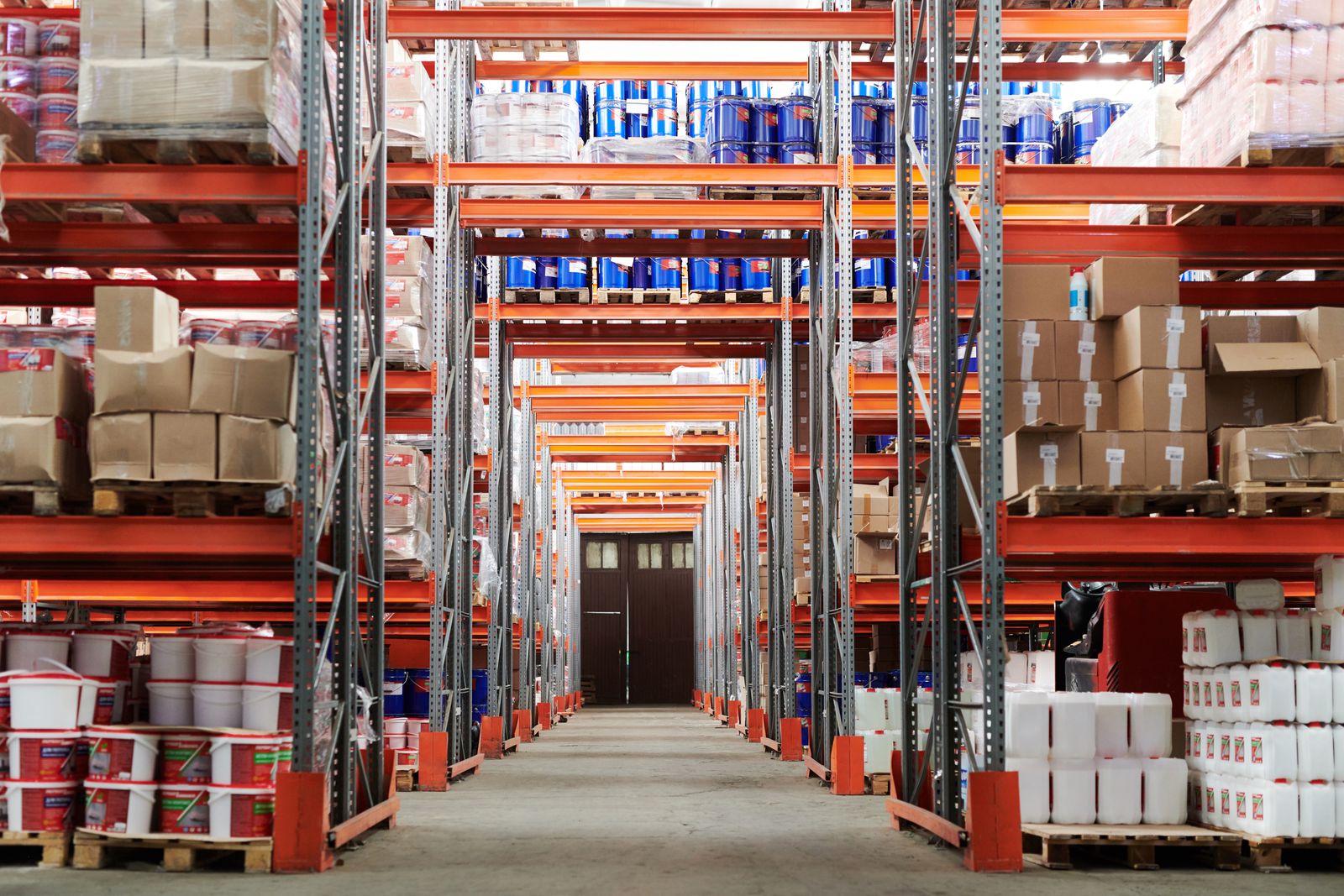
Photo credits: Storage aisle — via Pexels (free to use). Containers stacked in a yard — Tom Fisk, via Pexels (free to use).
More guides
- How to Hire a Moving Company That Won't Hold Your Furniture HostageMovers › Moving & Storage
- How Much Do Movers Cost? Local vs. Long-Distance Pricing ExplainedMovers › Moving & Storage
- Binding vs. Non-Binding Estimates: The Difference That Decides Your Final BillMovers › Moving & Storage
- Moving Insurance and Valuation: What 'Full Value Protection' Really CoversMovers › Moving & Storage
- Long-Distance Moving: A Start-to-Finish Guide for Household GoodsMovers › Household Goods Moving & Storage
- All Guides & ArticlesBrowse the full guides library