Movers › Storage Trailers & Containers
Storage Trailers and Containers: The Complete Checklist Before You Commit
In dispatch, there is a particular silence that comes over the radio when a driver reaches a site and the job cannot be done. The container does not fit the approach. The ground is soup. The customer needed a permit nobody mentioned, or the unit that arrived is not the unit in the photograph. Every one of those failures was decided days earlier, at a desk, by a question that was never asked.
Storage trailers and containers are simple products — a steel box, or a trailer at dock height, rented or bought and placed on your ground — wrapped in an unusual number of pre-commitment decisions. This is the complete checklist: every decision, document, and question to settle before money or signatures are committed, in the order dispatch would ask them. It is written for anyone placing a unit, but the pacing assumes a downsizing household working to a deadline, because that is who gets hurt worst by a failed delivery day.
Decision one: trailer, container, or portable unit
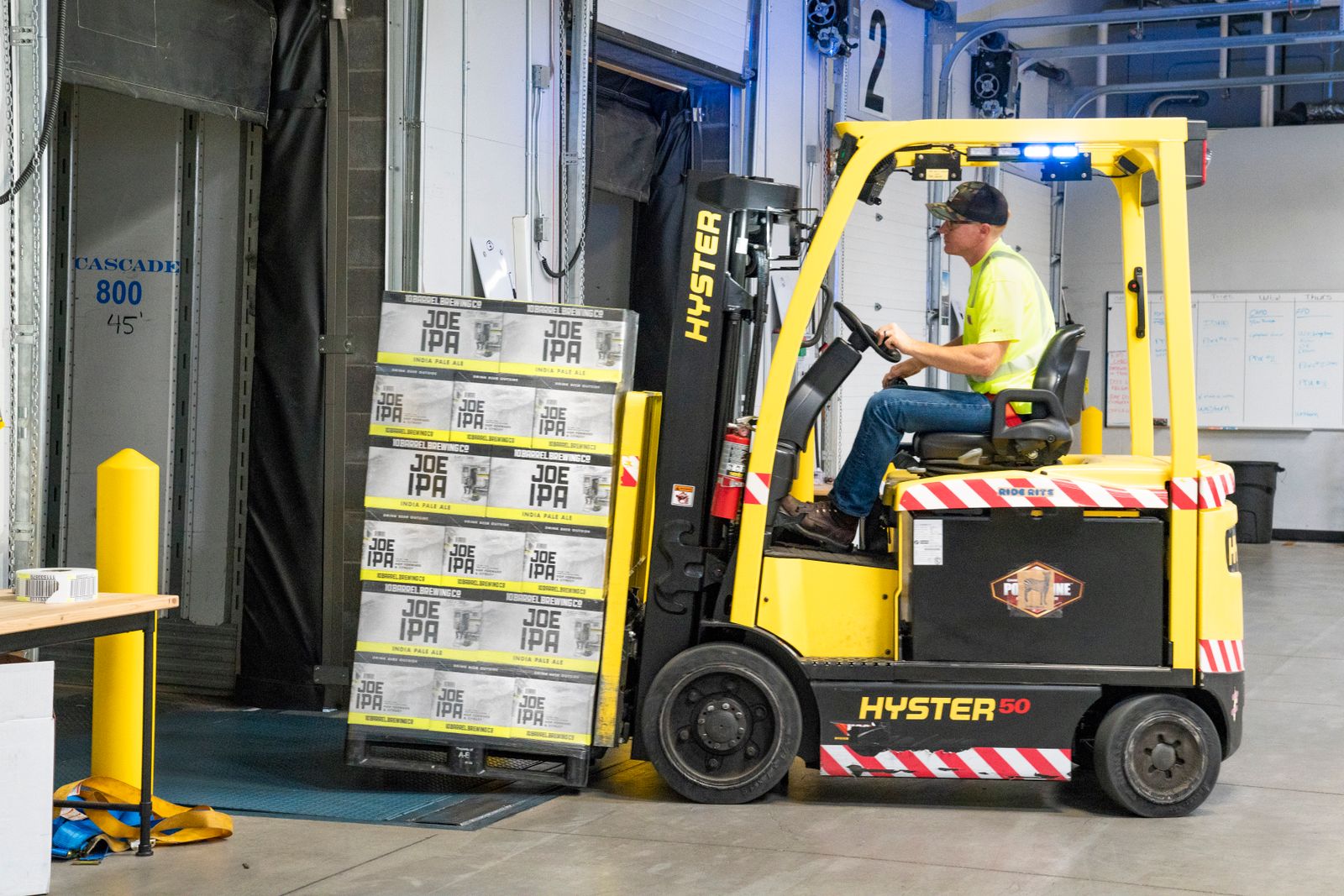
These are three different products sold under overlapping names, and the first checklist item is knowing which one your quote describes. A storage trailer is a semi-trailer, typically 28 to 53 feet, that stays on its wheels at dock height — ideal where a loading dock or forklift does the work, awkward for a household, because everything enters up a ramp at deck height. A ground-level container — the shipping-container family, 10 to 40 feet — sits on the ground, loads at walking height, locks like a safe, and is the default for sites, farms, and homes. A portable storage unit from the national brands is a smaller container, 7 to 16 feet, delivered by a lift system that keeps it level, rented monthly and often stored at the provider's centre instead of yours.
The choice follows the loading, not the brochure. Forklift or dock: trailer. People carrying boxes by hand: ground-level container. A household move with storage in the middle: portable unit. Get the product name, dimensions, and door configuration — swing doors, roll-up, or both — in writing on the quote. "A 20-foot unit" is not a specification.
Decision two: rent, rent-to-own, or buy
Price the commitment against the honest duration, including the overrun you are currently not planning. Portable units rent at published national averages of about $139 to $239 a month depending on size and whether the unit sits on your property or at the provider's storage centre, with delivery and pickup around $75 to $150 each way — so a single month of a 16-foot unit can total $369 to $660 all-in, against $120 to $230 for a comparable month in a self-storage unit. Ground-level containers rent locally at widely varying rates, sell used from roughly $1,300 for a wind-and-watertight 20-foot box upward, and sit between the two on rent-to-own programmes that convert payments into ownership.
| Commitment | Best when | Watch for |
|---|---|---|
| Monthly rental | The end date is real and near | Delivery and pickup fees at both ends; rate after any promotion |
| Rent-to-own | You will likely keep it, cash is tight | Total paid versus purchase price; who owns it if you stop early |
| Purchase | Years of use, or modifying the unit | Grade verification, delivery cost, resale and removal |
The checklist question is not "which is cheapest" but "what does exit cost." A rental exits with a pickup fee. A purchase exits with a sale or a removal bill. Commit to the exit you can actually execute.
Decision three: the site, measured, not eyeballed
More deliveries fail on geometry than on everything else combined, so measure the site before you sign, and give the provider numbers, not adjectives.
Approach clearance. A tilt-bed delivery needs long, straight, unobstructed space: roughly 75 feet of straight clearance for a 20-foot container and about 110 feet for a 40, with around 10 feet of width — and some tractor-trailer deliveries ask for 160 feet in front of a 40. Portable lift systems need far less, which is precisely their advantage on tight residential sites; one provider specifies a path at least 14 feet wide, 40 feet long, and 15 feet of overhead clearance as a requirement, not a preference.
Overhead clearance. Delivery trucks stand about 13 feet 6 inches tall, and during unloading the raised deck can lift the front of a container to a maximum height of about 16 feet. Walk the route and the pad looking up: power lines, branches, eaves, and bridges below that figure are delivery-day refusals waiting to happen.
Ground. The surface must be firm, stable, and level: pavement, concrete, or compacted gravel preferred; grass, dirt, and sand are case-by-case and refused when soft, wet, or unstable — excessive moisture, sand, and ice are named refusal conditions by operators. Level is not cosmetic: a twisted container's doors bind, and a low spot becomes a pond against the steel. Supports go under the corners — treated blocks, ties, or beams, level with each other — never hollow concrete blocks, which crack under load. And confirm what the spot is not on top of: septic systems, underground tanks, sprinkler heads, fresh asphalt, and new pavers are all on providers' do-not-place lists.
Door orientation. Decide which way the doors face before the truck arrives, with room for them to swing fully open and for you to work in front of them. Repositioning a placed container is another truck, another fee, another day.

Decision four: permission — zoning, permits, and the HOA
No national rule governs a container on your land; your city or county decides through zoning and building codes, and an HOA can be stricter than either. Most codes treat a container on a home lot as an accessory structure, like a shed: a house must already stand on the lot, setbacks from property lines apply, it often must sit in the side or rear yard, it counts toward lot-coverage limits, and it is for storage only. Time is the usual fork — many jurisdictions allow temporary placement for a defined window, commonly somewhere between 30 and 180 days, sometimes under a renewable temporary-use permit, and the clock starts at placement. A foundation, utilities, or people working inside reliably trigger building-permit territory. Street placement is a separate world: on a public street or sidewalk, expect a city permit almost everywhere, or an outright ban.
The checklist is three phone calls or portal visits, made before the order: the planning or zoning office ("a storage container, this size, this long, at this address"), the HOA or a read of the covenants (a county permit does not override them), and, if you rent the property, the owner's written consent — some jurisdictions require a tenant's consent to be written and notarised. Downsizers, note the direction of travel: the rules at the destination address govern the unit sitting there, and a retirement community or a child's HOA may have the strictest answer of the day.
Decision five: the documents, read as a set
Four documents decide every later argument, and the checklist is to hold all four before committing. The quote, itemised: unit, size, grade if buying, rent, delivery, pickup, transport, protection, taxes, and the rate after any introductory period. The rental or sale agreement: minimum term, renewal and rate-increase terms, late fees, the lien provisions that let an operator sell stored goods after default under your state's statute, prohibited contents, and who insures what. The contents protection terms: container-only protection can run about $10 a month, while contents protection is priced by coverage level — published figures run from about $39 to over $500 a month at the highest tiers — and the gap between those two products is the gap between replacing a box and replacing your belongings. The delivery terms: the clearance and ground requirements above, the failed-delivery fee, and the cancellation deadline — one national brand charges $150 if you cancel inside three days of delivery, with a 4 p.m. local cutoff. If a provider will not produce a document, that is the document review's conclusion.
Decision six: the unit itself, inspected
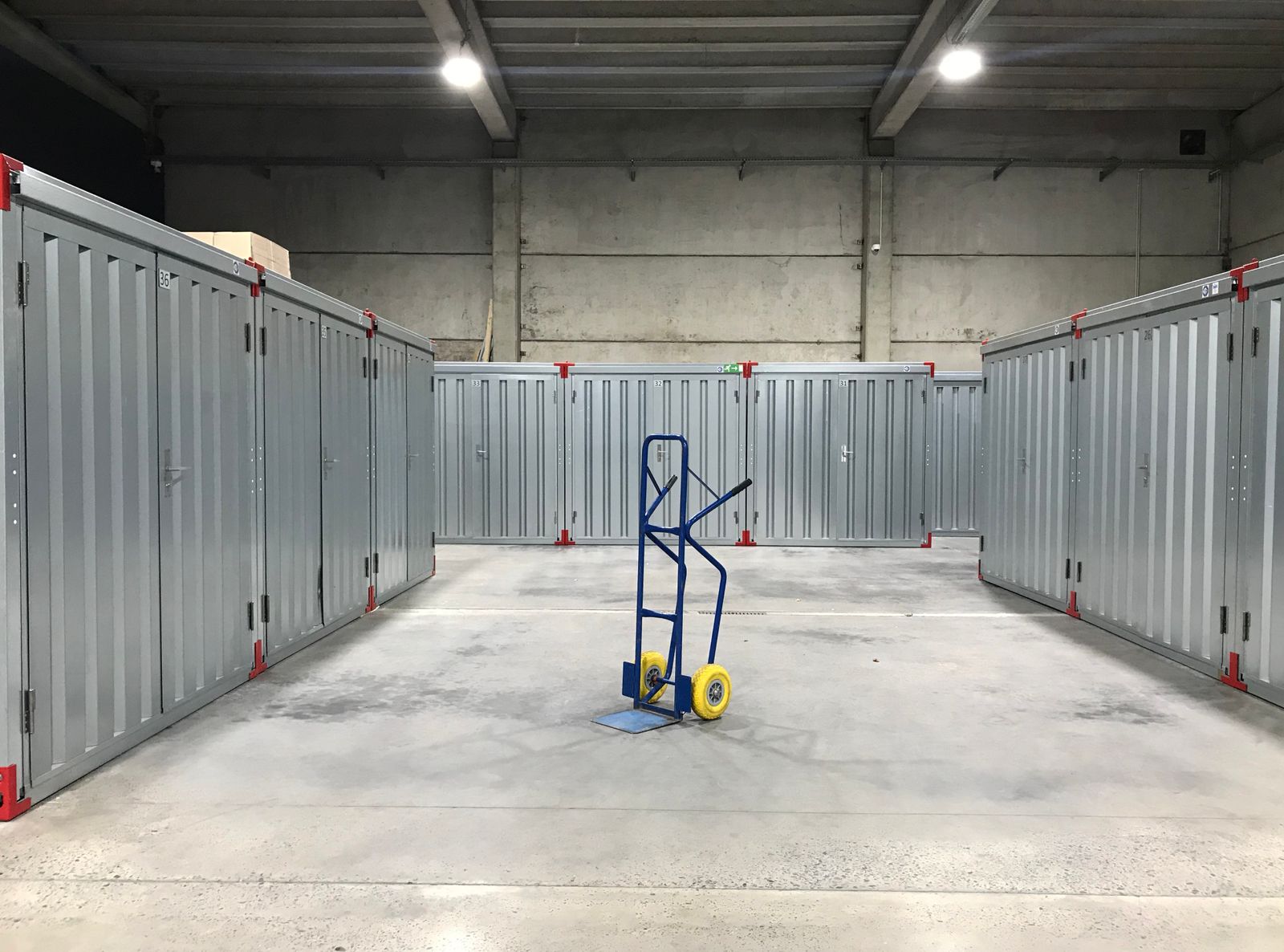
Buying, the grade is the product: as-is, wind and watertight, cargo-worthy, one-trip — seller-assigned labels with no official standard behind them, so demand photographs of the exact unit and inspect doors, seals, floor, roof, and corner castings, or pay for a unit inspected to a named standard. Renting, inspect at delivery instead: stand inside with the doors closed and look for daylight, work the doors through their swing, check the floor for soft spots and the roofline for standing-water rust, and photograph everything before you load a single box. A unit swapped later "for an equivalent" should be a contract term you have read, not a surprise you are having.
The final pass: questions to ask out loud
Before money moves, say these to the provider and write down the answers. What exactly is being delivered — product, size, door type — and is the unit in the photographs the unit I get? What is the total first payment, and the total if I keep it six months? What are the delivery requirements for my site, and what happens, and what does it cost, if delivery fails? What permits or permissions are my responsibility, and have you delivered to my street before? What does the agreement say about late payment, lien sale, and rate increases? What protection covers the contents, at what limit and deductible? What does pickup, removal, or resale look like at the end, and what does it cost? And what is the cancellation deadline, to the hour?
This site lists 495 storage trailers and containers listings, so no answer needs to be taken on trust — the next provider is one call away, and a checklist travels well. Dispatch's whole wisdom fits in one line: the cheapest time to solve a delivery is before it is one. Commit only when every box above is ticked, and the truck that arrives at your gate will be the boring kind — the kind that places the unit, gets a signature, and leaves.
Sources
- RecNation Storage, Pod vs. Storage Unit: Which Is Cheaper? — portable container monthly rates of $149 to $360 by size, delivery and pickup fees of $75 to $150 each way, and a one-month 16-foot total of $369 to $660 against $120 to $230 for a comparable storage unit.
- Storage Unit Costs, Pod Storage Cost (2026) — monthly storage averages of about $139 to $175 on your property and $189 to $239 at a storage centre, delivery and pickup around $80 each, and contents protection from about $39 to $517 a month by coverage level.
- American Trailer and Storage, Delivery and Prep Information — 70 feet of clear space for tractor-trailers, 16 feet of maximum unloading height, refusal conditions for wet, sandy, and icy ground, and gravel pad guidance.
- Hugg and Hall Mobile Storage, Storage Container FAQs — about 75 feet of straight clearance for a 20-foot container and 110 feet for a 40-foot, 14 to 16 feet of overhead clearance, and placement on level, firm surfaces.
- Containers Broker, Can I Put a Shipping Container on My Property? — accessory-structure treatment, setbacks and lot coverage, and city examples of permit and design rules for containers.
- Sentinel Containers, Do You Need a Permit for a Shipping Container? — temporary placement windows commonly between 30 and 180 days, HOA and deed restrictions sitting above city approval, and foundations and utilities as permit triggers.
- Photo by ELEVATE, https://www.pexels.com/photo/man-riding-a-yellow-forklift-lifting-boxes-1267324/
- Photo by Tiger Lily, https://www.pexels.com/photo/warehouse-with-concrete-floors-4483610/
- Photo by David Slaager, https://www.pexels.com/photo/5759145/
More guides
- How to Hire a Moving Company That Won't Hold Your Furniture HostageMovers › Moving & Storage
- How Much Do Movers Cost? Local vs. Long-Distance Pricing ExplainedMovers › Moving & Storage
- Binding vs. Non-Binding Estimates: The Difference That Decides Your Final BillMovers › Moving & Storage
- Moving Insurance and Valuation: What 'Full Value Protection' Really CoversMovers › Moving & Storage
- Long-Distance Moving: A Start-to-Finish Guide for Household GoodsMovers › Household Goods Moving & Storage
- All Guides & ArticlesBrowse the full guides library