Movers › Car Storage
The Fine Print in Car Storage Ads: Translating Offers and Teaser Prices Into Real Costs
Every car storage advertisement leads with a number that is not the price. It might be $1 for the first month. It might be "from $49." It might be half price for three months, in type three times larger than anything else on the page. None of these numbers is a lie, exactly. Each one is a true statement about a short period, a small space, or a set of conditions that may have little to do with the car you own and the months you need.
This site lists 458 car storage providers, and their ads all compete in the same few square inches. The way to shop among them is not to find the lowest headline — it is to translate every headline into the same language: the total you will pay, all in, for the space your car actually fits in, for the whole time it will be there. This guide decodes the phrases, one by one, and shows the arithmetic that turns an offer into a cost.

"From $49 a month" — from is doing the work
"From" prices quote the cheapest space on the site: usually the smallest outdoor spot, sometimes one that exists in single digits, is already taken, or fits a motorcycle rather than a car. Storage.com's listings data shows why the spread matters: outdoor uncovered parking averages $17 to $100 a month, covered parking $50 to $200, and an enclosed indoor unit $150 to $270. An ad can honestly say "from $49" about a facility where the space you need costs $180.
The translation is simple. Ignore the "from" figure entirely and price three specifics: the type of space (outdoor, covered, indoor), the size your car requires — most sedans and small SUVs need a 10×20 unit, averaging about $119 a month nationally — and the facility you will actually use, because the same brand prices differently across town. If the website will not show the price for that space at that site without a phone call, that is information too.
"$1 first month" and "50% off" — the discount ends, the tenancy doesn't
Introductory offers are the industry's standard way of filling empty spaces: $1 for the first month, the first month free, or half price for one to three months. They are not scams. They are, however, priced on the assumption that moving a car twice is annoying enough that most customers stay and pay the standard rate once the promotion expires — and the standard rate is the number the ad makes smallest.
U-Haul, which markets a one-year price lock against exactly this practice, describes the pattern plainly: a low promotional rate attracts the renter, then the price rises after move-in, sometimes doubling or tripling within a year in its competitors' facilities. Legal guidance on storage pricing makes the same point from the tenant's side: when a promotion ends, the bill does not rise so much as revert — a unit advertised at $50 during a promotion can become $100 or more the month it expires, because $100 was the rent all along.
Do the total-cost arithmetic before you sign. A space at $60 a month for three months, then $140, costs more over six months than a space at a flat $110 with no offer at all. Promotions reward short, certain stays. If your stay is long or uncertain, the flat rate is often the cheaper product wearing plainer clothes.
The street rate, the web rate, and the rate you will pay in month seven
Facilities commonly keep more than one price for the same space. The "street rate" is the standard rent. The "web rate" is a lower price offered online to win the booking. And then there is the existing-tenant rate path: most storage agreements are month-to-month and allow the operator to raise rent during the tenancy, typically with written notice, often around 30 days.
Pricing guides note that operators commonly target annual increases in the region of 3 to 7 percent, with larger jumps when a promotion expires or occupancy is high, and that revenue-management software now adjusts many facilities' prices automatically as spaces fill. None of this is hidden in a legal sense — it is in the rental agreement, in the clause most people skim. Before you book, ask two questions and write down the answers: how long is this rate guaranteed, and how much notice will I get of an increase? A facility that guarantees the rate for six or twelve months is selling a different, more valuable product than one that guarantees it until the end of the month, even at the same starting price.
Watch also for billing-cycle wording. Some operators bill in 28-day cycles rather than calendar months, which produces thirteen billing periods in a year instead of twelve — the same stated "monthly" rate, roughly 8 percent more paid across the year. The agreement will say which cycle applies. Look.

The fees that never appear in the headline
The monthly rent, even honestly quoted, is not the whole bill. The recurring add-ons in car storage contracts are well documented:
| Item | Typical cost | What to ask |
|---|---|---|
| Administration or move-in fee | $10–$75, one time | Is it charged at all, and is it waived for longer bookings or prepayment? |
| Required insurance or protection plan | About $10–$40 a month | Can I use my own insurance instead, and what proof do you need? |
| Lock | $15–$40 if you must buy theirs | Must it be a specific type, and can I bring my own? |
| Late fee | $10–$50, plus possible interest | When is rent late, and what is the timeline before a lien process starts? |
| Rate increases | Often 5–15% a year in contract terms | How much notice, and is there any cap or guarantee period? |
Insurance deserves a closer look, because it is the add-on most likely to be both required and overpriced. Most facilities require stored vehicles to be insured — reasonably, since an uninsured car in a shared building is everyone's problem. But many also sell their own protection plan at the desk, and consumer guides note those in-house plans can carry a substantial markup over equivalent cover you arrange yourself. Your existing car insurance may already satisfy the requirement; some facilities accept a homeowner's or renter's policy for stored belongings, though a stored vehicle usually needs its own cover kept in force. Bring proof of your own policy to the desk before you are sold theirs, and ask whether declining their plan is actually permitted — at some facilities the "optional" plan is added to the first bill by default and removed only on request.
The lock is smaller money with the same lesson. A facility that requires a disc or cylinder lock and sells it at the counter is not cheating you, but the price belongs in your move-in total, not in a surprise at the desk.
"Climate-controlled," "secure," and other adjectives with no standard
Some ad words have legal definitions behind them. These do not.
Climate-controlled can mean heated and cooled to a narrow band, or it can mean the building has ventilation and a heater that keeps pipes from freezing. For most everyday cars stored for a few months, the distinction barely matters; for a classic with leather, wood and old rubber, it does. Ask for the actual temperature and humidity range the facility maintains, and treat a vague answer as a vague product.
Secure can mean a fenced lot with a gate code and cameras that record, cameras that are watched, an on-site manager, or a padlocked yard behind a building. Ask what the word consists of at that facility: fencing, gate access hours, camera coverage, lighting, and whether anyone is present overnight.
24-hour access sometimes means you may come at any hour, and sometimes means you may request access at any hour, or that extended access costs an extra monthly fee — access add-ons of $20 to $50 a month appear in vehicle storage contracts. If you will need the car at odd hours, confirm whether your rate includes the hours you need.
"Vehicle storage available" at a general self-storage facility comes with conditions the ad omits: most facilities require the car to be registered, insured, in running condition, and titled in your name, and one rented space holds one vehicle. A non-running project car can be refused at the gate by a facility that happily advertised vehicle storage. State your car's condition when you book, not when you arrive.
Bundles, prepay deals and "free" extras
Bundled offers — a month of storage with a truck rental, a free lock and boxes, a discount for prepaying several months — are worth pricing rather than dismissing. A prepay discount is real money if your stay is certain and the refund terms for leaving early are written down; without those terms, prepayment converts your flexibility into the facility's. A "free" first month that requires a minimum stay is a discount with a condition, which is fine, provided you count the condition. Free extras you would not have bought — boxes for a car, a lock you already own — add nothing, and should add nothing to your comparison.
Military, senior, student and employer discounts are common and usually require proof and do not always combine with introductory offers. Ask which single discount is largest for you rather than assuming they stack.
The five-minute translation, before you sign anything
Take any car storage ad and run it through the same conversion:
- Space: What type and size does my car actually need, and what is the standard monthly rent for that space at that facility — not the "from" price?
- Promotion: What discount applies, for exactly how many months, and what is the rent the month after it ends?
- Fees: What is charged at move-in — administration, lock, deposit — in dollars?
- Recurring extras: What insurance or protection, access or other monthly add-ons are required, and can my own insurance replace theirs?
- Movement: How and when can the rent rise during my stay, how much notice will I get, and is billing monthly or in 28-day cycles?
- Total: What will I have paid, all in, if I stay three months? Six? Twelve?
Write the totals for two or three facilities side by side, for the same stay lengths. That sheet — not the ad — is the price comparison. Facilities with plain pricing survive it happily; a facility that will not answer the questions in writing is telling you how the tenancy will go.
Storage is a simple product sold in complicated language, because the language is where the margin is. Translate it, and the cheapest real offer is usually obvious — and it is seldom the one with the largest number in the advertisement.
Sources
- Storage.com, vehicle storage pricing — establishes typical monthly ranges by storage type, the roughly $105 average, and unit-size pricing.
- U-Haul, the introductory rate trap in self-storage, and its 1-Year Price Lock terms — establishes how promotional rates rise after move-in and what a rate guarantee covers and excludes.
- LegalClarity, why storage units raise rates — establishes promotional-rate reversion, typical annual increase ranges, revenue-management pricing, and 28-day billing cycles.
-
StowHelp, hidden fees in vehicle storage contracts — establishes typical administration, insurance, lock, late and lien fee ranges in vehicle storage agreements.
-
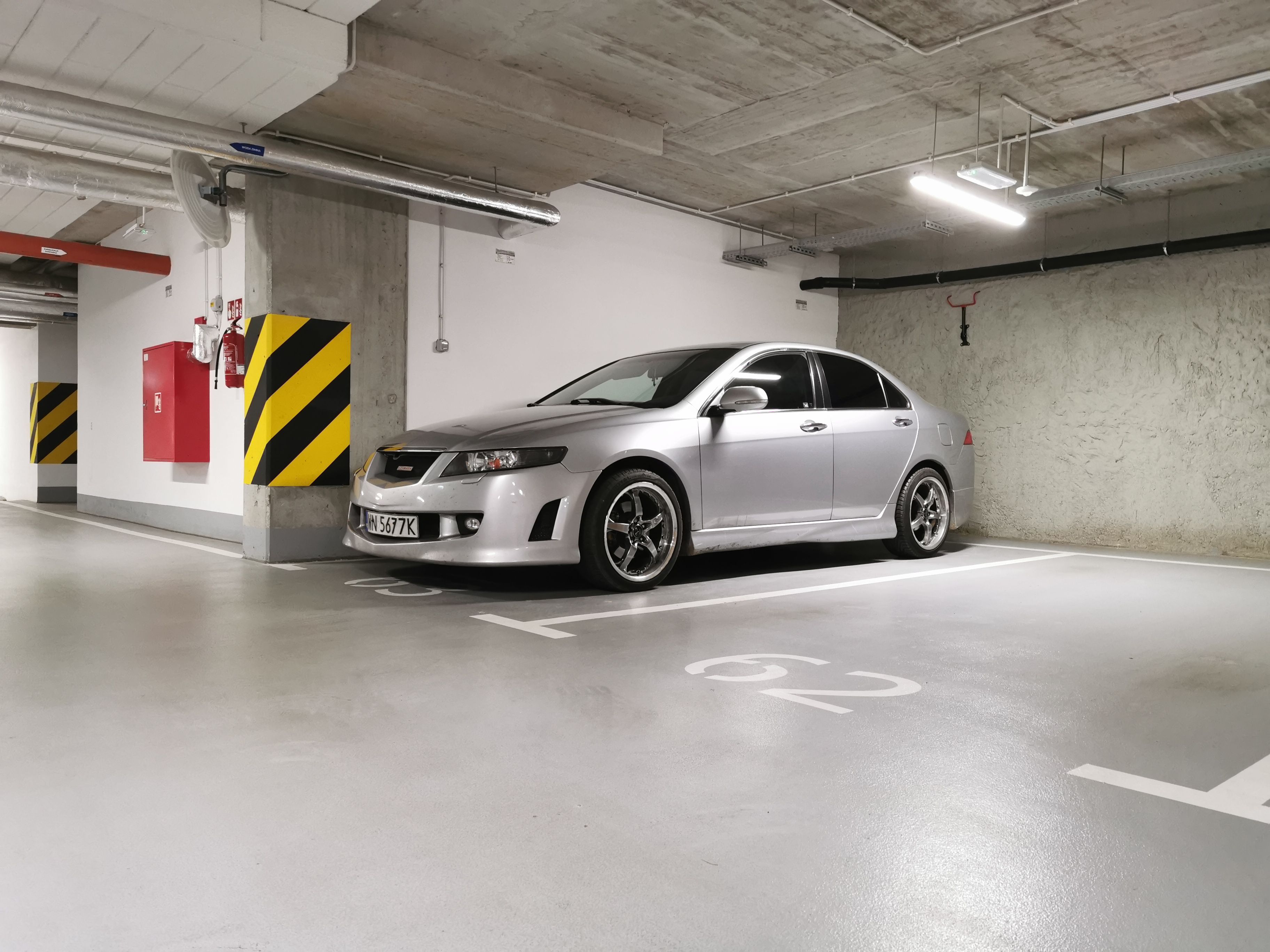
White car in a garage — photo by Erik Mclean, https://www.pexels.com/photo/sleek-white-car-parked-in-dimly-lit-garage-28984446/
- Vintage car in a garage — photo by Vitali Adutskevich, https://www.pexels.com/photo/chevy-corvair-car-parked-in-a-garage-14065441/
- Car in a garage — photo by Nessip, https://www.pexels.com/photo/car-parked-in-garage-5359816/
More guides
- How to Hire a Moving Company That Won't Hold Your Furniture HostageMovers › Moving & Storage
- How Much Do Movers Cost? Local vs. Long-Distance Pricing ExplainedMovers › Moving & Storage
- Binding vs. Non-Binding Estimates: The Difference That Decides Your Final BillMovers › Moving & Storage
- Moving Insurance and Valuation: What 'Full Value Protection' Really CoversMovers › Moving & Storage
- Long-Distance Moving: A Start-to-Finish Guide for Household GoodsMovers › Household Goods Moving & Storage
- All Guides & ArticlesBrowse the full guides library