Movers › Containers Industrial
The Fine Print in Containers Industrial Ads: Translating Offers and Teaser Prices Into Real Costs
A shipping container ad is a small masterpiece of compression. "20 ft container — from $1,225!" it says, and in those five words it has concealed the size's least popular variant, the grade's worst acceptable example, a depot that may be three hundred miles from you, and a delivery charge that can rival the box. None of this is necessarily dishonest. Container pricing genuinely is a three-variable equation — size, condition, and distance from a depot — and an ad can only print one number. But the number it prints is chosen by the seller, and it is chosen to be the smallest defensible one. Your job, before any deposit moves, is to decompress the ad back into the full equation. Dispatchers do this to vendor quotes reflexively. This guide teaches the reflex.
"From" prices: the smallest box in the worst clothes
The word "from" is doing the heaviest lifting in the industry. A "from" price is real — for exactly one configuration. Published dealer ranges show how wide the spread behind that word runs: a used 20-foot wind-and-water-tight unit ranges from roughly $1,225 to $2,500 depending on the seller and market; a 40-foot runs $1,575 to $3,500 at the same grade; step up to one-trip condition and the 20-foot becomes $2,800 to $4,500. The ad prints the floor of the range for the grade. Your quote will live somewhere above it, determined by local inventory: if the cheap units in the ad are sitting in a port depot two states away, the "from" price is technically true and practically fictional, because freight will eat the difference.
Three questions collapse a "from" price into a real one. Which depot does this price ship from, and how far is that from my address? Container prices are set at depots near ports and rail hubs; the same box costs more inland because someone already paid to move it there. Is this price for the grade named, in the size named, in stock now? "From" prices often describe a unit that sold last month. What does the identical unit cost at the next grade up? If one-trip is only a few hundred more than a tired WWT at your depot, the ad's anchor was steering you; if it is $2,000 more, the anchor was honest.
The photo is a representative, and the unit is a pool draw
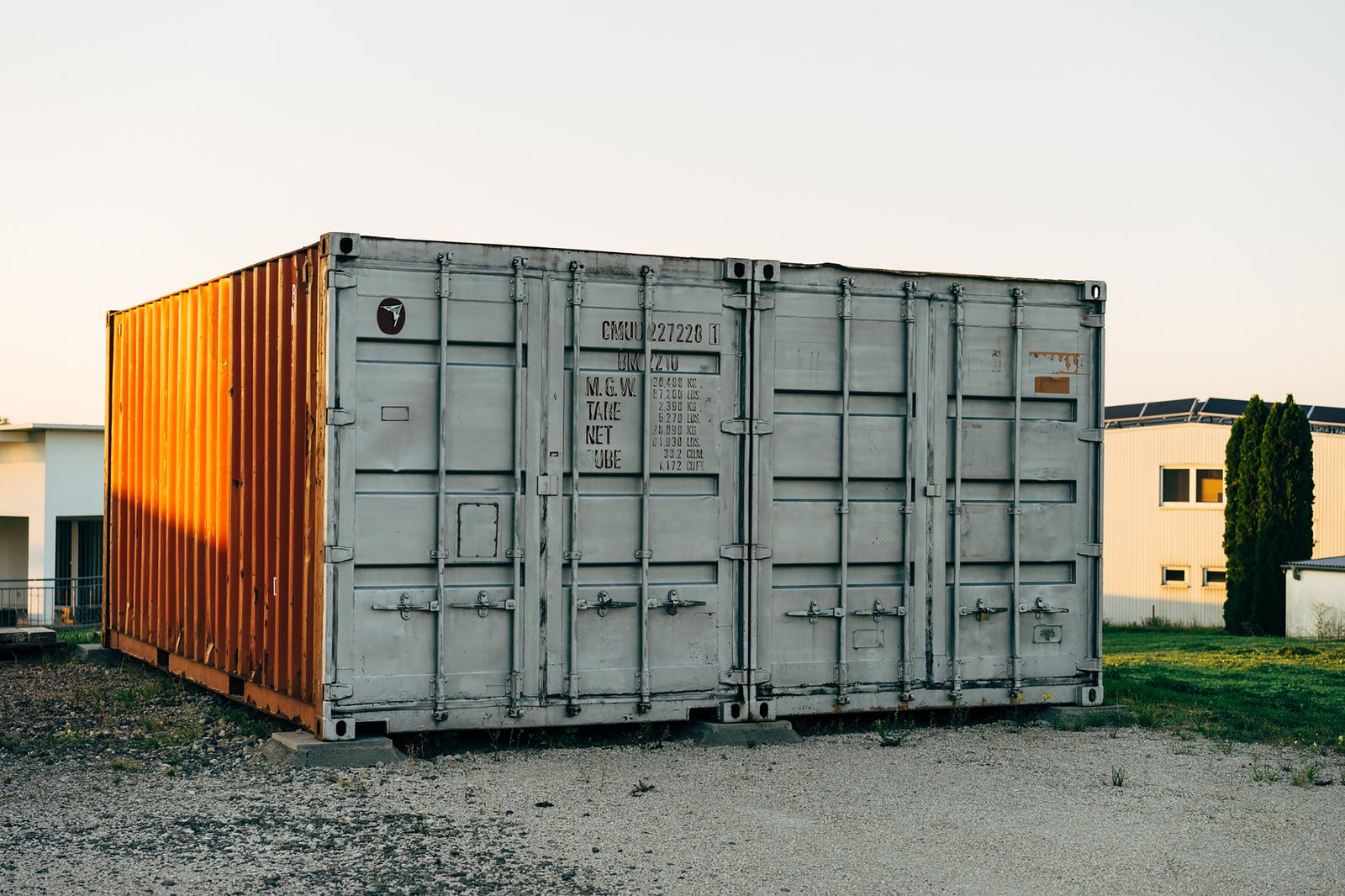
Container ads almost never photograph the unit you will receive. Dealers sell from depot pools: you buy a grade and a size, and the depot releases a unit meeting that description. This is normal, legitimate, and the source of the most common legitimate complaint in the business — bait-and-switch delivery, in which the delivered unit is technically the grade purchased and visibly worse than the photographs that sold it: more rust, a tired floor, doors that need muscle. Fraud trackers flag the pattern precisely: a supplier who cannot give you the serial number of the specific container being sold is selling you a pool draw, and a pool draw's quality is the depot's grading discipline, not the ad's photography.
The translation is not "refuse pool sales" — most of the industry works this way — it is "price the pool, not the photo." Ask for photos of the actual unit once assigned, including the door plate with its identification number, and ask what happens if the delivered unit fails your inspection: who pays the return freight, and is refusal at delivery even possible under the contract? Sellers with pay-on-delivery terms exist in this market, and their willingness to be paid after you've seen the box is the strongest signal in the entire transaction. The scam literature makes the darker version of the same point: in September 2026 the Better Business Bureau in Ohio warned about a fake container seller — copied website, fake address, wire-transfer-only payments, prices from $1,000 up — whose customers received nothing at all. A price far below the published ranges, payable only by irreversible methods, is not a deal. It is the deal's costume.

Delivery: the second price, hiding behind the first
"Delivery is where the industry hides money," as one dealer's unusually candid pricing page puts it — the unit price online excludes the part that gets the container to your property, and that part runs $300 to $1,500 depending on truck type, distance, and access. Published delivery ranges across sellers converge on a consistent shape:
| Delivery leg | Typical range | What moves it |
|---|---|---|
| Tilt-bed, under 50 miles | $300–$800 | Depot distance; 20–30 minutes on site included |
| Regional, 50–200 miles | $500–$1,500 | Per-mile adders commonly $1–$3 a mile beyond a base zone; some carriers quote ~$5.50–$7.00 a mile beyond 100 included miles |
| Long-distance, 200+ miles | $1,000–$2,500+ | Partner networks, deadhead miles |
| Rental pickup (the return leg) | $150–$500 | Charged separately on rentals — you pay freight twice |
The fine print inside delivery has its own vocabulary. Tilt-bed versus flatbed decides whether you need equipment: a tilt-bed slides the container off at ground level and needs roughly 100 to 125 feet of straight clearance and firm, level ground; a flatbed is cheaper per mile and useless unless you have a heavy forklift or crane waiting. Failed-delivery and re-delivery fees appear when the truck arrives and cannot place the unit — soft ground, low wires, a gate narrower than promised — and the honest sellers' pages are blunt that surprise access fees exist because nobody checked the site beforehand. "Free delivery" offers deserve the dispatcher's squint: freight is never free, it is bundled, and a bundle is worth comparing against the unbundled total from a competitor before admiring it. Ask for the delivery line item even when it is zero. If a seller will not separate unit price from freight, you cannot comparison-shop either one.
Rentals, rent-to-own, and the arithmetic in the small type
Rental ads lead with the monthly number — a 40-foot rents for roughly $120 to $300 a month in 2026, with longer terms cheaper per month — and the fine print carries the rest of the sentence. Delivery and pickup are billed separately, usually $150 to $500 each way, plus sometimes a deposit. That structure inverts the economics of short rentals: a two-month rental at $175 a month is not a $350 decision; with freight both ways it is a $650 to $1,350 decision, and the monthly rate was the smallest part of it. The same math drives the rent-versus-buy break-even that dealer calculators put at roughly 18 to 30 months: a 40-foot renting at $200 a month crosses the price of a used WWT purchase inside a year of payments.
Rent-to-own ads compress hardest of all. The pitch — payments comparable to rent, ownership at the end of a two-to-three-year term — is real, but cost guides put total rent-to-own premiums at 30 to 50 percent over the outright purchase price, and the contract details decide whether the premium buys flexibility or just costs money: how much of each payment actually applies to the price, what early termination does to your accumulated equity, who pays for repairs and damage during the term, and whether a missed payment converts the whole arrangement back into a plain rental with the equity gone. None of those answers is in the ad. All of them are in the agreement, and the agreement is short. Read it before the first payment, not after the twelfth.
Other recurring small type, translated:
- "Cargo worthy" without a survey — the grade, properly used, means a certified marine surveyor passed the unit and its CSC plate is valid. If the price is a WWT price and no survey certificate exists, you are buying a description.
- High-cube versus standard — a high-cube is a foot taller and priced higher; scam and complaint reports include delivering a standard unit against a high-cube invoice. Check the door plate's height marking on delivery.
- Modification pricing — ads for cut-down sizes, extra doors, lockboxes, and vents price the base box; the modifications are line items, and dealer calculators state plainly that they are extra.
- Taxes — the quoted price is routinely pre-tax, and on a several-thousand-dollar unit, sales tax is a line worth seeing before the invoice, not on it.
Bundles: when the package is the product being sold
The last compression trick is the bundle: container plus delivery plus lockbox plus vents, one price, "everything included." Bundles are not inherently bad — a seller who delivers weekly on your route can genuinely price the package better than you can assemble it — but a bundle defeats comparison by design, because no competitor sells the identical bundle. The decompression move is to ask for the bundle's anatomy anyway: the unit's grade and price alone, the delivery alone, and each accessory alone. Sellers who built the bundle from real line items can produce them in seconds. Sellers who built it as a marketing number cannot, and the hesitation is the answer.
Apply the same suspicion in miniature to the accessories themselves. A lockbox — the steel shroud that protects a padlock from bolt cutters — is a modest fabrication item, yet it appears in quotes at prices ranging from trivial to startling, and a "free lockbox included" line in a bundle is sometimes carrying more margin than the container. Vents, ramps, and shelving brackets follow the same pattern. None of this requires refusing the bundle. It requires knowing which line inside it is the expensive one, because that is the line you will negotiate, and the only one the seller expected you to skip.
The decompression checklist
This site lists 476 industrial container providers, so you will never lack a second quote — which is the entire strategy. Before paying anyone:
- Get the total delivered price in writing: unit, grade, size, freight, tax, and any site or fuel fees, as one number and as line items.
- Name the unit: grade confirmed in the contract, and — once assigned — photos and the identification number of the specific container.
- Price delivery as its own negotiation: depot location, truck type, clearance requirements, failed-delivery terms.
- On rentals, total the whole term: monthly rate × months, plus delivery, plus pickup, plus deposit terms.
- On rent-to-own, read the equity clauses: payment application, early termination, repair responsibility, default conversion.
- Keep payment reversible until the box exists in front of you: credit card, or pay-on-delivery terms; wire-only sellers at below-range prices are the documented fraud pattern.
A container ad is not lying to you. It is answering a narrower question than the one you are asking — "what is the cheapest defensible version of this product?" — and printing that answer in the largest type available. Ask the wider question, in writing, and the real price appears. It always existed. It was just in the fine print, which is where dispatchers read first.
Sources
- Giant Lock Box, "Shipping Container Prices: Delivery Costs — Honest Ranges" — delivery described as where the industry hides money; tilt-bed delivery at $300–$700 within 50 miles and $500–$1,000 regionally, with $1–$3 per mile beyond; warnings on surprise fuel, site, and re-delivery fees.
- KwoteAdvisor, "How Much Does a 40' Shipping Container Cost in 2026?" — 40-foot rental rates of $120–$300 a month by term; delivery and pickup at $150–$500 each way charged separately; tilt-bed clearance requirements (about 125 feet straight, 12 feet wide, 16 feet high) versus flatbed delivery requiring a forklift of at least 15,000 lb capacity on site.
- YES Containers, shipping container delivery pricing — mileage-based delivery with the first 100 miles in the base fee and roughly $5.50–$7.00 per mile beyond, varying by region; pay-on-delivery terms.
- Tuff Shipping Containers, cost calculator and price tables — purchase ranges by grade and size; rent-versus-buy break-even at roughly 18–30 months; modifications priced as extras; delivery priced from the nearest depot.
- B2B Chronicle, "Shipping Container Costs: A Complete Buyer's Budget Guide" — rent-to-own premiums of 30–50 percent over purchase price and the contract terms to check (maintenance responsibility, early termination, purchase-option pricing).
- Container Compass, "Shipping Container Scams: How to Avoid Getting Ripped Off (2026)" — grade misrepresentation worth $1,500–$3,000 between one-trip and WWT; hidden delivery fees of $800–$2,000 quoted after the sale; bait-and-switch delivery from depot pools and the serial-number protection.
- Container One, "How To Purchase A Shipping Container & Avoid Scams" — the September 2026 Better Business Bureau warning about a fake Canfield, Ohio container seller using copied content and wire-transfer-only payments; the all-in price and pay-on-delivery recommendations.
- K3 Containers, "How to Avoid Shipping Container Scams" — verifying whether you are buying the exact unit shown or a representative unit, and confirming the total delivered price in writing before paying.
- Photo by Ollie Craig, https://www.pexels.com/photo/7519246/
- Photo by Markus Winkler, https://www.pexels.com/photo/two-shipping-containers-sitting-in-front-of-a-building-18609057/
More guides
- How to Hire a Moving Company That Won't Hold Your Furniture HostageMovers › Moving & Storage
- How Much Do Movers Cost? Local vs. Long-Distance Pricing ExplainedMovers › Moving & Storage
- Binding vs. Non-Binding Estimates: The Difference That Decides Your Final BillMovers › Moving & Storage
- Moving Insurance and Valuation: What 'Full Value Protection' Really CoversMovers › Moving & Storage
- Long-Distance Moving: A Start-to-Finish Guide for Household GoodsMovers › Household Goods Moving & Storage
- All Guides & ArticlesBrowse the full guides library