Movers › Shelving Commercial & Industrial
The Fine Print in Shelving Commercial and Industrial Ads: Translating Offers and Teaser Prices Into Real Costs
Dispatch teaches you to read prices backwards. The customer sees the number in the ad. You see the number the ad is standing in front of: the freight, the extras, the conditions in type too small to argue with later. Commercial and industrial shelving is sold exactly the way moving was sold in my dispatch years — with a true-but-partial price doing the talking, and the rest of the invoice waiting politely offstage.
If your family is planning a move and pricing shelving for a garage, a storage unit, or a small business space, this guide is the translation dictionary. Every trick below is legal, common, and survivable — once you know the questions that turn an advertised price into a real total.
Trick one: the price is for a piece, not a system
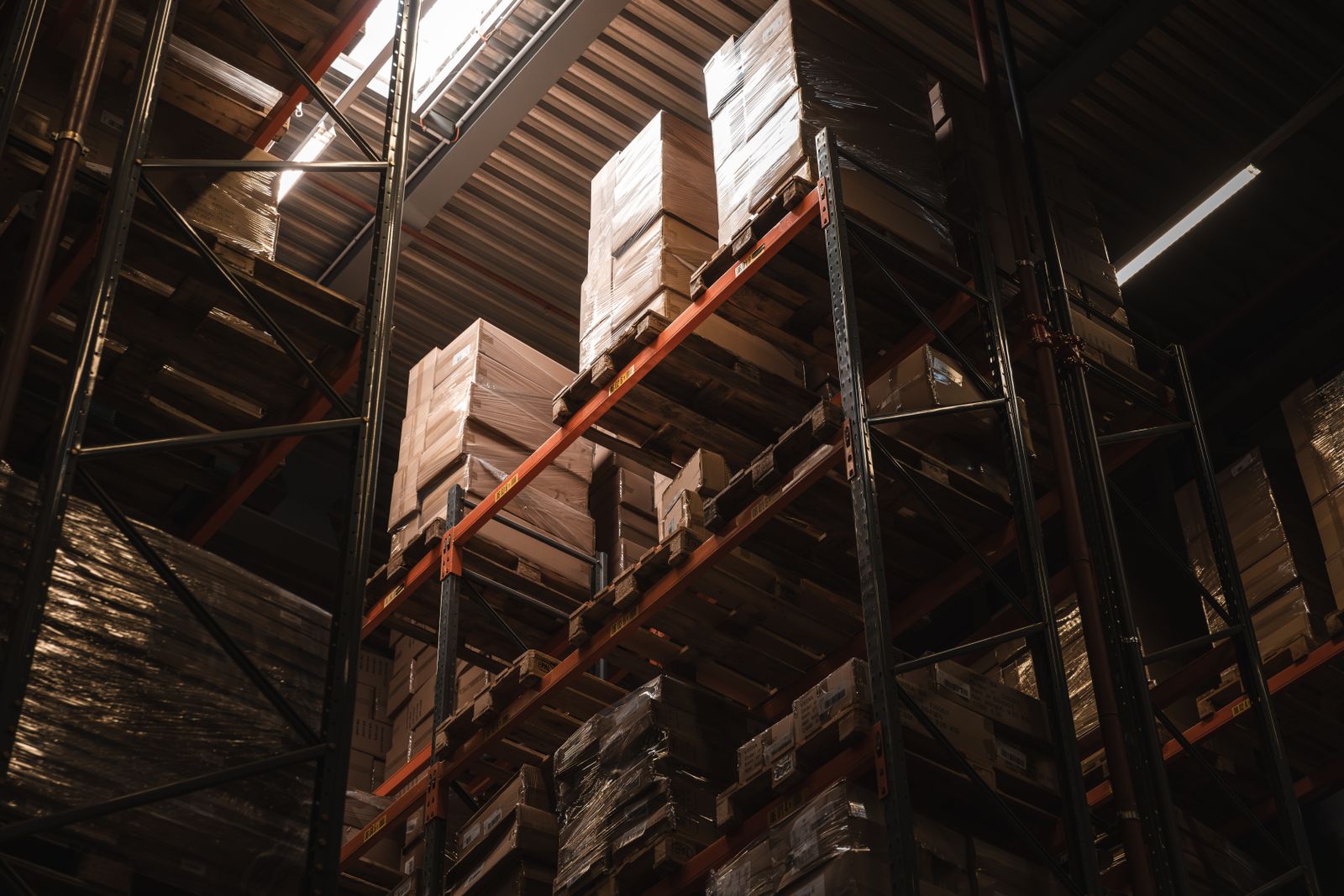
The foundational move in shelving advertising is the unit switch. An ad shows a towering run of racking and a price that turns out to belong to one component of it. The industry's own price lists show how the arithmetic works: upright frames from about $129 each, beams from about $17 each, wire decking $24 to $64 a panel. None of those numbers is false. A working bay, though, is two uprights, four to six beams, decking on every level, anchors, and usually column protection — and a real starter bay, honestly bundled, lists at roughly $900 to $1,480 depending on height and beam length, while a simpler 16-foot bay built from components runs about $580 to $770 new. When an ad's headline price is a tenth of that, you are not looking at a bargain bay. You are looking at a beam.
The question that fixes it: "Price one complete bay, standing and anchored, with decking on every level — what is in that number, itemized?" A straight seller answers with a list. A teaser answers with another adjective.
Trick two: "per pallet position" — the denominator that shrinks the price
Industrial racking is often priced per pallet position, which is a legitimate professional metric and a superb advertising device, because the buyer hears a small number and multiplies by the wrong thing. Materials for standard selective racking run roughly $50 to $200 per pallet position; installed, typical figures land around $80 to $160 per position. Both ranges are honest. The fine print is everything the per-position figure excludes, and the exclusions are where projects actually live:
| Line item | Typical cost | How it hides |
|---|---|---|
| The racking, materials | $50–$200 per pallet position | The advertised number — usually this, only this |
| Installation | $15–$35 per pallet position | "Available" rather than included; roughly 20–35% of material cost as a rule of thumb |
| Freight | Often 10–20% of project cost | Steel is long, heavy, and ships badly; quoted at checkout, or "calculated later" |
| Wire decking, if not bundled | $70–$110 per level new (8 ft bay) | Photos show decked levels; the quote prices bare beams |
| Permits and engineering | $1,500–$5,000 on taller or high-piled systems | Nobody's ad mentions the city at all |
| Anchors, spacers, guards | A few dollars each, never zero | Itemized in real quotes, absent in teaser ones |
A family buying two bays for a garage will not meet the permit row. A small warehouse fitting out twenty bays will meet every row, and the difference between the advertised total and the real one can approach half the project. The question that fixes it: "What is the installed, delivered total — and what, specifically, is not in it?"
Trick three: "from" prices and the configuration you cannot buy
"Racking from $225 per bay" almost always describes the shortest, shallowest, lightest-capacity configuration in used condition — a configuration that exists, technically, the way the smallest rental car exists at the airport. Published guides put a standard used bay around $225–$425 and a new one around $450–$675 and up, before the height, depth, and capacity most buyers actually need move the price. Capacity is the silent escalator: a beam pair rated for two heavy pallets costs meaningfully more than one rated for light cartons, and the ad's price belongs to the light one. If your load is a household's worth of boxes, the light configuration may genuinely serve you — hand-loaded light-duty levels are typically rated around 1,000–2,000 lb. If your load is pallets, the "from" price is a photograph of a product you are not buying.
The question that fixes it: "Price my exact configuration: this height, this depth, this many levels, this load per level." Make them quote the thing in your garage plan, not the thing in their warehouse clearance corner.
Trick four: used prices wearing new photographs
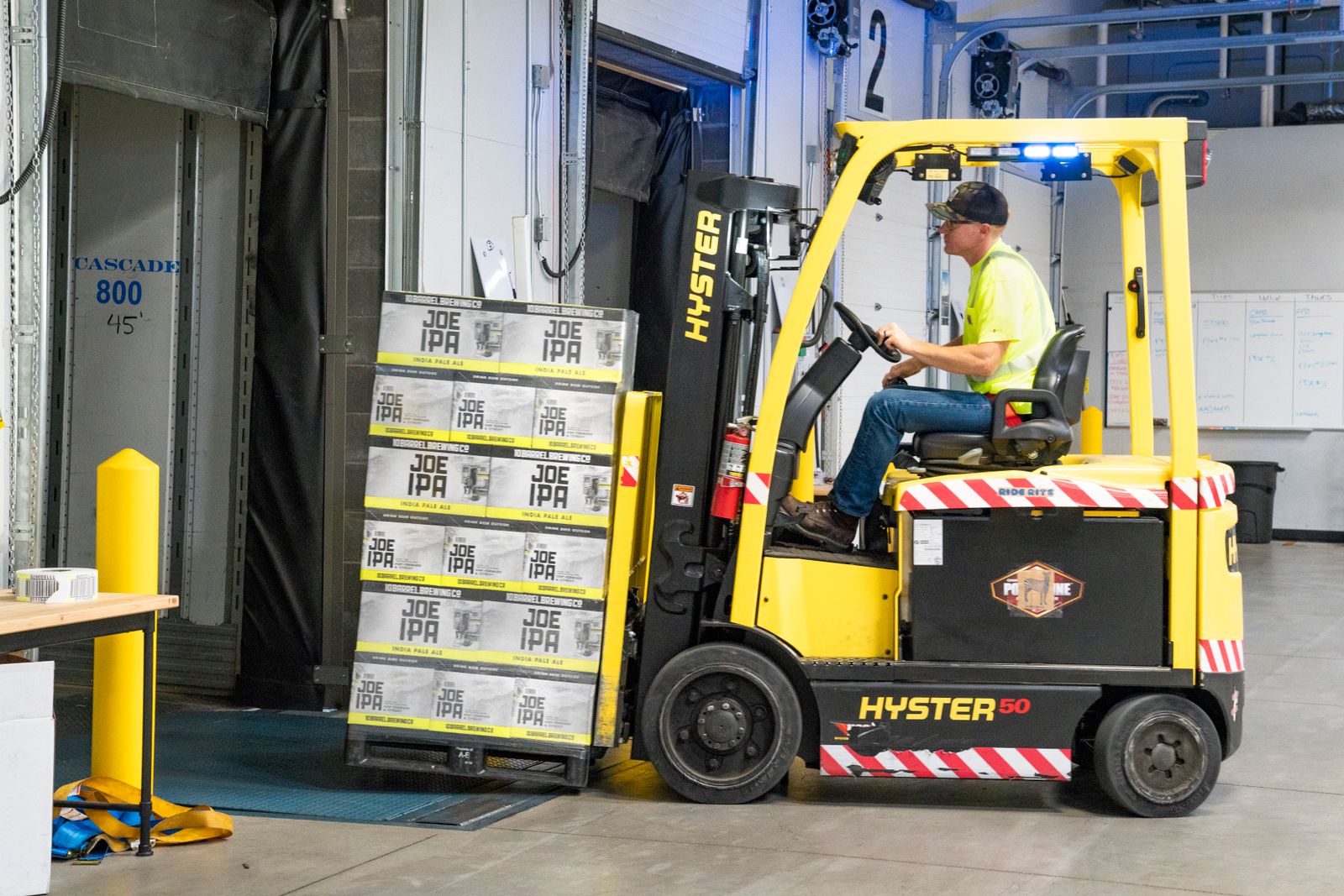
Used racking is the honest bargain of this industry — typically 25–40 percent below new, often available immediately — and it is also where advertising language does its quietest work. "Like new," "refurbished," and "inspected" have no standard definitions. A used bay at $350–$540 against $580–$770 new is a fair reflection of the market; what separates a good used buy from a bad one is condition grading you can verify: straight uprights, undamaged beams, all safety clips and anchors counted, and decking included or priced. Ads that lead with used prices and deliver "equivalent condition" substitutions are running a switch you will only discover on delivery day, when the truck is in the dock and your leverage is gone. The question that fixes it: "Am I buying the specific units in the photograph, graded how, and what is my remedy if they arrive bent?" Get the answer in the quote, in writing.
Trick five: the bundle that unbundles at checkout
"Complete shelving system!" — some assembly of words that suggests everything is included, followed by a checkout in which decking is an option, anchors are an option, delivery is a calculation, and the safety clips are a line item. Decking is the classic: a level of wire decking runs about $70–$110 new in an 8-foot bay against $40–$70 for wood, and a four-level bay needs four of them; leaving decking out of a "complete" price quietly discounts the headline by a fifth. Read every bundle as a packing list and tick the components off: two uprights, beams per level, decks per level, anchors per frame, clips per beam. What is not on the list is not in the price, whatever the banner says.
Trick six: freight, the polite ambush
Shelving freight deserves its own paragraph because it ambushes families hardest. A household buyer, trained by a decade of free shipping, meets a product that ships on a flatbed or in a freight truck, priced by weight, distance, and whether a liftgate or a forklift is needed at your end. Industry guides put freight at roughly 10–20 percent of project cost, and a single regional delivery can run several hundred dollars. "Free delivery" offers in this category usually mean free within a radius, on a minimum order, to a commercial dock — three conditions, each capable of voiding the offer at a residential address. The question that fixes it: "Delivered to my address, to the ground, what is the freight — and what happens to that number if I am not there or the truck cannot unload?"
A worked example: one garage, two quotes
Make it concrete. A family wants two bays of shelving in a garage to hold a household through a move: 12 feet tall, two decked levels each, hand-loaded boxes, nothing on pallets. Seller A's advertisement says "industrial shelving from $17," and its quote, once configured, reads: uprights and beams at the light end of the range, no decking ("available at $70–$110 per level"), delivery "calculated at dispatch," assembly "self-install with instructions." The honest reconstruction of Seller A's real total: roughly $600–$770 of steel per bay at standard component pricing, four levels of decking across two bays at up to about $110 each, freight on a heavy flat shipment, and a weekend of the family's own labor — a total that lands somewhere around $1,700–$2,100 and two days of work, for a system whose per-level rating was never actually stated.
Seller B quotes $1,483 for a bundled starter configuration — the top of the published starter-kit range — with frames, beams, wire decking, anchors, and column guards itemized in the price, a stated per-level capacity, and delivery quoted to the address as a number rather than a promise. Seller B looks 40 percent more expensive in the advertisement and is, in all probability, the cheaper purchase — and is certainly the only one of the two whose final cost was knowable before the truck arrived. That inversion is the whole lesson of shelving fine print: in this category, the expensive-looking quote is frequently the honest one, because honesty itemizes, and itemization always looks like more money than a teaser.
Trick seven: the quote that expires, and the steel that reprices
One last piece of fine print lives not in the ad but in the quote itself: the validity window. Steel is a commodity, and shelving quotes commonly hold their prices for days rather than months — sometimes explicitly, sometimes in a line about prices being "subject to change with steel costs" that functions as an unlimited repricing clause. A family that collects quotes in March for a June move may find every number has moved, legitimately, by the time they order. The defense is procedural: ask how long the quote holds, note the date on the quote itself, and when you are ready to buy, buy against a fresh written confirmation of the same itemized total rather than assuming the spring number survived the summer. Sellers are not cheating when steel reprices. They are cheating only when the repricing arrives after your deposit — which is why the deposit conversation and the validity conversation are the same conversation.
The translation table
Keep this beside any shelving ad:
| The ad says | It usually means | Ask instead |
|---|---|---|
| "Bays from $225" | The smallest used configuration, materials only | "My configuration, new or used, itemized?" |
| "$85 per pallet position" | Materials, mid-range, before install and freight | "Per position, installed and delivered?" |
| "Complete system" | The components the seller chose to include | "Show me the packing list." |
| "Free delivery" | Free within limits that may exclude your address | "To my door, on the ground — free?" |
| "Heavy duty" | An adjective | "What gauge, and what is the per-level rating at my beam spacing?" |
| "Like new" (used) | The seller's opinion | "Graded how, and what if it arrives bent?" |
The short version
None of this requires suspecting every seller. It requires one habit, learned the hard way in a dispatch office: never compare two advertised prices, because advertised prices are not prices for the same thing. Compare two itemized, delivered, installed totals for your exact configuration — and let the teaser ads do what they are designed to do, which is start a conversation you then conduct on paper. This site lists 363 commercial and industrial shelving providers, so you can always get a second itemized quote. The seller whose real total survives that comparison is the seller the ad should have introduced you to in the first place.
Sources
- Speedrack West, pallet racking cost guide — establishes starter-bay list prices of roughly $908–$1,483 with frames, beams, decking, anchors, and guards itemized, component starting prices, and per-position material ranges by rack type.
- Massey Rack, new versus used pallet racking costs (Texas market) — establishes per-position prices of $85–$125 new and $60–$85 used before installation, a 16-foot bay at $580–$770 new and $350–$540 used, installation at $15–$35 per position, permits and engineering at $1,500–$5,000, and used savings of 25–40 percent.
- Warehouse Cubed, pallet racking cost guide — establishes standard bay ranges of $225–$425 used and $450–$675+ new, freight at roughly 10–20 percent of project cost, and installation at roughly 20–35 percent of material cost.
- RackCity, pallet racking cost per position installed — establishes installed selective racking at roughly $80–$160 per pallet position and the component split of a typical position's cost, including decking as the line budget quotes omit.
Photo credits: forklift lifting boxes — photo by ELEVATE, https://www.pexels.com/photo/man-riding-a-yellow-forklift-lifting-boxes-1267324/ — warehouse shelving — photo by Ryan Klaus, https://www.pexels.com/photo/low-angle-shot-of-boxes-standing-on-the-shelves-in-a-warehouse-27111449/
More guides
- How to Hire a Moving Company That Won't Hold Your Furniture HostageMovers › Moving & Storage
- How Much Do Movers Cost? Local vs. Long-Distance Pricing ExplainedMovers › Moving & Storage
- Binding vs. Non-Binding Estimates: The Difference That Decides Your Final BillMovers › Moving & Storage
- Moving Insurance and Valuation: What 'Full Value Protection' Really CoversMovers › Moving & Storage
- Long-Distance Moving: A Start-to-Finish Guide for Household GoodsMovers › Household Goods Moving & Storage
- All Guides & ArticlesBrowse the full guides library