Movers › Moving Companies
Tucson Hiring a Moving Company: What the Local Market Looks Like Beyond the Ads
Dispatch teaches you what an ad never will: a moving quote is a guess about hours, and hours are decided by things nobody puts in the brochure — a long gravel driveway in the Foothills, a third-floor walk-up near the University, a customer who said "mostly packed" and meant something else. Tucson is one of the cheaper big moving markets in the country, which makes it a good city to move in on a tight budget. It is also a city where Arizona's hands-off approach to movers means the checking that a licensing board does elsewhere lands entirely on you.
Both halves of that sentence matter. Tucson's tracked movers average about $85 an hour — 36 percent below the $133 national average — and a two-bedroom local move can genuinely land under $700. But Arizona issues no state license for household movers, sets no maximum rate tariff, and requires no state permit you can look up. The protections that do exist are real but specific: a state hostage-load law, a written-contract requirement, a Department of Public Safety complaint line, and federal rules the moment your move crosses a state line. This guide walks through Tucson prices from a dispatcher's side of the desk, the season calendar that turns this market upside down, and the budget moves that save money without gambling the whole load.
This site lists 1,770 moving companies in its directory. The Tucson market itself is a few dozen working crews — moveBuddha tracks 33 local full-service movers here — ranging from long-established local firms (Nicolosi Moving & Storage has operated for 37 years) to two-man operations running one truck. On a budget, your job is not to find the cheapest name on that list. It is to find the cheapest crew whose paperwork survives inspection.
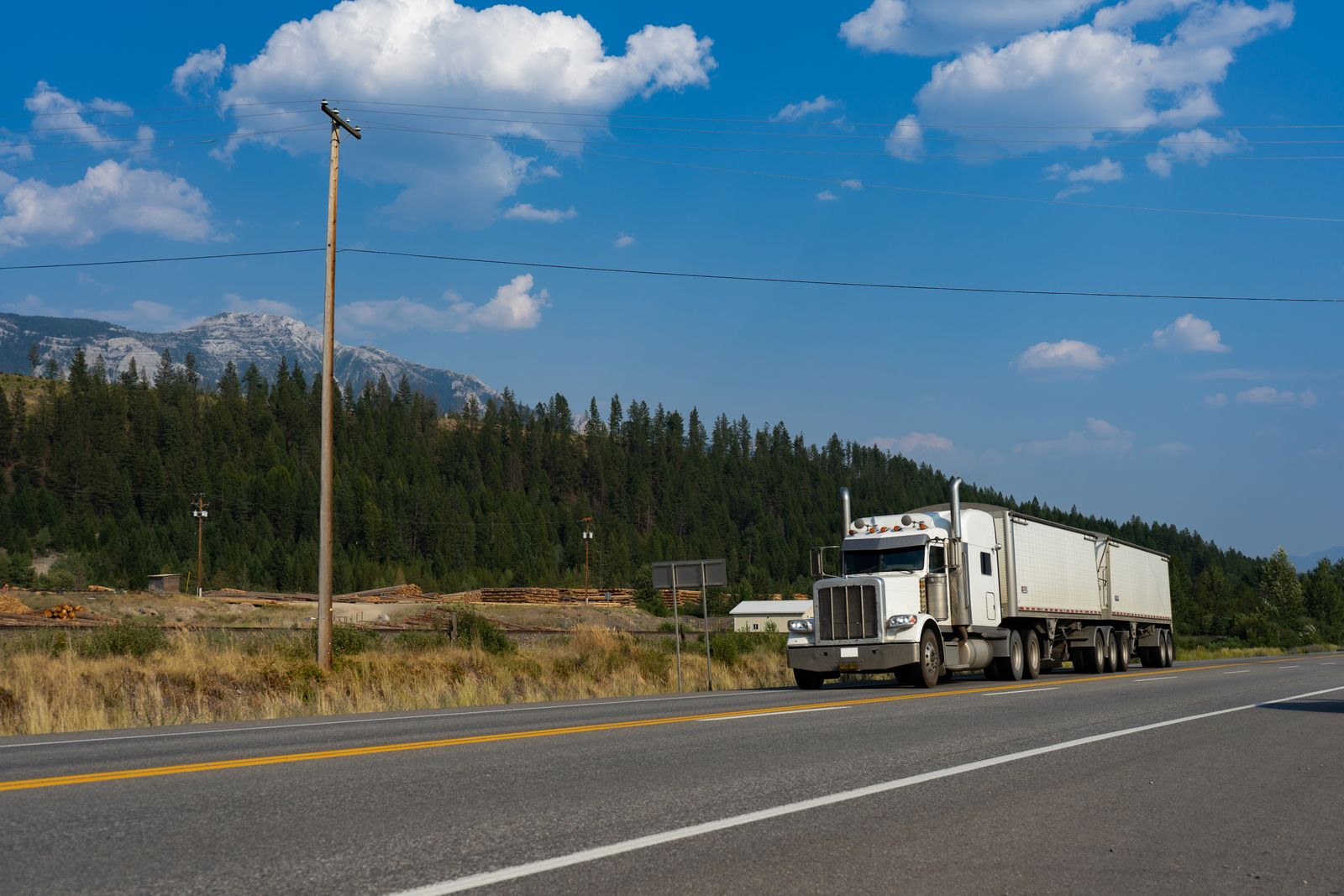
What a Tucson move costs
Local moves — under 100 miles, which covers everything from Oro Valley to Sahuarita and Green Valley — are billed by the hour. moveBuddha's analysis of 33 Tucson movers puts local moves between $276 and $2,817, with the average move costing $664 to $1,581 and taking a crew of three to four people five to eight hours.
| Home size | Typical local cost | Crew | Hours |
|---|---|---|---|
| Studio | $276 | 2 movers | About 3 |
| 1 bedroom | $398 | 2 movers | About 4 |
| 2 bedrooms | $664 | 3 movers | About 5 |
| 3 bedrooms | $1,581 | 4 movers | About 8 |
Read those figures the way a dispatcher does. The studio and one-bedroom rows are where budget movers shine: a packed, ready, ground-floor one-bedroom is a four-hour job, and four hours at Tucson rates is cheap by any national standard. The jump to the three-bedroom row is the honest warning — crew size and hours compound, and a big house that is not ready can run past the table entirely. Local movers typically start around a $160 base rate plus about $85 an hour per mover, with a two-hour minimum of about $170. Two movers for five hours runs about $654 in moveBuddha's route data.
The alternatives price out like this. Do-it-yourself truck rental in Tucson runs about $110 to $1,127 depending on home size, and moving containers about $145 to $809 for a local move — containers typically cost meaningfully less than full service for the same home. Hiring two movers for about five hours just to load a truck or container you drive yourself costs roughly $640 to $800 in local route data. For a tight budget, that hybrid — your truck, their backs — is the single best value structure in this market, provided someone in the household can genuinely drive a 20-foot truck across town and the load is furniture, not a piano.
Where budget moves die is never the base rate. They die on the extras that were not in the phone quote: stairs, long carries from a parking lot to a back unit, a second trip because the truck was too small, packing billed by the hour at the full crew rate because the kitchen was not done. Every one of those is visible in advance to a dispatcher reading a proper job description — which is why the written estimate, below, is a budget tool and not a formality.
Arizona does not license movers. Here is what protects you instead
Say it plainly, because half the advice online gets it wrong: Arizona has no state mover license. There is no Arizona equivalent of a permit number to verify, no state tariff capping rates, and no licensing board that has pre-screened the company you are about to hand your furniture to. Any website that tells you to "check the mover's Arizona moving license" is recycling copy from another state. What Arizona has instead:
Business registration. A legitimate Tucson mover is a registered business with the Arizona Corporation Commission. Checking that registration confirms the company legally exists, is active, and has a real address and statutory agent. It does not prove the company is good at moving — but a company that cannot pass even that test should not get your deposit.
The hostage-load law. Arizona's household goods moving law, A.R.S. §§ 44-1611 to 44-1616, is the sharp end of state protection. Once a mover has taken possession of your goods on an in-state move, it may not refuse to deliver or unload them, and it may not enforce or threaten a carrier's lien except as the statute allows. A mover may require payment of the total estimated price before unloading only if it gave you the signed contract and disclaimer the law requires — and even then it must release medicine, medical devices and disability aids on request. Advertising must accurately disclose insurance coverage, fees, charges and rates; a violation is an unlawful practice the Arizona Attorney General can pursue.
The written contract. State law's practical core is paperwork before loading: a signed contract that discloses charges, and written acknowledgement for extra services and their fees. On a budget move this is your ceiling. A mover who will only quote verbally is asking you to accept an open-ended hourly bill from a company the state has not licensed — decline, politely, and call the next name.
Complaints and enforcement. The Arizona Department of Public Safety runs household goods enforcement for in-state moves and takes moving-fraud reports; its moving hotline numbers are (602) 223-5000 and (602) 223-2212. DPS also notes the uncomfortable truth about hourly billing: in-state movers may charge by the hour, and the customer cannot control how long the move takes. That is the legal backdrop to every budget decision in this guide — your only real control over hours is preparation, crew size, and a contract that names the rate.
Insurance reality. Arizona requires vehicles to carry motor vehicle liability insurance (at least $25,000 per person, $50,000 per accident, $15,000 property damage), but no separate state cargo requirement applies to intrastate moves. Translation: ask the mover, in writing, what covers your furniture if it is damaged — what valuation is included, what fuller coverage costs — because the state's minimum rules do not answer that for you.
Interstate moves are federal. The moment a move crosses a state line — Tucson to Las Cruces is the classic local example — the Federal Motor Carrier Safety Administration's rules apply: the mover needs a USDOT number and federal household goods authority, and you can verify both, plus insurance on file, on the FMCSA's Protect Your Move consumer site. Many Tucson moves are snowbird moves to and from the Midwest, and those are federal moves even when a local Tucson crew loads the truck as an agent.
Tucson's calendar runs backwards — and its weather runs the day
Most American cities have one moving peak: summer. Tucson has two, and the bigger one is in winter.
Snowbird season is peak season. From roughly November through March, part-time residents arrive and depart, retirees relocate to Green Valley and Oro Valley, and comfortable 60s-and-70s weather makes winter the pleasant time to move. Demand rises exactly when the rest of the country is quiet. A budget move in Tucson is therefore often a summer move — the reverse of national advice — provided you handle the heat properly, below.
Summer heat is a dispatch constraint, not a comfort tip. Tucson recorded 70 days at 100°F or more in summer 2026, according to the National Weather Service figures cited in local market guides. Dispatchers build summer days around dawn starts: a crew that begins at 6 or 7 a.m. does its heavy carrying before the worst heat, works faster, and makes fewer mistakes. Ask for the first slot of the day, confirm it the afternoon before, and treat a company happy to start at noon in July as a company that has not thought about your move. Heat also argues for keeping medicines, electronics, candles, and anything meltable or perishable out of the truck and in your air-conditioned car.
Monsoon season, June 15 to September 30, is the other summer variable. Afternoon storms arrive fast, dust storms can cut visibility to near zero, and a competent dispatcher will stop a move rather than drive a loaded truck through one. If you book inside monsoon season, build slack into the day — do not schedule a lease deadline, a flight, or a same-day closing that a two-hour storm delay would break — and agree in advance how weather delays are billed on an hourly job.
The University of Arizona shapes the center of town. Late-August move-in and May move-out flood the neighborhoods around campus with student moves, small trucks, and double-parked everything. If your move touches the university area, avoid those weeks; if it doesn't, they are a reason your chosen crew may be stretched thin anyway, so book earlier than you think you need to.
Neighborhoods, from the dispatch board. Central and historic Tucson — Armory Park, Barrio Viejo, Sam Hughes, the streets around Fourth Avenue — means older homes, narrower streets, alleys, and on-street parking to plan. The Foothills mean slope, gravel, long carries, and HOA rules that can restrict truck hours and sizes; tell the estimator, because a shuttle run with a smaller truck is a real line item. Oro Valley, Marana and Sahuarita are newer subdivisions with wide streets and easy access — the cheapest terrain in the metro — but the drive time from a Tucson yard is part of your hourly bill, so a crew based on your side of town is worth money. Apartment complexes add their own layer: loading areas, elevator or stair rules, and move-in bookings separate from anything the city controls.
Curb rules are light, with two exceptions. Tucson has no resident moving-truck permit for ordinary residential streets. Downtown, Fourth Avenue, Main Gate Square and the University area are metered, and Park Tucson can reserve metered spaces and loading zones: meter hooding runs $11 per meter per day Monday to Saturday and $5.50 on Sunday, a loading zone $25 per day, with a $20 late fee on under 24 hours' notice — and the city's page frames reservations around construction and special events, so call Park Tucson at (520) 791-5071 and ask whether your move qualifies before counting on a reserved curb. The second exception catches container movers: a storage pod left on a street or in the right-of-way needs a city Traffic Control Permit, $75 per 30 days. A pod in your driveway needs neither — one more reason the driveway is the budget mover's best friend.

The budget playbook, in dispatch order
- Move in the off-peak that is actually off-peak here. A weekday in late spring or early fall, mid-month, avoids both snowbird winter and month-end lease turnover. In summer, trade the date discount for a dawn start.
- Shrink the load before you price it. Tucson's thrift and donation pickup options will take furniture free; every piece not on the truck is crew time not billed. Estimators price what they see — show them the smaller load.
- Get three written estimates with on-site or video inspection, each naming the hourly rate, crew size, base or travel charge, and every fee. Compare the estimated hours, not just the rate: dispatchers know a low rate with padded hours is the oldest trick in an unlicensed market.
- Choose the structure that fits your household. Full service for stairs, heavy pieces, or no able driver. Labor-only plus your rental truck for a ground-floor, well-packed load. A container if your dates have a gap and your driveway can hold it — and budget the $75 street permit if it cannot.
- Prepare like the meter is running, because it is. Boxes sealed, furniture disassembled, paths and doorways cleared, parking arranged, the new address ready. On hourly billing, preparation is the only discount that never expires.
- Keep the paperwork in one place. Signed contract with the estimated total, the mover's Corporation Commission registration, its insurance and valuation answers in writing, and the DPS hotline number. If anything goes wrong on the day, that folder — not the ad that brought you there — is what protects you.
Tucson's market, read from the dispatch board, is genuinely friendly to a careful budget: rates a third below the national average, mostly single-story, truck-friendly terrain, and an off-season hiding in plain sight in summer. What it asks in return is the verification work a licensing state would have done for you. Do that work — registration, contract, written estimate — and the cheapest quote on your list can also be a safe one.
Sources
- moveBuddha — Tucson moving costs: 33 local movers, local range $276–$2,817, average about $85/hour (36% below the $133 national average), home-size table, DIY truck $110–$1,127 and container $145–$809 ranges. https://www.movebuddha.com/moving-cost-calculator/az/tucson/
- moveBuddha — best Tucson movers: 31 movers and 10,590 reviews analyzed; Nicolosi Moving & Storage, 37 years in business. https://www.movebuddha.com/movers/az/tucson/
- Arizona household goods moving law, A.R.S. §§ 44-1611 to 44-1616 — no hostage loads, lien limits, signed contract and disclaimer, accurate advertising; Arizona Department of Public Safety household goods enforcement and moving hotline (602) 223-5000 / (602) 223-2212; Arizona Corporation Commission registration check. https://mx.iamtrusted.org/compliance/compliance-arizona-usa/
- Arizona mover regulation explained — no state mover license; DPS complaints; FMCSA Protect Your Move checks for interstate movers (USDOT number, household goods authority, insurance on file). https://phoenix.life/posts/movers-in-phoenix
- City of Tucson / Park Tucson — meter hooding $11 per meter per day ($5.50 Sunday), loading zones $25 per day, reservations in Downtown, 4th Avenue, Main Gate Square and University areas, (520) 791-5071; mobile storage Traffic Control Permit $75 per 30 days; no resident moving-truck permit. https://holdthecurb.com/arizona/tucson/
- National Weather Service — Tucson 70 days at 100°F or more in summer 2026; monsoon season June 15 to September 30, via MoversLineup's Tucson guide. http://moverslineup.com/movers/tucson/
- Photographs: Pexels (Pexels License) — Braeson Holland (truck on the road); Curtis Adams (house exterior); Andrea Piacquadio (woman carrying boxes).
More guides
- How to Hire a Moving Company That Won't Hold Your Furniture HostageMovers › Moving & Storage
- How Much Do Movers Cost? Local vs. Long-Distance Pricing ExplainedMovers › Moving & Storage
- Binding vs. Non-Binding Estimates: The Difference That Decides Your Final BillMovers › Moving & Storage
- Moving Insurance and Valuation: What 'Full Value Protection' Really CoversMovers › Moving & Storage
- Long-Distance Moving: A Start-to-Finish Guide for Household GoodsMovers › Household Goods Moving & Storage
- All Guides & ArticlesBrowse the full guides library