Movers › Heavy Equipment Movers
What Does Heavy Equipment Transport Cost? Weight, Miles, and Permits
A contractor in Kansas City needs a 45,000-pound excavator in Denver. A manufacturer in Ohio has sold a press to a plant in Georgia. A farmer has bought a combine two states away. None of them can drive the machine there, and all of them are about to discover that heavy equipment transport is priced on a logic that has almost nothing to do with the logic of ordinary freight.
There is no rate card. There is a formula — a per-mile linehaul, multiplied and added to by weight, dimensions, trailer type, permits, escorts, and timing — and once you understand the formula, the quotes stop looking arbitrary. Two bids $2,000 apart for the same machine usually differ in identifiable places. This guide walks through each line of the build-up, with the numbers carriers and brokers are actually quoting in 2025–2026, so you can budget a haul before you request one and audit a quote when it lands.

The legal line: what "oversize" and "overweight" actually mean
Every cost in this business hangs on one threshold: whether your load is legal — movable on public roads with no special permission — or whether it crosses into oversize or overweight territory, where every state on the route gets a say and a fee.
Under federal law for the Interstate System (23 U.S.C. § 127), the legal ceiling is 80,000 pounds gross vehicle weight — truck, trailer, and cargo combined — with no more than 20,000 pounds on a single axle or 34,000 pounds on a tandem axle. Federal size rules cap width at 102 inches (8 feet 6 inches). There is no federal height limit; states set their own, most commonly 13 feet 6 inches to 14 feet. Exceed any one of these — gross weight, an axle limit, width, or your state's height limit — and the load needs a permit from every state it crosses. Exceed them by a lot and you enter superload territory, which each state defines for itself and which triggers route surveys and bridge analysis.
Notice what this means in practice. A mid-size excavator weighing 50,000 pounds sounds comfortably under 80,000 — until you add the tractor and a multi-axle lowboy trailer, which together can weigh 35,000 pounds or more. The combination is overweight before anyone has done anything wrong. Weight in heavy haul is always combination weight, and the trailer your machine needs is part of the problem it creates.
The linehaul: per-mile rates, and why short hauls cost more per mile
The core of every quote is a per-mile rate times loaded miles. Published carrier and broker figures for 2025–2026 cluster in these bands:
| Load type | Typical per-mile rate | Notes |
|---|---|---|
| Legal load (under 80,000 lbs, within dimensions) | $3.50–$4.50 | Flatbed, step-deck, or lowboy; the baseline market |
| Permitted oversize load | $5.00–$8.00 | Width/height permits, some escorts |
| Oversize and overweight combined | $8.00–$15.00 (vendor estimates) | Multi-axle RGN territory; highly route-specific |
| Long-haul legal load (1,000+ miles) | $2.00–$3.50 | Per-mile rate falls as fixed costs spread |
| Short haul (under 200 miles) | $4.00–$5.00+ | A 50-mile move can total $500–$800 — $10–$16 per mile |
The distance curve surprises first-time shippers. A 2,500-mile cross-country legal load can price at $1.00–$1.50 per mile, while a 100-mile local move prices at $6 per mile or carries a flat minimum. The reason is fixed costs: permits, loading and securement time, and the empty miles the truck drives to reach your machine are the same whether the loaded leg is 60 miles or 600. Short hauls amortize those costs over very few miles. When you budget, budget the total, and use per-mile figures only to compare quotes for the same move.
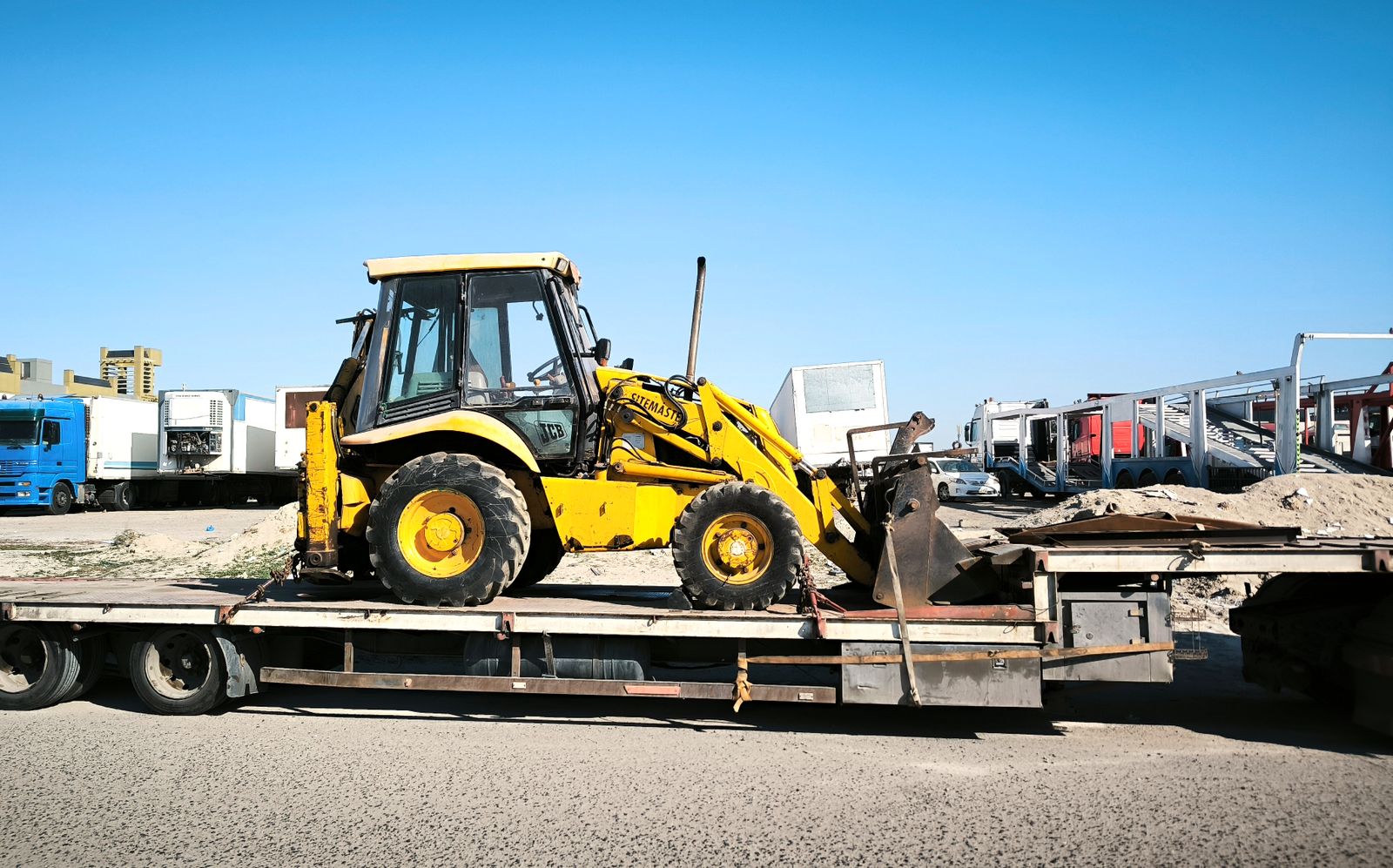
Trailer type moves the rate as much as distance does. A skid steer at 8,000 pounds rides a flatbed at the cheap end. Tracked machines that load themselves — excavators, dozers — go on an RGN (removable gooseneck) or lowboy, whose deck sits 18–24 inches off the ground so the machine's height on the trailer stays manageable; broker data puts RGN work around $3.00–$5.00+ per mile before oversize premiums. The heavier the machine, the more axles the trailer needs, and multi-axle combinations are scarcer equipment with scarcer drivers. Scarcity is a price.
Fuel sits on top. Heavy-duty shipping guides put the fuel surcharge at typically 15–25 percent of the linehaul, indexed to diesel prices — one reason two quotes for the same move, written months apart, can differ without either being wrong.
What specific machines cost to move
Aggregating published examples from carriers and estimators, here is the shape of the market by machine (totals include linehaul and standard permits; escorts and extremes of route extra):
| Equipment | Typical weight | 500 miles | 1,000 miles |
|---|---|---|---|
| Skid steer / compact track loader | 6,000–12,000 lbs | $1,200–$2,000 | $2,000–$3,500 |
| Mini excavator | 8,000–20,000 lbs | $1,500–$2,500 | $2,500–$4,000 |
| Bulldozer (D3–D6 class) | 15,000–45,000 lbs | $2,000–$3,500 | $3,500–$6,000 |
| Mid-size excavator | 40,000–70,000 lbs | $2,500–$4,500 | $4,000–$7,000 |
| Large excavator | 70,000–100,000+ lbs | $4,000–$7,000 | $6,500–$11,000 |
Read the table the way a dispatcher does: the jump from a mini excavator to a mid-size is not really about the extra miles — it is the jump from a flatbed to a permitted RGN combination. The single most useful budgeting question is not "how far?" but "does my machine, on its trailer, stay legal?" If yes, you are shopping in a competitive market. If no, you are buying a regulated project.
Permits: small fees, multiplied by states, with teeth at the top end
Permit fees themselves are usually the smallest line in the quote — but they are per state, and the structure matters. Compiled state fee schedules show single-trip oversize permits starting between roughly $15 and $125 per state for standard overdimension moves. Real examples: California charges $16 for a 7-day single-trip permit; Texas charges a $60 flat fee within legal weight, with overweight fees of $210–$470 added depending on gross weight; Florida prices overweight permits per mile ($0.27–$0.47 per mile) rather than flat; Georgia charges $30 for a standard single-trip permit but $500 for its largest mega-load category; Pennsylvania charges $46 under 14 feet wide and $97 at 14 feet or more, plus $0.04 per ton-mile for overweight.
Three consequences follow. First, route is money: a five-state combined oversize/overweight move can run $500–$2,500 in permit fees alone, and a route through fewer or cheaper states can be worth real savings. Second, overweight costs more than oversize almost everywhere, because states price weight by the ton-mile or by the thousand pounds over — road wear is the thing being charged for. Third, the top of the market is a different world: superload permits run $500–$5,000+ per state, require route surveys and bridge analysis, and can take two to four weeks to issue, against same-day to three days for standard permits. If your load is a superload, the permit timeline, not the truck, sets your delivery date.
The carrier or broker normally obtains the permits and passes the cost through. Ask whether permits are itemized in your quote or buried in the rate — itemized is better, because it lets you see whether a cheaper competing quote is cheaper or merely quieter about a cost you will meet later.
Escorts: the line item that dwarfs the permits
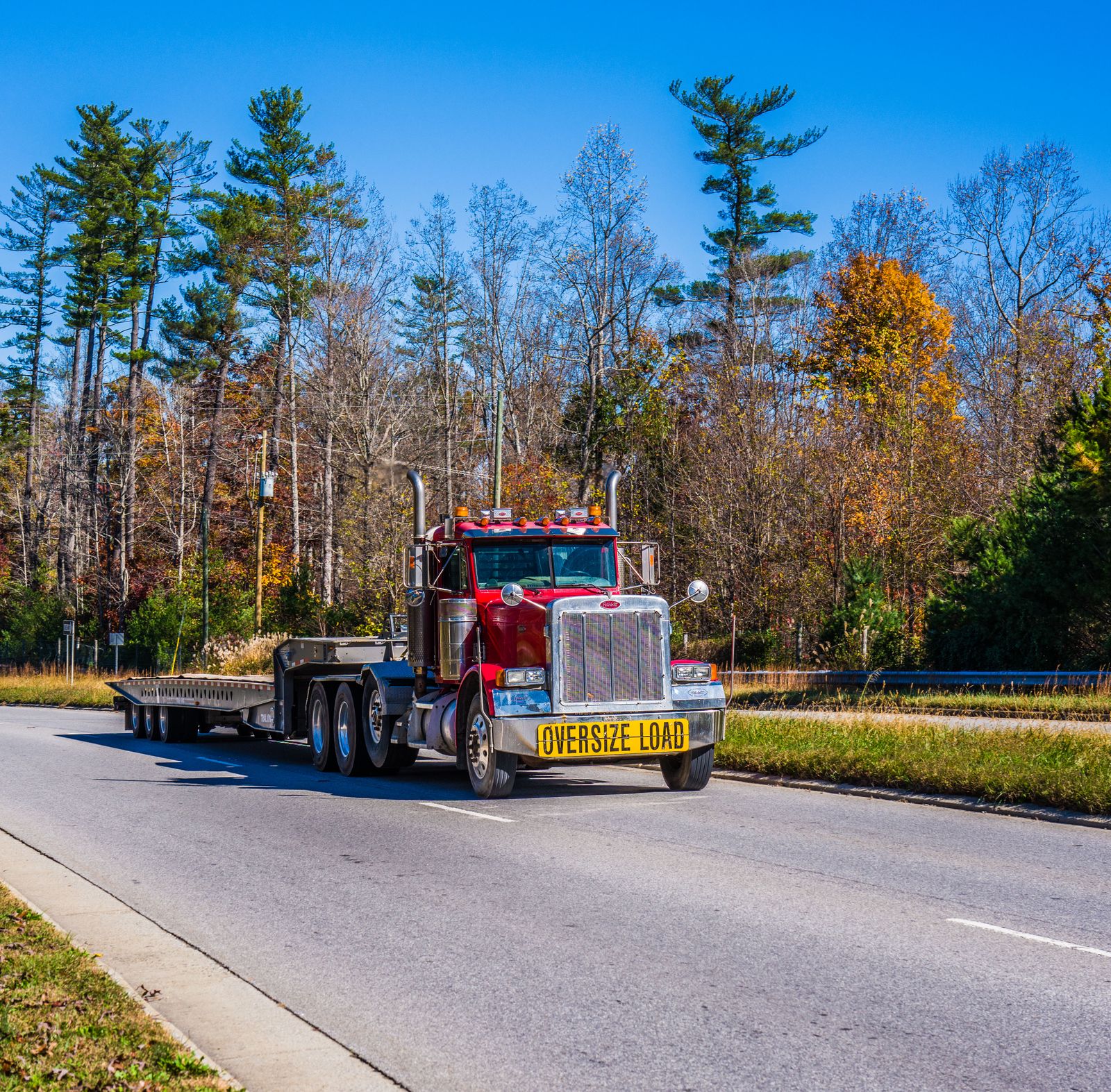
Where permits are tens of dollars, pilot cars are dollars per mile. Escort vehicles — required by states at width thresholds typically around 10–12 feet, with some states requiring them lower or on specific roads — cost roughly $1.50–$3.00 per mile per escort, and wide loads may need two: one front, one rear. A 600-mile move with two escorts at $2 per mile adds $2,400 to the invoice — more than the permits by an order of magnitude, and a healthy fraction of the linehaul itself.
Escorts also impose time. Permitted loads commonly travel daylight-only, observe state curfews around urban rush hours, and stop on weekends or holidays in some jurisdictions. A haul that is two days of driving as a legal load can become four days as a permitted one, and the meter — driver, tractor, escorts — runs on all four. When a quote for an oversize move looks startlingly higher than the legal-load math suggested, the escorts and the calendar are usually where the money went.
The rest of the invoice: loading, disassembly, insurance, and waiting
- Loading and securement. Machines that drive onto an RGN under their own power are cheap to load. Dead machines, machines without keys or batteries, and machines needing a crane or winch add equipment and hours. Say so up front; discovering it at pickup is the expensive version.
- Disassembly. Crane booms, excavator buckets and counterweights, dozer blades, and combine headers are routinely removed to bring a load within legal width or height. The labor to strip and reassemble is a real cost — and often cheaper than the permits and escorts it avoids. Ask the carrier to price both configurations.
- Insurance. Verify the carrier's cargo insurance limit against your machine's value, in writing, before loading. A $250,000 excavator on a policy with a $100,000 cargo limit is an uninsured $150,000 decision. Supplemental cargo coverage is available and, relative to machine values, cheap.
- Detention and access. If the truck waits — site not ready, machine not ready, gate locked — you pay for the waiting, and on permitted loads a missed travel window can push departure a full day. The cheapest sentence in heavy haul is "the machine will be ready, fueled down as required, with access confirmed, at this hour."
How to get a quote you can trust
Give every bidder identical inputs: machine make, model, year, operating weight, and dimensions as it will sit for transport (blade on or off, boom configuration), plus exact pickup and delivery addresses and your date flexibility. Weight and dimension errors are the leading cause of requotes at the dock — a machine that turns out to be 12 feet wide instead of 11 changes the permit class, the escorts, and the price, and the change will be billed to whoever supplied the wrong number.
Then ask three questions. Is the quote all-in — linehaul, fuel surcharge, permits, escorts — or are permits and escorts passed through at cost? What is the carrier's cargo insurance limit? And what does the schedule assume about travel restrictions — how many days, not miles, is this price built on? A broker who answers all three crisply is showing you the whole machine. For context while you compare: this site's directory lists thousands of heavy-equipment and machinery movers among its moving and storage listings — the market is deep, and for a legal-size load you should expect genuinely competitive bids. For a superload, the field narrows to specialists, and the premium is real rather than negotiable.
Budget with the formula, not the headline: miles times the right per-mile band, plus 15–25 percent fuel, plus per-state permits, plus escorts by the mile, plus the calendar. Do that, and the number on the quote will look less like a surprise and more like arithmetic — which, in heavy haul, is exactly what it is.
Sources
- Arnold & Itkin, "Overweight & Oversize Load Permits" — federal limits under 23 U.S.C. § 127 (80,000 lbs gross; 20,000 lbs single axle; 34,000 lbs tandem; 102-inch width; no federal height limit, states commonly 13'6"–14'): https://www.arnolditkin.com/trucking-safety/federal-regulation/equipment-load-regulations/overweight-oversize-load-permits/
- Freedom Heavy Haul, "Lowboy Trucking Rates for Heavy Machinery Transport" — 2025 rates $3.00–$8.00 per mile; legal loads $3.50–$4.50; pilot cars $1.50–$2.00 per mile; worked examples by machine: https://freedomheavyhaul.com/lowboy-trucking-rates-for-heavy-machinery-transport/
- HeavyDutyYard, "How to Ship Heavy Equipment: Costs, Methods & Tips" — VeriTread/DAT-based ranges, fuel surcharge 15–25%, cost-by-equipment table, RGN deck and rate data: https://www.heavydutyyard.com/blog/how-to-ship-heavy-equipment
- Cowtown Logistics, "Overdimension Load Permit Fees" — state fee schedules (CA $16, TX $60 + $210–$470 overweight, FL per-mile, GA $30–$500, PA $46/$97 + ton-mile): https://www.cowtownlogistics.com/blog/overdimension-load-permit-fees-explained/
- O Trucking, "RGN Trailer Permits and Regulations" — permit tiers ($15–$500 single-trip; superload $500–$5,000+), escort thresholds ~10–12 ft wide at $1.50–$3.00 per mile, processing times: https://otrucking.com/resources/guides/rgn-trailer-permits-and-regulations/
- A-1 Auto Transport, "Heavy Equipment Transport Rates" — $2–$5 per mile general range; 500-mile examples by machine size: https://www.a1autotransport.com/heavy-equipment-shipping-rates/
- Photo by mali maeder: https://www.pexels.com/photo/yellow-and-black-excavator-69483/
- Photo by Tayssir Kadamany: https://www.pexels.com/photo/38095094/
- Photo by R9 Media Photo Collective: https://www.pexels.com/photo/40840366/
More guides
- How to Hire a Moving Company That Won't Hold Your Furniture HostageMovers › Moving & Storage
- How Much Do Movers Cost? Local vs. Long-Distance Pricing ExplainedMovers › Moving & Storage
- Binding vs. Non-Binding Estimates: The Difference That Decides Your Final BillMovers › Moving & Storage
- Moving Insurance and Valuation: What 'Full Value Protection' Really CoversMovers › Moving & Storage
- Long-Distance Moving: A Start-to-Finish Guide for Household GoodsMovers › Household Goods Moving & Storage
- All Guides & ArticlesBrowse the full guides library