Movers › Car Storage
What Good Car Storage Looks Like: The Standards Professionals Judge Each Other By
Every car storage facility photographs well. The website shows a clean floor, a row of gleaming cars under covers, and a gate. What separates the good facilities from the ones that merely photograph well is almost entirely invisible in that picture: what happens to your car on an ordinary Tuesday in month three, when nobody is watching and nothing is due.
Professionals in this trade — facility operators, relocation coordinators, the people who store fleets and collections — judge each other on a fairly consistent set of standards. None of them require you to be a mechanic or a security expert to check. They require you to ask specific questions and watch how the answers come back. This site lists 458 car storage providers; here is the yardstick the insiders use, so a family planning a move can use it too.
The building is a system, not a shed
Start where the professionals start: water, air, and light.
Water stays out, and the floor proves it. A good indoor facility has a floor with no staining patterns creeping from the walls, no tide lines, no musty smell at the back corners. Ask when the roof was last inspected and what happened the last time it rained hard for a week. Operators who maintain roofs answer with dates. The car you are storing will sit under that roof through weather you will not see, because you will be in another state.
The air is managed, in proportion to the price. Climate control is a spectrum that marketing flattens into one phrase. At the honest end, premium facilities hold a steady temperature and, more importantly, steady humidity — it is damp, cycling air that corrodes, molds interiors, and perishes rubber, not honest cold. Typical market pricing puts climate control at roughly $25 to $150 a month above a comparable non-climate space. What professionals check is not the claim but the equipment: dehumidifiers that are actually running, a hygrometer on the wall, and a straight answer to "what humidity do you hold?" A facility that cannot tell you a number is not controlling it.
Light and pests are handled quietly. Sunlight through windows fades interiors and cooks dashboards, so good facilities limit direct sun on stored cars. Rodent control is the unglamorous standard everyone in the trade respects: sealed building penetrations, traps or a pest contract, no food stored anywhere on site, and cars checked for the droppings and nesting that announce a problem. Ask directly. A facility that laughs off the rodent question in a rural or semi-rural building is telling you something.
The intake is a record, not a handshake
The single clearest dividing line in the industry is what happens in the first thirty minutes.
A professional intake produces a condition record: dated photographs of every panel, the wheels, the interior, and the odometer; a note of existing damage, signed by both sides; the car's VIN recorded against your contract and your space. This protects the facility from claims for old damage — and it protects you, because without it, every scratch discovered at pickup becomes an argument about memory.
Alongside the record, a good facility asks questions that sound like care because they are: How long, honestly? Will you need the car at all during storage? Is the registration and insurance current? Who besides you may collect it — by name? A facility that takes your keys, your money, and nothing else is not being easygoing. It is being undocumented, and undocumented cuts against the customer first.

A stored car is maintained, not parked
Cars deteriorate in storage in predictable ways, and the professional standard is a routine that interrupts each one:
- Battery. A modern car drains its battery in weeks, not months — three to four weeks of sitting can be enough. The standard is a battery tender (a smart maintainer, not a crude charger) connected for the duration, or a documented schedule of charging. Premium facilities include tender hookup as a matter of course and will tell you so without being asked.
- Tires. A car sitting on one patch of tire develops flat spots, and underinflated tires make it worse. Common professional practice, echoed in AAA's extended-parking guidance, is to inflate tires about 10 psi above normal for storage, check pressures periodically, and — in facilities that offer exercise services — roll or move the car on a schedule so it does not sit on the same patch forever.
- Fuel and fluids. For storage beyond a month or two, fuel stabilizer in a full tank is the standard preparation; it limits moisture and keeps fuel from degrading. Good facilities either do this at intake, confirm you did it, or tell you plainly that preparation is your job and hand you the list.
- Movement and exercise. The top tier of the market — specialty and collector facilities, which commonly run $300 to $750 a month and up — sells an active routine: weekly or monthly checks, the car started and brought to temperature, moved enough to circulate fluids and work the brakes, tires checked, and a report to the owner. Some include a set number of retrievals a month, with extra retrievals charged. This is what the premium actually buys. If a facility charges premium prices and the car is never touched, you are paying for a nicer photograph, not a higher standard.
For a family storing an ordinary car during a move — typically a few months, at ordinary prices (a standard indoor space or 10-by-20 unit commonly runs in the $105 to $270 a month range nationally, with outdoor parking well below that and covered parking between) — you are not buying the collector routine. You are buying the tender, the tire check, and an honest statement of what is and is not included. Get that statement in the contract, not in the sales conversation.
Security is layers, and access is a log
Professionals do not judge security by the height of the fence. They judge it by layers and records:
| Layer | The professional standard | The corner being cut |
|---|---|---|
| Perimeter and access | Gated, code or fob access tied to individuals, lighting that actually covers the storage area | One shared gate code, unchanged for years, known by everyone who ever rented |
| Surveillance | Cameras covering entrances and storage aisles, recording retained for weeks, not days | A camera over the office door and a monitor nobody reviews |
| The space itself | Indoor: a locked unit or a managed floor with controlled entry. Outdoor: a defined, assigned space, not a field | "Park it anywhere out back" |
| Access record | Every entry and every retrieval logged; only named people on your contract may take the car | Keys in an unlocked cabinet; no record of who took what, when |
| Retrieval process | Notice period stated (24–48 hours is common for managed facilities), identity checked at release | The car handed to whoever arrives with a plausible story |
Retrieval deserves emphasis, because it is where families get hurt. During a move, cars get collected by spouses, parents, adult children, and occasionally a transport driver. A good facility releases the car only to people named on the contract, checks identification, and logs the release. That will feel like friction exactly once — the day it stops the wrong person, it will feel like the whole point.
The paperwork protects the car, not just the company
Read the contract the way an operator reads a competitor's: looking for what it reveals about how the place runs.
Insurance, stated plainly. The facility's insurance covers the facility's liability; it almost never covers your car. The professional standard is that the facility tells you this up front and requires you to keep your own coverage — at minimum comprehensive, which covers theft, fire, and weather while the car is not being driven. Insurers and State Farm's long-term storage guidance make the companion point: for a car stored 30 days or more, many owners drop collision and keep comprehensive, with the insurer's agreement and the registration handled properly — and you must restore full coverage before the car is driven again. A facility that lets you store uninsured without a word is not doing you a favor; it is leaving a gap you will discover at the worst moment.
Lien and abandonment terms, in the open. Storage contracts give the facility remedies if you stop paying — eventually, the right to treat the car as abandoned under state law. Good facilities state the timeline, the notice they will give, and the contact attempts they will make, and they make them prominently, because they would rather be paid than possess your car. During a move, when mail goes astray, that notice process matters. Give the facility an email and a phone number that will survive your change of address, and a second contact person.
Fees, all of them, in writing. Administration fees, late fees, retrieval fees, the charge if they must move your car, the rate after any introductory period. Introductory pricing is common in storage; the professional tell is whether the step-up rate is printed as clearly as the teaser.
The people test: an ordinary Tuesday
Finally, professionals judge a facility by its staffing reality. Is someone on site, or on call, and when? How often does a human walk the floor and look at each car — weekly is a credible premium answer; "regularly" is not an answer. What happens if a leak appears over your car, a battery dies, or another customer damages yours: who notices, who calls you, and how fast? Ask for the incident story. Every facility that has operated for years has one. The good ones tell it with specifics — what failed, what they changed — because that is how operators actually talk to each other.
Visit if you possibly can, and visit unannounced if the facility allows it. Look at the cars already there: covers on or off, tenders connected or dangling, tires visibly soft, dust patterns that show how long since anything moved. A facility's existing customers' cars are the truest review it has.
A short yardstick to carry with you
When you compare facilities, score them on the things in this guide, in this order:
- A documented intake: photographs, condition record, VIN, named collectors.
- Water and air: dry building, an honest humidity answer if climate control is claimed.
- Battery on a tender, tires checked and correctly inflated, fuel preparation settled — in the contract.
- Layered security with an access log and an identity-checked retrieval process.
- Insurance responsibilities stated plainly, fees and step-up rates in writing.
- A person who can tell you what happens to your car on an ordinary Tuesday in month three.
A facility that meets those six is doing the job the way professionals recognize as good, whatever its price band. A facility that meets none of them is a parking space with a gate code, and should be priced — and trusted — accordingly. For a family in the middle of a move, your car is one of the most valuable things you own and the one you will think about least. Choose the place that thinks about it on a schedule, writes it down, and can prove it when you come back.
Sources
- Storage.com, vehicle storage cost guide — establishes typical car storage pricing, including average monthly cost and unit pricing.
- Neighbor, car storage pricing guide — establishes facility price bands and the typical added cost of climate control.
- AAA, extended parking and storage guidance — establishes tire inflation for storage, battery drain, and preparation practices for cars left parked for extended periods.
- State Farm, long-term car storage guidance — establishes preparation steps and keeping comprehensive coverage, with collision adjustments, for cars stored 30 days or more.
- Edmunds, long-term car storage preparation — establishes fuel stabilizer, battery tender, and flat-spot prevention practices.
- Specialty collector storage facilities' published tiers — establish premium pricing and the included care routines at that tier, such as scheduled checkups, battery maintenance, and included retrievals.
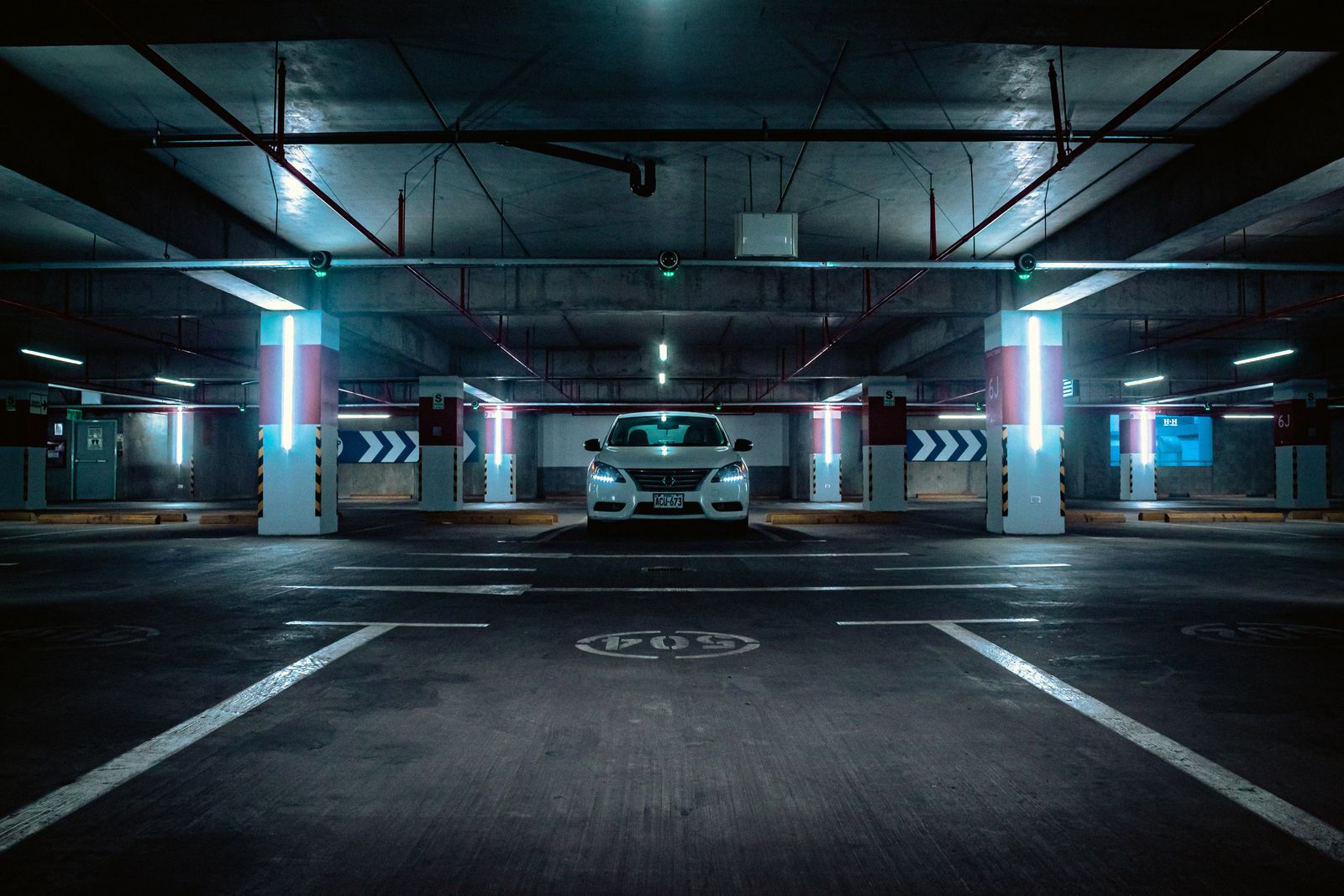
Photo credits: Sports car in a garage — photo by Erik Mclean on Pexels. Cars in an underground garage — photo by Joaquin Delgado on Pexels.
More guides
- How to Hire a Moving Company That Won't Hold Your Furniture HostageMovers › Moving & Storage
- How Much Do Movers Cost? Local vs. Long-Distance Pricing ExplainedMovers › Moving & Storage
- Binding vs. Non-Binding Estimates: The Difference That Decides Your Final BillMovers › Moving & Storage
- Moving Insurance and Valuation: What 'Full Value Protection' Really CoversMovers › Moving & Storage
- Long-Distance Moving: A Start-to-Finish Guide for Household GoodsMovers › Household Goods Moving & Storage
- All Guides & ArticlesBrowse the full guides library