Movers › Heavy Equipment Movers
What Good Heavy Equipment Movers Looks Like: The Standards Professionals Judge Each Other By
Nobody hires a heavy equipment mover for an ordinary object. The load is a tractor, an excavator, a printing press, a generator — something heavy enough to hurt someone, expensive enough to ruin a business, and awkward enough that moving it is a profession rather than a favour. Families planning a move that includes machinery, a workshop or farm equipment face a particular problem: they must judge work they cannot themselves do, in a trade whose quality is invisible until the moment it isn't.
Professionals in the trade have no such problem. They judge each other constantly, and their standards are not mysterious — they are just rarely written down where a customer can read them. A rigger watching another crew load a machine notices the same things an inspector would: how the load was measured, whether the securement maths works, whether the permits match the route, whether anyone on the crew seems to be improvising. This guide translates those standards into things a non-expert can see, ask and verify. This site lists 2,791 heavy equipment movers. The difference between the best and the rest is not the size of their trucks. It is the habits below.

It starts before the truck: measurement, weight and a plan in writing
The first professional standard is that nobody guesses the load. A good mover establishes the machine's true weight and its dimensions as it will travel — width, height and length with attachments positioned for transport — because everything downstream depends on those figures: the trailer chosen, the permits applied for, the route cleared, the tie-downs required. Permits are issued against exact dimensions, and a discrepancy discovered mid-route can void the permit on the spot. When a mover quotes from your description alone — "a mid-size excavator, roughly" — and never asks for a data plate, a manual figure or a measurement, you are watching the first corner being cut.
Ask what the plan is and listen for specifics: which trailer and why, how the machine will be loaded (driven, winched, lifted), where it will sit on the deck, what the route avoids, and what happens if the destination site is mud, slope or fresh concrete. Professionals answer in particulars because they have already run the job in their heads. Corner-cutters answer in reassurance: we do this all the time. In complaint files, that sentence appears with remarkable frequency — usually in the paragraph before the damage.
The trailer fits the machine, not the schedule
Matching equipment to load is the second standard, and it is visible from the kerb. Excavators and dozers typically travel on lowboy trailers because the low deck keeps the centre of gravity down and the overall height legal; lighter compact machines ride equipment trailers rated well above the machine's weight — the rating that matters being the trailer's gross vehicle weight rating for machine, trailer and everything on it combined, not the machine's weight alone.
The tells of a mismatch are plain once you know them: a machine perched with track or tyre overhanging the deck edge, ramps at a frightening angle because the deck is too high or the ramps too short, a trailer that was clearly the one available rather than the one required. Professionals also think about the ground at both ends — a loaded lowboy needs firm, level access, and a good mover asks about your site conditions before dispatch, not while sinking into them.
Securement: the maths a professional does out loud
Load securement is where insider standards are most exact, because federal rules make them exact. Under the FMCSA's cargo securement rules (49 CFR Part 393), heavy equipment must be immobilised against the forces of the road — the system is designed around resisting 0.8 g forward under hard braking, 0.5 g rearward and 0.5 g sideways. For machinery, the working rules professionals recite are:
- At least four separate tie-downs on heavy equipment — state load-securement procedures put it plainly: machines under 10,000 pounds need at least two tie-downs, and over 10,000 pounds, a minimum of four, one at each corner. Federal guidance for heavy vehicles and machinery likewise works on a four-tie-down minimum, whatever the load-limit calculation alone might allow.
- Aggregate working load limit of at least half the cargo's weight. Add up the working load limits (WLL) of every tie-down and the total must reach at least 50 percent of the machine's weight — and the assembly is only as strong as its weakest component, often the hook or binder.
- Chains, not straps, on steel. Tracked and wheeled machinery gets grade 70 transport chain with binders, hooked to the manufacturer's tie-down lugs or the frame — never to a hydraulic line, an axle that can roll, or sheet metal. Each chain runs down and away at an angle, resisting movement in more than one direction.
- Attachments lowered and secured separately. Buckets, blades and booms are lowered to the deck and chained in their own right; loose attachments are secured as their own cargo, because in a hard stop they become their own cargo whether you planned it or not.
- A re-check after the first miles. Chains settle. Good drivers stop early in the journey and re-tension, and say so without being asked.
You do not need to compute WLL at the kerbside. You need to watch whether the crew behaves as if the maths exists: chains to proper lugs, binders tensioned, attachments down, nobody looping a strap over a track and calling it done. A professional crew's securement looks deliberate and slightly slow. That slowness is the product you are paying for.
Permits, routes and escorts: paperwork as a quality signal
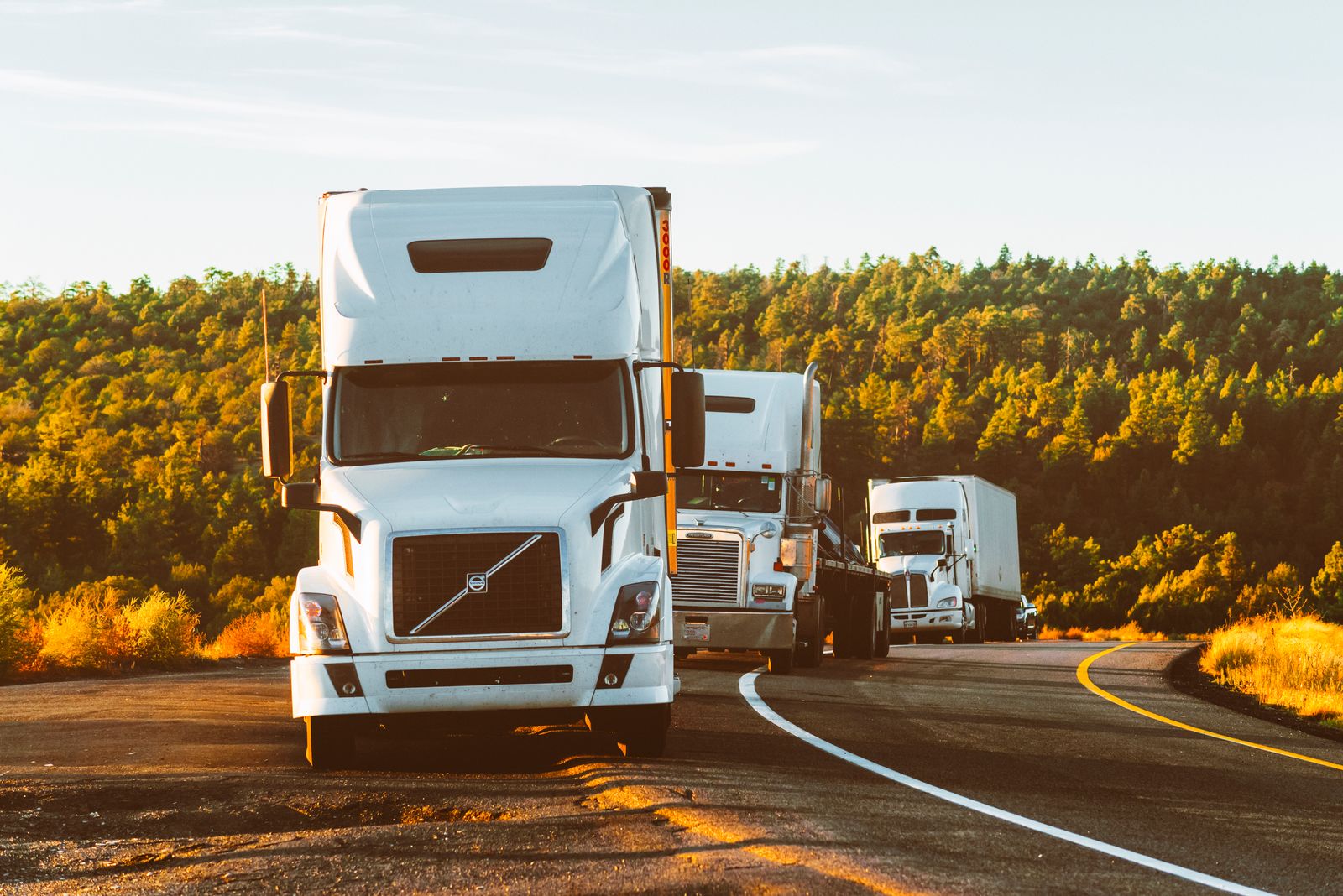
Oversize and overweight work runs on permission. Standard legal limits in most states sit at 8 feet 6 inches wide, about 13 feet 6 inches tall and 80,000 pounds gross vehicle weight; beyond them, the load travels on permits — a separate permit for each state crossed, sometimes with city or county roads needing their own clearance. Loads wider than roughly 12 feet or longer than about 75 feet typically require at least one pilot car, with two escorts or a law-enforcement escort common for the largest loads. The Federal Highway Administration's pilot and escort best-practice work exists because escort errors have caused serious accidents — in its training materials, route planning, communication and knowing each state's differing rules are treated as core skills, not accessories.
For a customer, the standard to apply is simple: a good mover talks about permits the way a good builder talks about building control — as a normal, costed, scheduled part of the job, with the route surveyed for bridge clearances, tight turns and restricted roads before departure. Warning signs are equally simple: a mover who proposes to "keep it under the limit" by optimistic measurement, who treats a permit as an optional extra, or who cannot say which states' permits your route needs. In the complaint record, unpermitted loads surface as seizures, fines and multi-day delays at state lines — charged, somehow, to everyone except the person who skipped the paperwork.
The crew: certification, communication and the right to stop
Heavy hauling crews are judged by insiders on behaviour that customers can observe in the first fifteen minutes. Is there one person plainly in charge of the lift or load? Does the crew use agreed signals or radios when a machine is moving and sightlines are broken? Is anyone wearing the basic protective kit — safety footwear, gloves, high-visibility clothing, hard hat where lifting happens — that load-securement procedures list as standard? And most telling of all: does the crew have, and use, the right to stop? A professional who halts a load because the ground feels wrong, the ramp angle is off or a chain point is damaged is displaying the single most valuable habit in the trade. A crew that has never once been seen to pause has not been lucky. It has been untested, or it has been overriding its own doubts — and a customer should never be the load it happens on.
Where cranes are involved, the standard hardens into law: OSHA requires crane operators on construction sites to be trained, certified and evaluated, with written and practical testing. If your move involves a crane lift, asking who the operator is and what certification they hold is not impertinence; it is the question every professional on the site has already asked.
Insurance, authority and the documents behind the handshake
Good movers can prove they are movers. Interstate carriers hold federal operating authority that can be checked by USDOT number; the record shows whether authority is active and whether the company is a carrier or a broker. Insurance should be specific — cargo cover that actually extends to machinery of your load's value, not a general statement that the company is "fully insured." Ask for the certificate and read the cargo limit against your machine's worth. A professional produces these documents the way a pilot produces a licence: routinely, and with mild surprise that you would consider skipping the question.
The written estimate deserves the same standard. For heavy work it should identify the machine, its weight and dimensions, the equipment to be used, permit and escort costs as their own lines, and the conditions that would change the price. Vagueness in heavy hauling is never a favour to the customer; the load is knowable, so the quote should be too.
The corner-cutting catalogue
Insiders recognise the shortcuts instantly. Now you can too:
- Quoting without establishing the machine's real weight or dimensions.
- Arriving with a trailer that is merely adequate, or plainly wrong for the machine.
- Two tie-downs on a machine that needs four; straps where chains belong; chains hooked to lines, axles or bodywork.
- Attachments left raised, or loose items riding unsecured on the deck.
- No permits, "permits included" with no detail, or a route that has obviously never been surveyed.
- A crew with no visible leader, no signals, no protective kit — and no pauses.
- Pressure to skip the paperwork: no written estimate, cash terms, documents to follow later.
Any one of these, seen on the day, is a reason to stop the job before the machine leaves the ground. That feels drastic, and it is meant to: with heavy loads, the cheap moment to intervene is always before movement, never after.
Good heavy equipment moving, in the end, is a discipline of verified numbers and unhurried checks, performed by people who would rather be thought slow than be proved careless. You cannot become a rigger by reading a guide — but you can learn to see what riggers see, and to hire the crews who work as if someone knowledgeable is watching. Now someone is.
Sources
- LegalClarity, DOT tie-down requirements for heavy equipment — FMCSA cargo securement under 49 CFR Part 393: force standards, four-tie-down minimum for heavy equipment, and aggregate working load limit of at least 50 percent of cargo weight.
- North Carolina DOT, Load Securement Safe Operating Procedures — pre-loading inspection of anchor points, brakes, tyres and connections; at least two tie-downs under 10,000 pounds and four over 10,000 pounds; attachments lowered and secured.
- FleetRabbit, heavy-haul pre-move inspection and permit checklist — legal thresholds of 8 feet 6 inches wide, 13 feet 6 inches tall and 80,000 pounds gross; per-state permits; pilot cars typically required past 12 feet wide or 75 feet long; route surveys for clearances.
- Federal Highway Administration, Pilot/Escort Vehicle Operator training and best-practice guidelines — route planning, communication and state-by-state escort rules as core skills for oversize load movements.
- DC Cargo, securing construction equipment on a flatbed — grade 70 chain and binders at the manufacturer's tie-down points for tracked and wheeled machinery, with attachments secured separately.
- Photo by SevenStorm JUHASZIMRUS, https://www.pexels.com/photo/green-and-yellow-crane-439416/
- Photo by Quintin Gellar, https://www.pexels.com/photo/white-volvo-semi-truck-on-side-of-road-2199293/
- Photo by ELEVATE, https://www.pexels.com/photo/man-riding-a-yellow-forklift-lifting-boxes-1267324/
More guides
- How to Hire a Moving Company That Won't Hold Your Furniture HostageMovers › Moving & Storage
- How Much Do Movers Cost? Local vs. Long-Distance Pricing ExplainedMovers › Moving & Storage
- Binding vs. Non-Binding Estimates: The Difference That Decides Your Final BillMovers › Moving & Storage
- Moving Insurance and Valuation: What 'Full Value Protection' Really CoversMovers › Moving & Storage
- Long-Distance Moving: A Start-to-Finish Guide for Household GoodsMovers › Household Goods Moving & Storage
- All Guides & ArticlesBrowse the full guides library