Movers › Mini & Self Storage
What Good Mini and Self Storage Looks Like: The Standards Professionals Judge Each Other By
Ask storage professionals what separates a good facility from a bad one and they will not start with price, or even with security cameras. They start with the walk. A well-run property is walked, daily, by someone whose job includes noticing: the roll-up door that no longer seals, the hallway light that died Tuesday, the water stain spreading under a wall, the unit whose lock has changed. Storage is a business of small deteriorations compounding quietly behind closed doors, and the professionals know it. The standard they judge each other by is not whether a facility has features. It is whether somebody is paying attention.
That is useful knowledge for a family choosing storage during a move, because the features are easy to advertise and attention is easy to fake for the length of a tour. This guide translates the insiders' benchmarks — security, climate, cleanliness, access, and honest dealing — into things you can verify with your own eyes in a twenty-minute visit.

The scale of what you're choosing among
Self storage in the United States is enormous: more than 52,300 facilities and roughly 2.1 billion square feet of rentable space, with about one in three Americans having used it and facilities running at high occupancy — figures from industry compilations put average occupancy anywhere from about 85 percent upward depending on the measure. The standard product is well defined. The 5×10 is the most common unit size; the 10×10 is the benchmark everyone prices against, averaging roughly $119 a month nationally for a standard unit in recent Yardi Matrix data via SpareFoot, and about $134 to $139 for climate-controlled. Renters keep units far longer than they expect — about 20 months on average — which is the single most important planning fact in this guide: you are not choosing a locker for a fortnight. You are choosing a landlord for the better part of two years, for belongings you cannot watch.
This site lists 2,753 mini and self storage listings, so in most areas you have a genuine choice. Here is how professionals would have you make it.
Security: layers, not a gate
The insider standard is layered security, because every single layer, alone, fails in a known way. The layers a good facility stacks are: perimeter fencing without gaps or damage; gated access with a unique code per tenant, so entries are logged to a person; video surveillance covering entrances, hallways, and drive aisles — recorded and retained, not just mounted; lighting throughout, including the lot and loading areas; and, at better properties, individual unit door alarms and an on-site manager or regular patrols.
Judge it the way a professional would: as a system with a paper trail. Your unique code creating a timestamped entry log is what turns a camera from décor into evidence. Ask three questions that reveal whether the system is real. How long is video kept? Who reviews access logs, and when? What happens when a unit is found overlocked or a lock is cut — who calls whom? Vague answers to specific questions are the finding. And bring the right lock yourself: professionals specify disc or cylinder locks, which resist cutting and prying far better than a standard padlock, and some insurance arrangements require them.
Climate control: a range, not a word
"Climate controlled" is the most abused phrase in the industry, because it has no single legal definition and facilities use it for everything from true conditioned space to a vent and a hope. The professional standard is a stated range: conventional climate-controlled units are generally kept between about 55°F and 80°F year-round, and humidity-controlled space adds dehumidification and sensors to hold moisture steady — the protection that actually matters for mold, documents, photographs, instruments, and wood. Air-cooled space, by contrast, moves cool air without managing humidity, which protects against heat but not damp.
So the insider's question is never "is it climate controlled?" It is: what temperature range do you hold, do you control humidity or only temperature, and how do you know? A facility that monitors its space can answer with numbers and show you where the sensors are. The premium is modest and worth pricing precisely — climate-controlled 10×10 units run roughly 13 percent above standard in national amenity data — and it is worth paying when the contents are wood, leather, paper, electronics, or fabric, and the storage will run through a summer. It is worth skipping for tools, plastic bins, and patio furniture. Professionals match the space to the goods; they do not buy the label for everything.
The unglamorous standards: dry, clean, and pest-managed
More stored property is ruined by water and pests than by thieves, and it is not close. The professional benchmarks here are boring and absolute. Roofs and door seals maintained so units stay dry in a hard rain; drainage that moves water away from buildings rather than across thresholds; no standing water, no water stains on interior walls, no musty smell in the hallway — your nose is a legitimate inspection instrument, and a facility that smells damp is damp. Pest management is a scheduled program of inspections and treatments, not a response when a tenant complains: ask when the property was last treated and by whom, and look for the evidence professionals look for — bait stations in place, no droppings or nesting debris in corners, no gaps at door bottoms wide enough to admit the tenants nobody wants.
Cleanliness functions as a proxy for the whole operation. A swept aisle, an emptied trash area, intact doors, and working lights tell you the daily walk is happening. Debris, damaged fencing, dead cameras, and a gate standing open tell you it is not — and if the visible property is neglected, the invisible parts, like the roof over your unit, are not being maintained either.
Access and operations: the standards that show up at 7 p.m.
Good operations are legible. Access hours are stated and kept; gates work; the office answers or returns calls the same day; move-in is a real lease with the rate, the fees, and the rules for rate increases printed in it. Professionals watch two operational details customers miss. The first is how rate increases work: month-to-month renting means the facility can raise your rent, and with an average stay of about 20 months, most tenants will meet at least one increase — good operators disclose their practice up front and give notice; the complaint files are full of promotional move-in rates that doubled by month four, disclosed nowhere but the fine print. The second is the lien and late-fee machinery: every state gives storage operators a lien on stored property for unpaid rent, with an auction process after notice. A good facility explains its late timeline plainly at move-in, because it would rather have your payment than your furniture. A facility that is evasive about its own remedies is telling you how it communicates generally.
Insurance deserves one clear sentence: the facility's insurance covers the facility, not your belongings. Good operators say so unprompted and offer tenant insurance or a protection plan, or tell you to check whether your homeowner's or renter's policy covers stored property. Any suggestion that your goods are "covered" without a policy in your name is a corner being cut in the first conversation.
The twenty-minute inspection
| Checkpoint | Good looks like | Corner-cutting looks like |
|---|---|---|
| Perimeter and gate | Fence intact, gate closed and coded, entry logged | Gaps, gate propped or broken, shared codes |
| Cameras | Covering entries and aisles, recording, retention answerable | Dummy or dead cameras, blind spots, shrugs |
| Climate claim | A stated range (about 55–80°F), humidity answer, sensors visible | "Climate controlled" with no numbers behind it |
| Dryness | No stains, no standing water, no musty smell | Stains at wall bases, damp smell, poor drainage |
| Pests | Scheduled program, bait stations, sealed door bottoms | "We spray if there's a problem" |
| The lease | Rate, fees, increase and late policies in print | Verbal assurances, fine-print surprises |
| The walk | Signs a manager tours daily: lights working, aisles swept | Burned-out lights, debris, damaged doors unrepaired |
Visit at an unannounced time if you can, ideally near dusk, when lighting and gate discipline are tested and the tour script is not running. Look at the unit you would actually rent, not the model near the office. Photograph its corners and door seal. Then ask the two questions that end most evaluations: when was this property last walked by the manager, and what did they find? A professional recognizes a professional question. The answer — specific, recent, slightly proud — is what good looks like.
Storage, done well, is a quiet service: nothing happens to your belongings for twenty months, and the nothing is the product. Choose the facility where the nothing is engineered — layered security, a climate claim with numbers, a dry and pest-managed building, and a lease that hides nothing — and your move gets the uneventful middle chapter it deserves.
Sources
- SpareFoot, U.S. Self-Storage Industry Statistics, drawing on Yardi Matrix and Self Storage Association data — more than 52,300 U.S. facilities and about 2.1 billion square feet of space; 10×10 standard units averaging about $119/month and climate-controlled about $134; 5×10 the most common unit size; average occupancy around 85 percent.
- Self Storage Association 2025 Demand Study, via industry compilations — about one in three Americans uses self storage, and renters keep units for an average of about 20 months.
- StorageCafe, guide to self storage amenities — conventional climate control holds units between about 55°F and 80°F, humidity-controlled units use dehumidifiers and sensors, air-cooled units do not manage humidity, and climate-controlled 10×10 units rent for roughly 13 percent more than standard units.
- Angi, guide to keeping stored belongings safe — layered security of fencing, lighting, unique access codes, and recorded surveillance; disc or cylinder locks; pest and moisture neglect as primary damage risks.
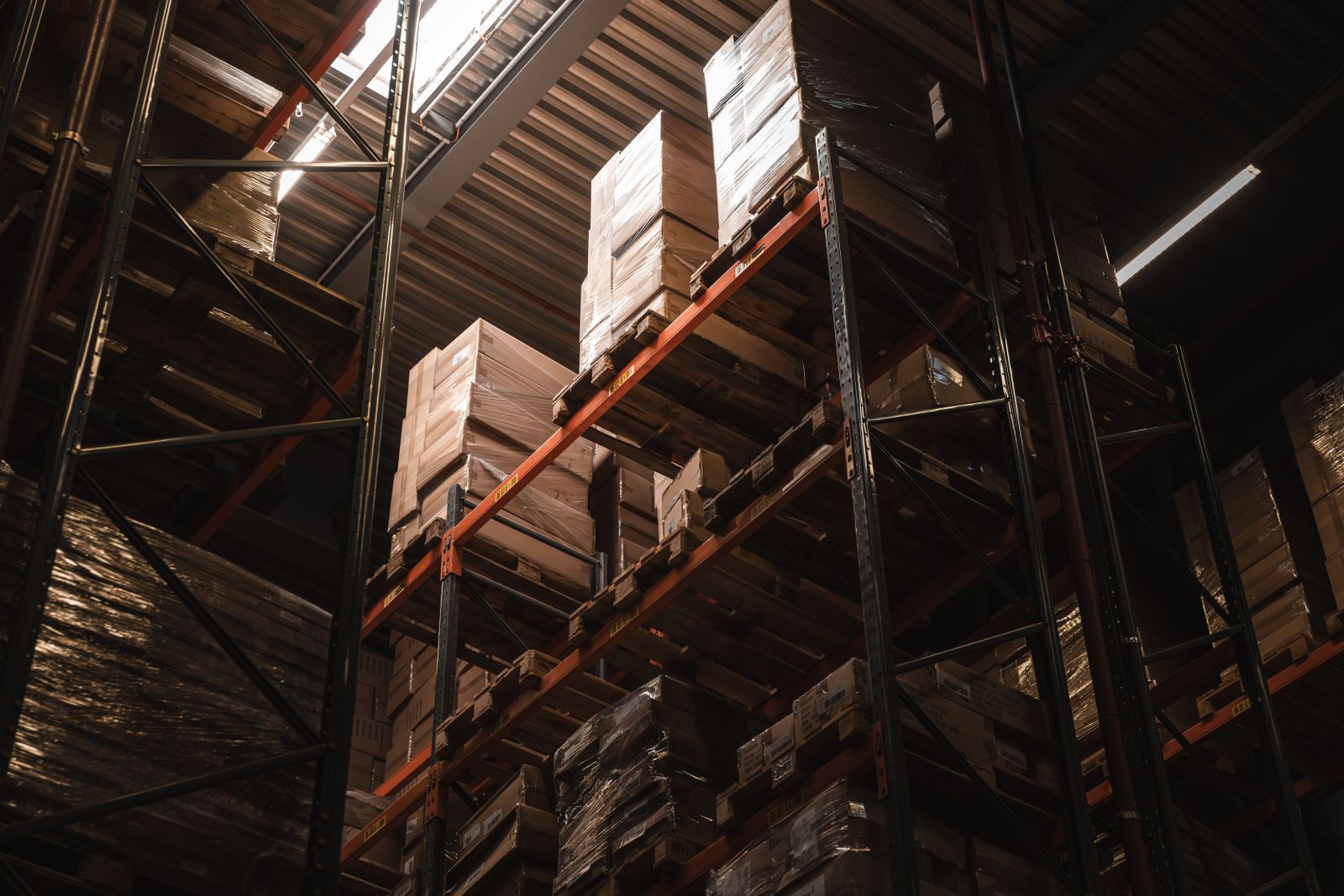
Photos: storage facility aisle — photo by Tiger Lily, https://www.pexels.com/photo/warehouse-with-concrete-floors-4483610/ ; warehouse shelves with boxes — photo by Ryan Klaus, https://www.pexels.com/photo/low-angle-shot-of-boxes-standing-on-the-shelves-in-a-warehouse-27111449/
More guides
- How to Hire a Moving Company That Won't Hold Your Furniture HostageMovers › Moving & Storage
- How Much Do Movers Cost? Local vs. Long-Distance Pricing ExplainedMovers › Moving & Storage
- Binding vs. Non-Binding Estimates: The Difference That Decides Your Final BillMovers › Moving & Storage
- Moving Insurance and Valuation: What 'Full Value Protection' Really CoversMovers › Moving & Storage
- Long-Distance Moving: A Start-to-Finish Guide for Household GoodsMovers › Household Goods Moving & Storage
- All Guides & ArticlesBrowse the full guides library