Movers › Machinery Movers & Erectors
What Machinery Movers and Erectors Actually Includes: The Service Broken Down in Plain Language
"Machinery movers and erectors" is one of the least self-explanatory trade names in the directory. It sounds like a company that carries machines, full stop — and the carrying is only the middle of the job. The name is actually two trades bolted together. The moving is rigging and transport: lifting a machine safely, getting it out of one building, down the road and into another. The erecting is the millwright's half: putting the machine back together at the far end — set on its foundation, levelled, anchored and aligned to the tolerances it was built to hold. A firm that does both is selling you the whole arc from a working machine in Building A to a working machine in Building B. A firm that does only the first half is selling you a machine on a new floor, which is not the same thing.
Movers-Map lists 275 machinery moving and erecting firms, and their quotes are not directly comparable until you know which parts of the arc each one includes. This guide breaks the service into its components, in the order they happen, with what each part costs and which parts are genuinely optional.
Part 1: The survey, the plan and the lift engineering
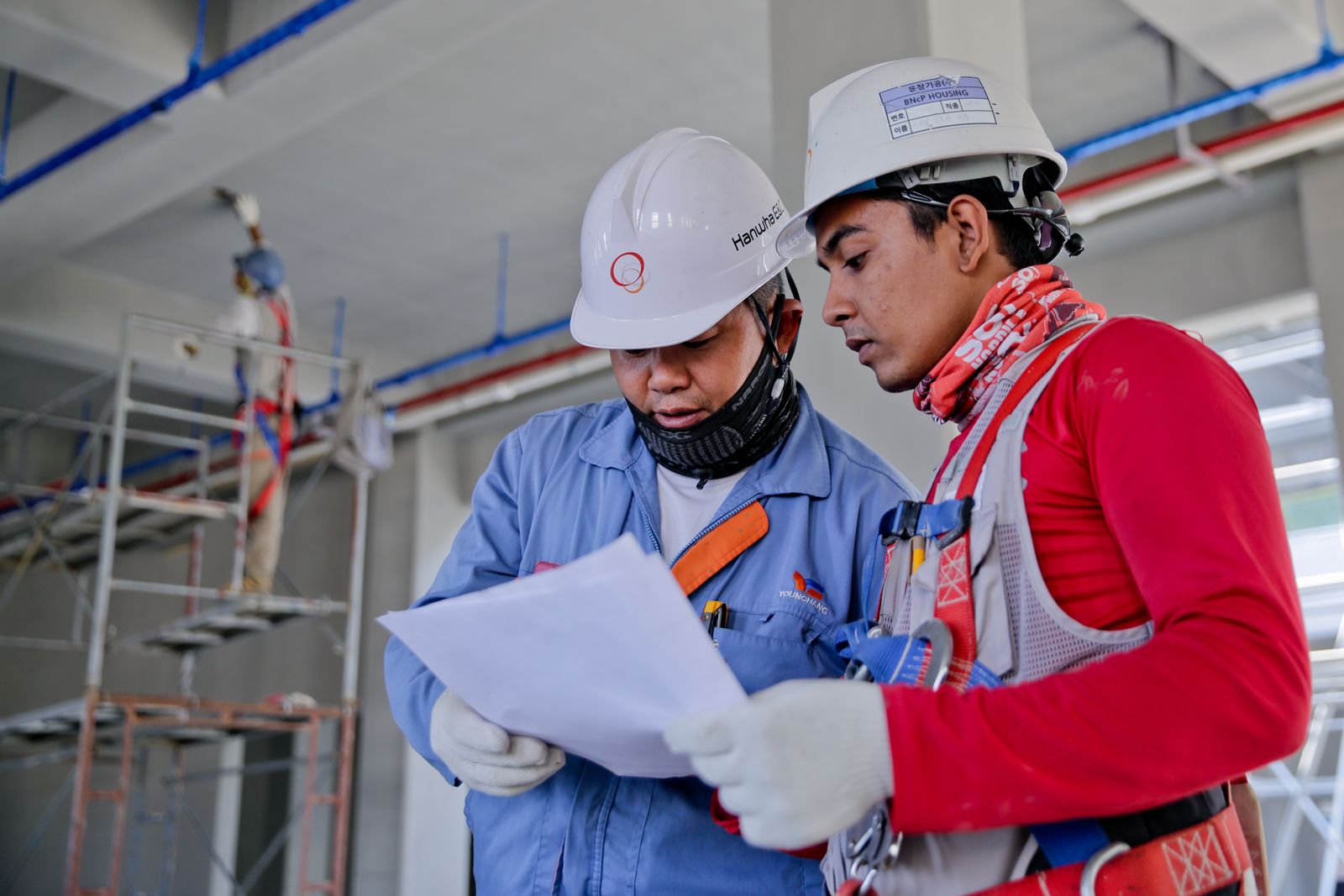
Before anything moves, a competent firm surveys both sites: the machine's weight, dimensions and centre of gravity; how it is anchored; the route out and the route in, measured rather than assumed; floor capacity along both routes; and where a truck or crane can stage. From the survey comes the plan — the equipment list, the crew size, the lift method, the schedule — and on heavier or tighter jobs, an engineered lift plan with calculated pick points and sling angles. This stage is usually folded into the project price rather than billed separately, but it is real work and it is where the rest of the quote comes from. A quote produced without it is a guess, and guesses in this trade are corrected at your expense.
Part 2: Disconnection and disassembly
A machine has to be separated from the building before it can leave: power, air, water and coolant disconnected; anchor bolts released; and, on larger equipment, the machine itself partly dismantled into transportable sections — a press separated from its crown, a production line split at its joints, guards, conveyors and control cabinets removed and labelled. Who does this is one of the great scope questions. Some machinery movers include disconnection and disassembly in the crew's work; on many jobs the electrical disconnection belongs to a licensed electrician, sometimes yours. Washington State's classification for this trade captures the standard shape of the work: assembling component parts, cutting and welding brackets and mountings, incidental electrical connections needed to complete an installation, and calibrating and testing the machine's operation are all contemplated parts of machinery installation work. "Incidental" is the word to interrogate — full reconnection of a plant's electrical systems is a different contract from reconnecting what the mover disconnected.
Part 3: Rigging — the lifting itself
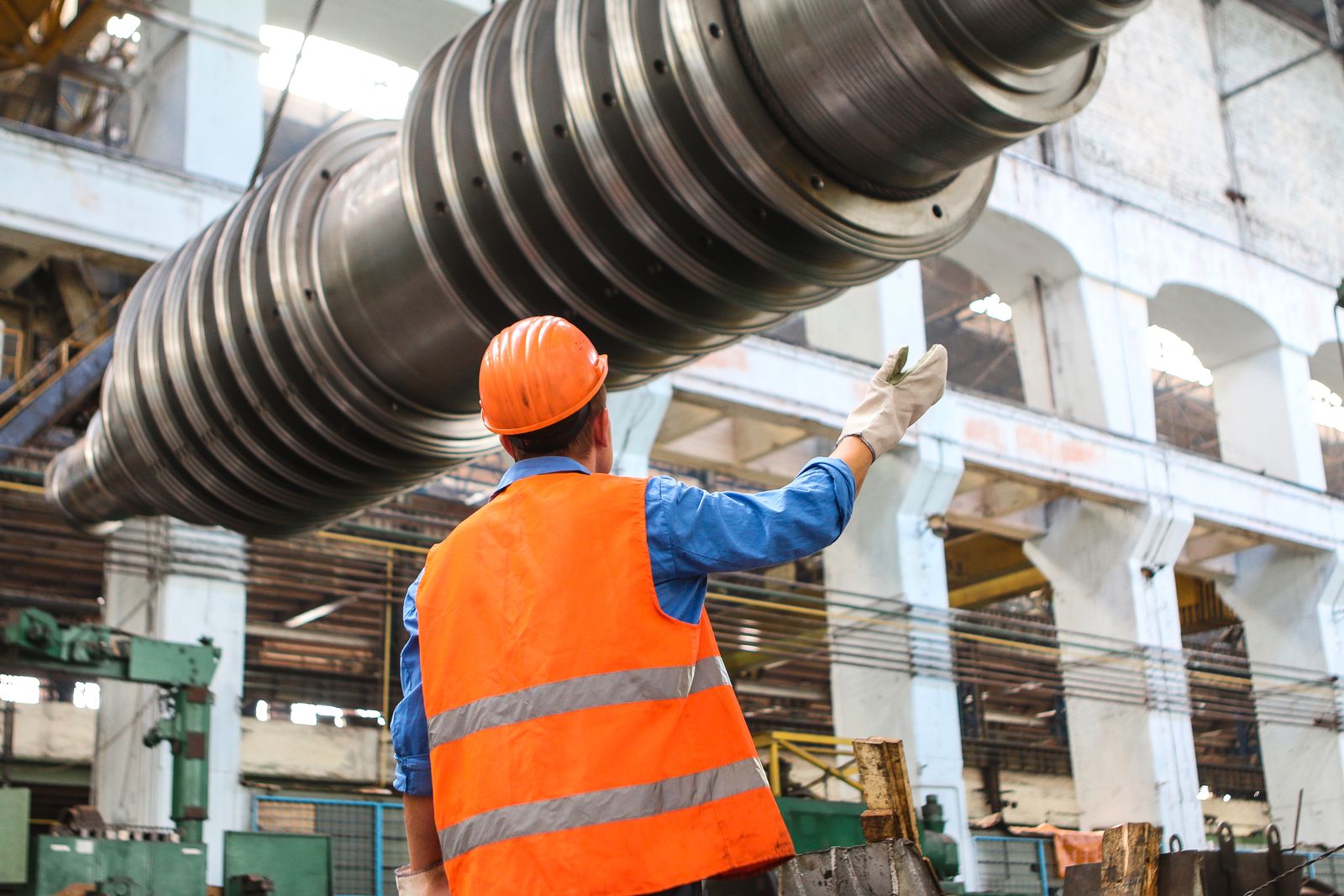
Rigging is the skilled core of the moving half: getting the machine off the floor and through the building without damage to it, the floor or anyone nearby. The toolkit is specialised — machine skates and toe jacks for short indoor travel, high-capacity forklifts, hydraulic gantries that straddle and lift loads too heavy or too tall for a forklift, mobile cranes where a pick from above or outside is needed, and the slings, spreader bars and hardware that connect machine to machine-mover, each piece with a rated working load limit. Published 2026 rate guides put a rigging crew at roughly $200 to $500 an hour, usually with a minimum of about four hours, and a mobile crane with operator at roughly $150 to $600 an hour depending on size. This is the part of the service where the price of experience is easiest to justify: the lift is the one stage that cannot be paused halfway and reconsidered.
Part 4: Crating and protection
Not every machine travels naked. Precision equipment, machines with exposed ways or electronics, and anything facing a long or open-trailer journey may be crated — timber crating, sometimes custom-built around the machine, with moisture protection and shock-absorbent packing — or at minimum wrapped, blanketed and secured against movement and weather. Crating is normally an extra line item, priced on materials and labour, and it is one of the genuinely optional components: a ten-minute indoor move between adjacent units rarely needs it; a machining centre crossing three states in January usually does.
Part 5: Transport
The road leg looks simple and is quietly administrative. The mover provides tractors and the right trailers — flatbeds, step-decks, air-ride trailers for vibration-sensitive equipment, multi-axle transporters at the heavy end. Loads within legal limits (in the US, broadly 8.5 feet wide, 13.5 feet tall and 80,000 pounds gross) travel without special permission; beyond them, every state on the route issues its own oversize permit, escorts join at the larger sizes, and the permitting lead time becomes part of your schedule. Trucking, permits and escorts are usually itemised separately from the rigging labour, which is why two quotes for "the same move" can differ by the small print of who is paying for the paper.
Part 6: Erection — setting, levelling, anchoring and alignment
This is the half of the trade name most buyers overlook, and the half that decides whether the machine works afterwards. Erection — the millwright's work — means assembling the machine at its destination and installing it properly: positioned on its foundation or base plates, levelled to fine tolerances, anchored, and aligned, including setting and aligning the motors and power sources that drive it and connecting them by their couplings. Millwrights describe tolerances in thousandths of an inch, because that is what precision machinery requires; a lathe or machining centre set down carelessly "close enough" will wear early, cut inaccurately or fail its first calibration. Published guides price millwright installation work as a distinct project type, typically from around $4,500 to $8,500 for a standard installation project — separate money from the move that delivered the machine. If your quote's scope ends at "delivered and set in place," ask exactly what "set" includes. Levelling and alignment are either in the number or they are a second invoice.
Part 7: Reconnection, testing and hand-over
The final component closes the arc: utilities reconnected (to the incidental extent agreed in Part 2), the machine powered and tested, and a hand-over in which the mover's responsibility ends and yours resumes. Full commissioning — OEM calibration, test cuts, production sign-off — is usually shared ground between the mover, your own technicians and sometimes the machine's manufacturer, and it is the component most often assumed by both sides and contracted by neither. Name it in the scope, whoever performs it.
The people inside the price
One more breakdown is worth having, because quotes name crew roles as casually as they name parts. A machinery moving crew is not generic labour. The foreman runs the job and owns the plan on the day. Riggers do the lifting work — slings, jacks, skates, gantries — and are the people whose judgement the load hangs from, literally. Millwrights do the erecting half: disassembly and reassembly, levelling, alignment and anchoring, work measured in thousandths of an inch. Operators run the forklifts and cranes, certified for the machines they drive. On heavy or complex lifts an engineer may stand behind the lift plan itself. Published quotes are typically built from exactly these blocks — labour by role, equipment, trucking, planning, and mobilisation, the cost of getting people and gear to and from your site — plus the extras: storage, crating, fabrication, overtime, insurance and permits.
This is also why "we'll send a couple of guys and a forklift" is not a cheaper version of the same service. It is a different and smaller service wearing the same name: no millwright means no erection, no engineered plan means the lift is improvised, and no foreman means nobody owns the sequence when something unexpected appears — as, on real jobs, it reliably does. When you compare quotes, compare crews as well as totals. The firm that names its foreman, its riggers and its millwrights in the proposal is describing the service this guide has broken down. The firm that names only a price is describing a hope.
What is usually extra, and how the price is assembled
Around the core sit the optional and conditional parts: storage and staging if the destination is not ready; foundation and pad work at the new site; overtime for shutdown-window or weekend work; fabrication of brackets and mountings; and expedited permits. Quotes are assembled three ways — time and materials at hourly crew rates, a fixed lump sum for a defined scope, or per-piece pricing on large multi-machine relocations — and the same components appear in all three, differently labelled.
For scale, published 2026 figures from US rigging firms put a simple single-machine rigging job from about $3,000 to $3,500, most full machinery moving and installation projects somewhere between roughly $3,500 and $30,000 to $45,000, and complex plant relocations well past $200,000. One pricing survey of real projects found single-machine moves in the US running about $4,600 to $22,700 with a typical figure near $11,700 — a spread that makes sense once you see the components: the same "one machine" can mean a survey, a skate across a floor and a level, or a gantry, a crane, three state permits and a week of millwrighting.
| Component | Usually in a full-service quote? | What drives its cost |
|---|---|---|
| Survey, planning, lift engineering | Yes, folded into the price | Complexity of route and lift |
| Disconnection and disassembly | Partly — electrical scope varies | Machine size; number of sections and services |
| Rigging and lifting | Yes — the core service | Crew hours ($200–$500/hr); crane time ($150–$600/hr) |
| Crating and protection | Often an extra | Materials, machine sensitivity, distance and weather |
| Transport, permits, escorts | Yes, usually itemised | Distance; oversize status; states crossed |
| Erection: set, level, anchor, align | Yes from a mover and erector — verify | Tolerances required; foundation readiness |
| Reconnection and testing | Incidental connections yes; full commissioning rarely | Who owns calibration and sign-off |
| Storage and staging | Extra, when needed | Duration; indoor versus outdoor |

The plain-language version
So "machinery movers and erectors," translated, is this: we will plan it, unbolt it, take it apart as far as it needs, lift it properly, protect it, truck it legally, put it back together, and leave it level, anchored and aligned where you want it — subject to the scope on your quote. Read any quote against the seven parts above and the gaps announce themselves: the missing erection, the unpriced crating, the commissioning nobody owns. Among 275 listed firms, the right one is rarely the cheapest line. It is the one whose quote, read part by part, describes the whole arc.
Sources
- Alltracon, "Large Equipment Movers for Manufacturing Plants" — the service components of machinery moving: rigging and lifting, disassembly and reassembly, project planning and lift plans, crating and packing, transportation, and installation with precision placement, levelling, anchoring and alignment. https://alltracon.com/large-equipment-movers-for-manufacturing-plants/
- Alltracon, "How Much Do Industrial Rigging Services Cost? A Complete 2026 Pricing Guide" — rigging crews at roughly $200–$500 per hour with minimums around four hours; mobile cranes at $150–$600 per hour; simple single-machine rigging from about $3,000–$3,500; most full moving and installation projects roughly $3,500–$45,000; millwright installation projects about $4,500–$8,500; the three pricing methods (time and materials, fixed price, per-piece) and their component parts. https://alltracon.com/how-much-do-industrial-rigging-services-cost-a-complete-2026-pricing-guide/
- Rigging-Busters, "Industrial Rigging & Machinery Moving Costs 2026" — real project ranges: US single-machine projects about $4,600–$22,700, typical about $11,700; projects start at $3,500. https://rigging-busters.com/pricing/
- Millwright (Wikipedia) — in modern usage a millwright is engaged with the erection of machinery: levelling, aligning and installing machinery on foundations or base plates, and setting, levelling and aligning motors and other power sources, connecting them by couplings. https://en.wikipedia.org/wiki/Millwright
- Washington Administrative Code 296-17A-0603 — machinery installation and millwright classification: work includes preparing a concrete pad, cutting and welding brackets and mountings, assembling component parts, incidental electrical connections needed to complete the installation, and calibrating controls and testing the machinery's operation; also includes dismantling and removal. https://lawfilesext.leg.wa.gov/Law/WACArchive/2021/pdf/WAC%20296%20%20TITLE/WAC%20296%20-%2017A%20CHAPTER/WAC%20296%20-%2017A-0603.pdf
Photographs
- Engineers reviewing plans — via Pexels, https://www.pexels.com/photo/1216589/
- Worker guiding a machine into place — via Pexels, https://www.pexels.com/photo/2760243/
- Semi trucks on a road — Quintin Gellar via Pexels, https://www.pexels.com/photo/2199293/
More guides
- How to Hire a Moving Company That Won't Hold Your Furniture HostageMovers › Moving & Storage
- How Much Do Movers Cost? Local vs. Long-Distance Pricing ExplainedMovers › Moving & Storage
- Binding vs. Non-Binding Estimates: The Difference That Decides Your Final BillMovers › Moving & Storage
- Moving Insurance and Valuation: What 'Full Value Protection' Really CoversMovers › Moving & Storage
- Long-Distance Moving: A Start-to-Finish Guide for Household GoodsMovers › Household Goods Moving & Storage
- All Guides & ArticlesBrowse the full guides library