Movers › Storage Trailers & Containers
What Storage Trailers and Containers Actually Includes: The Service Broken Down in Plain Language
Ask a family what they bought when they booked storage containers and the answer is usually a shrug: a big metal box, dropped in the driveway, filled at leisure, taken away. That shrug is where the complaints I investigate are born. "Storage trailers and containers" is not one product. It is a bundle of at least seven separate services — the box, the delivery, the rental clock, the transport, the storage location, the protection, and the pickup — each priced separately, each with its own rules, and several of them optional in ways nobody explains at booking. This guide takes the bundle apart, piece by piece, in plain language, so you can see what you are actually paying for and which pieces you can decline, delay or do yourself.
First, three different things share one name
Portable moving containers are the familiar branded product — PODS is the name most people know, with competitors such as 1-800-PACK-RAT and U-Pack's ReloCube working the same way. The container is delivered to your home, you load it, and the company either stores it at its own warehouse or transports it to your new address. Sizes are modest and standardised: PODS offers 8-, 12- and 16-foot containers, rated by the company for roughly 500 square feet of contents, 500–800 square feet, and a two-bedroom home of up to about 1,200 square feet respectively. One catch hides in that list: the 12-foot container is offered for local moves and storage only, so a one-bedroom household moving long-distance must squeeze into the 8-foot or pay for the 16.
Storage trailers are a different animal wearing a similar name. A storage trailer is typically a semi-trailer — the back half of a freight truck, 28 to 53 feet long — rented and parked at a business, a building site or occasionally a large property, usually for commercial or renovation storage rather than a household move. You are renting volume and a door at dock or ground level, not a moving service; transport, when it happens at all, is a separate arrangement with a tractor.
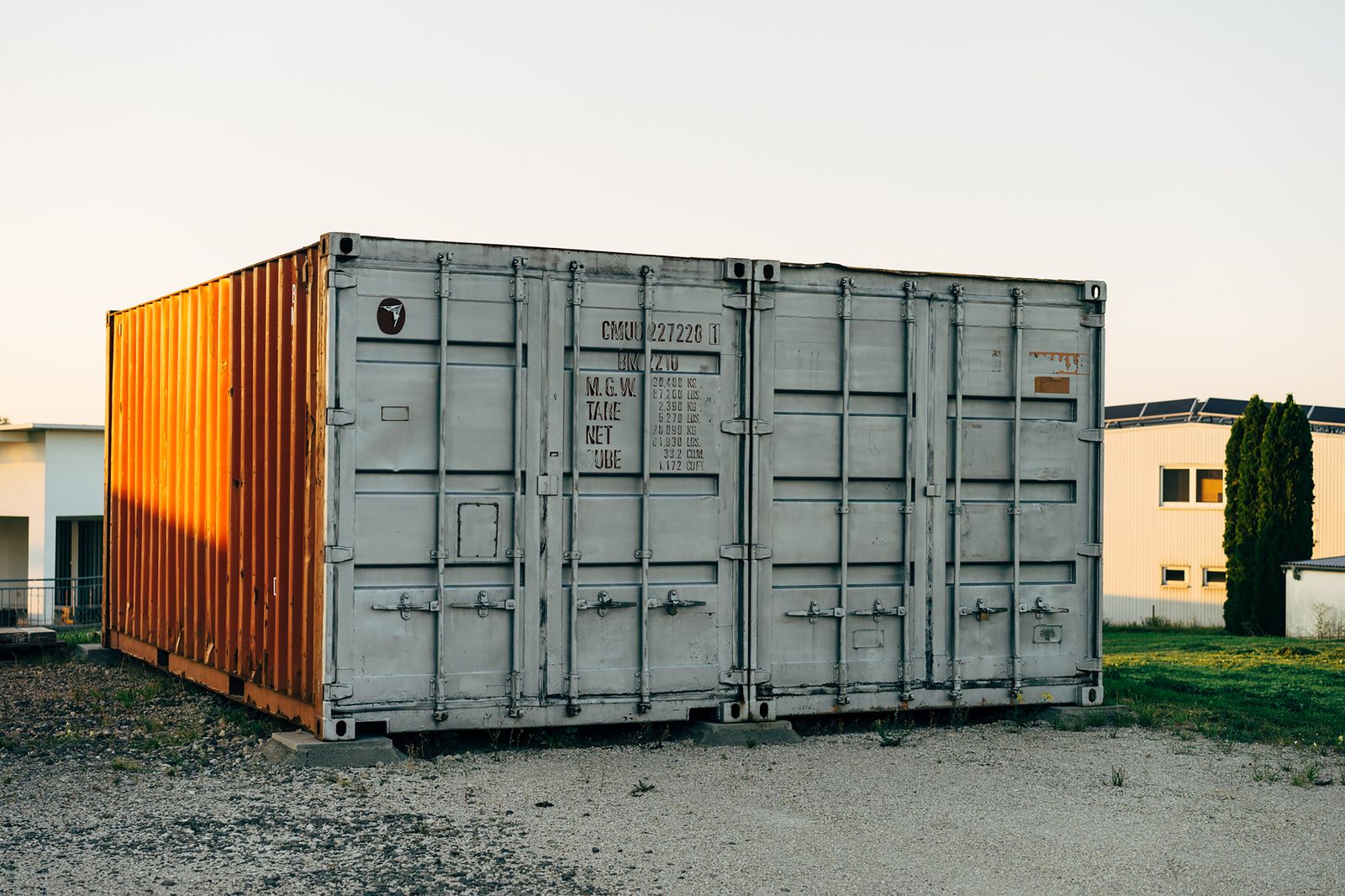
Shipping containers — the corrugated steel 10-, 20- and 40-foot boxes of world trade — are sold and rented by container companies for on-site storage. A 20-foot container rented for a driveway or a job site is a real option for a long renovation, and an entirely different purchase from a portable moving container: nobody will transport your household in it as part of the deal, delivery is by tilt-bed or crane truck, and what you are buying is closer to renting a small steel building than to hiring a mover.
Confusing the three is the original sin of this market. The prices, the rules and the complaints differ because the products differ.
The service, piece by piece
1. The box itself, rented by the month. The container is never bought and rarely rented by the day; the clock is monthly, and it starts on delivery, not on the day you start loading. PODS' own published averages put on-site rental at about $139 a month for the 8-foot, $159 for the 12-foot and $175 for the 16-foot, with storage at the company's own facility costing more — roughly $189, $210 and upward for the same sizes. Independent quote-gathering runs higher: moveBuddha's pricing data puts storage rentals in a $150–$359 per month band depending on size and region. Either way, the lesson is the same: the second month is not an accident or a penalty. It is the product, and a slow load-in is a purchase, not a delay.
2. Delivery. A driver places the container where you direct — within limits. Portable containers are set down by a lift system that keeps the box level, which is gentler on contents than a tilt-bed, but every delivery needs clearance: room for the truck, overhead space free of wires and branches, and a surface that will bear the weight without the container sinking or cracking it. Delivery is charged per trip, typically $75–$150; one itemised local quote gathered by moveBuddha showed $88.19 for initial delivery. A failed delivery — the truck arrives and cannot place the box — is usually chargeable too, which is why the clearance conversation belongs before the truck, not during it.
3. The loading window — which is yours. This is the genuine advantage of the category and the reason families choose it: no crew is standing on the clock, children and grandparents can be packed around, and a room can be loaded, reconsidered and reloaded over a fortnight. What the brochures understate is that the window is rented, per the monthly clock above, and that the container sitting in your driveway is governed by other people's rules too — see the permits section below.
4. Transport, if it moves. For a local move, the company collects the loaded container and delivers it to the new address — about $93 in that same itemised quote. For long distance, transport is the big number and it is priced by container and route, not by weight: moveBuddha's data puts a local move at $220–$813 per container depending on size, and a cross-country move at roughly $2,068–$4,028 for an 8-foot container and $5,439–$7,448 for a 16-foot. Households larger than the container need a second one, and a second container is a second full set of fees, not a marginal add-on.
5. Storage, in one of two places. If the container is held, it is held either on your property — cheapest, most accessible, most exposed to weather, rules and your own driveway needs — or at the company's storage centre, where it costs more per month and access becomes an appointment: you typically schedule a visit or a re-delivery rather than wandering in. Families planning a gap between homes should ask, before booking, how access works at the centre, what it costs to have the container re-delivered for an afternoon, and how much notice that takes. "In storage" and "reachable" are different states.
6. Contents protection — optional, and not insurance unless it says so. Container companies sell contents protection plans with monthly premiums scaled to a declared value. Read what the plan actually covers — typically defined perils such as fire, theft and collision, with exclusions — and compare it against your homeowners or renters policy, which may already cover belongings in storage or transit, or may not. What you should not do is assume the container company's liability covers your contents in transit by default. It generally does not, beyond narrow limits, and the time to discover that is at booking.
7. Final pickup, and the end of the clock. When the container is empty, the company collects it — another per-trip fee, $75–$150, $88.19 in the itemised quote — and the rental clock stops when the pickup happens, not when you phone. Schedule pickup before the next billing date, and get the confirmation in writing. A surprising share of container complaints are simply an empty box sitting for nine days into a new month, billed in full, because pickup was requested but never confirmed.
| Piece of the service | How it is charged | Itemised local example |
|---|---|---|
| Container rental, 16 ft | Per month | $205.79 first month |
| Initial delivery | Per trip | $88.19 |
| Transport to new address (local) | Per move | $93.09 |
| Final pickup | Per trip | $88.19 |
| Base total, one local move | — | $475.26 before tax, protection and extra months |
The example is a single local quote for a 16-foot container gathered by moveBuddha; your market will differ, but the structure — rent plus three separate movements — will not.
The part nobody sells you: permission to put it there
A container in your driveway sits at the intersection of three authorities, and the company delivering it is only one of them.
Your city or county. On private property, many places require no permit at all for a temporary container — but street placement is different almost everywhere, because the street is public right-of-way. Cities that allow street placement typically require a right-of-way or traffic-control permit, charge by the week, cap the stay, and want days or weeks of processing time. Some towns regulate driveway containers too, with size limits and day caps — one North Carolina town, for example, allows containers of 20 feet or smaller in a driveway for up to 14 days without a permit, requires a temporary use permit beyond that, and caps the total at 90 days a year. The only safe general rule is: driveway, usually simple; street, ask the city first; and ask before delivery day, because permit offices do not work at moving speed.
Your HOA, if you have one. Association rules sit on top of city rules and are frequently stricter: notification requirements, placement limits such as not blocking the sidewalk, and time limits — three months is a common HOA allowance, with extensions by request. An HOA fine or a remove-it notice mid-load is a miserable surprise that one email, sent before booking, prevents.
Physics. The spot must be level enough, firm enough and clear enough — roughly a car's width of working space, overhead clearance for the delivery system, and no steep slope. Tell the company about a gravel drive, a soft lawn or a steep grade when you book. Delivery drivers are empowered to refuse an unsafe placement, and they do.

Which parts are optional — the honest summary
You can decline the protection plan if your own policy covers the contents. You can avoid the second month's rent by loading promptly, which is the single largest saving available in the whole product. You can sometimes avoid storage-centre fees by keeping the container on your own property, if the rules allow and the gap is short. You cannot decline the trip fees, the transport charge or the monthly clock, and you should not try to decline the permit question.
What you are buying, in the end, is time and separation: the move broken into pieces that a family can do at its own pace, with the driving and the warehousing rented by the month. Priced with open eyes — this site lists 495 storage trailers and containers providers, so get two quotes and compare them piece by piece, not headline by headline — it is one of the most humane ways to move a household. Priced by the shrug, it is a metal box full of small print. Now you know where the small print lives.
Sources
- moveBuddha, How Much Does PODS Cost — per-container pricing by size and distance, storage rentals of $150–$359 a month, and an itemised local quote: $88.19 delivery, $205.79 first month's rent for a 16-foot container, $93.09 transport, $88.19 final pickup.
- PODS, published storage pricing — average on-site monthly rates of $139 for an 8-foot, $159 for a 12-foot and $175 for a 16-foot container, with higher rates at a PODS storage centre.
- City of Fort Collins, mobile storage delivery guidance — driveway placement usually requires no city permit, while street placement requires a right-of-way permit applied for 5 to 10 business days ahead, and HOA notification is separate.
- Town of Harrisburg, North Carolina, portable storage rules — driveway containers of 20 feet or smaller allowed 14 days without a permit, a temporary use permit beyond that, and a 90-day annual cap; street placement prohibited.
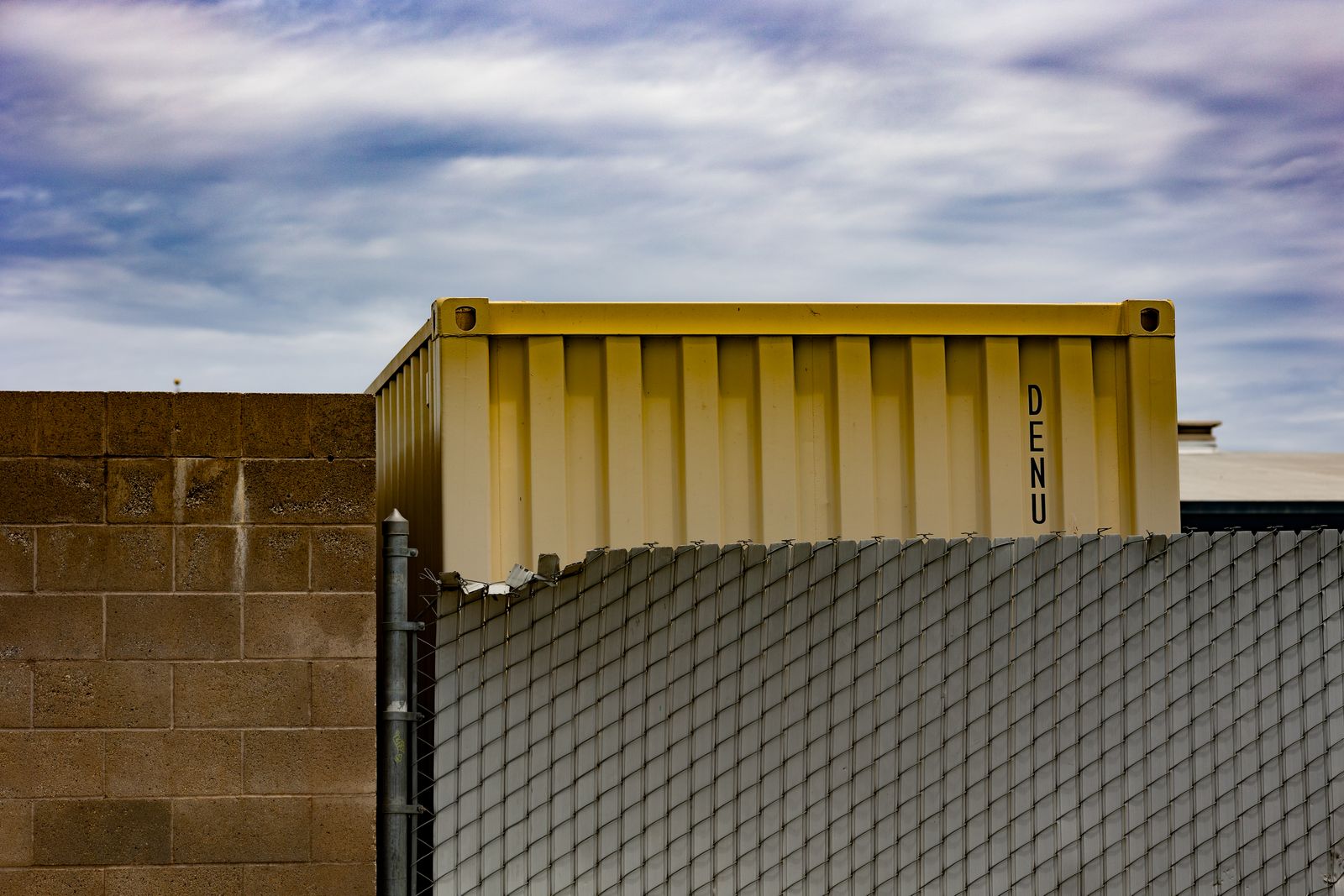
Photo credits: - Container behind a fence — photo by Shane Eckert, https://www.pexels.com/photo/12393185/ - Container at a facility — photo by Markus Winkler, https://www.pexels.com/photo/18609057/ - Warehouse shelves — photo by Ryan Klaus, https://www.pexels.com/photo/27111449/
More guides
- How to Hire a Moving Company That Won't Hold Your Furniture HostageMovers › Moving & Storage
- How Much Do Movers Cost? Local vs. Long-Distance Pricing ExplainedMovers › Moving & Storage
- Binding vs. Non-Binding Estimates: The Difference That Decides Your Final BillMovers › Moving & Storage
- Moving Insurance and Valuation: What 'Full Value Protection' Really CoversMovers › Moving & Storage
- Long-Distance Moving: A Start-to-Finish Guide for Household GoodsMovers › Household Goods Moving & Storage
- All Guides & ArticlesBrowse the full guides library